
The complaint sounds like a normal blockage at first. A dental laboratory, a prosthetics workshop or a school art room has a sink used for rinsing plaster bowls, moulds and tools. The sink drains a little slower each week. By Friday the water stands above the strainer; by Monday it does not drain at all. A hand snake clears it for a day. The white crust returns, harder than before.
Plaster of Paris and dental stone are not soap. They are mineral powders that react with water, settle in the low points of the pipe and set into a solid mass. The drain downstream is usually blamed, but the real problem starts at the sink and in the pipe between the sink and the drain.
The complaint: a sink that drains until it does not
A technician rinses a mixing bowl under the tap. The bowl looks clean, so the residue is judged harmless. In a pipe with a gentle fall, the particles settle where the water slows: at a coupling, a bend, a badly formed joint or the trap. Water still passes for a while. Then the layer hardens, the bore closes and the sink backs up.
Hot water, then a chemical drain cleaner, then a snake: the usual response. Hot water does not dissolve set gypsum. Caustic cleaner may soften soap and hair, but it does not break down a mineral deposit. The snake makes a narrow hole through the centre, water flows again, and the deposit keeps building around the hole.
Five reasons plaster becomes a pipe problem
- Gypsum is a settling solid, not a soluble salt. Plaster particles are heavier than water. When the flow slows, they drop out of suspension and collect at the invert of the pipe.
- Water is the setting agent. The deposit does not stay as loose powder. Residual water causes the plaster to set, and the mass becomes hard enough to resist rodding and conventional cleaners.
- Low flows and long runs make it worse. A hand basin or a rinse sink may discharge only a few litres at a time. That is not enough to carry the solids through a long horizontal run. The pipe with the gentlest fall collects the most sediment.
- Hot water and chemicals are the wrong tools. Heat does not dissolve gypsum, and many chemical cleaners are ineffective against mineral deposits. Strong acid can damage the pipe and is dangerous in a confined room; it is not a plaster remedy.
- There is no plaster trap at the source. A normal sink strainer is too coarse, and a standard floor drain trap is designed for water, not for a settling mineral load. Without a dedicated trap, the drainage system becomes the settling tank.
Catch it before the pipe
The correct fix is a dedicated plaster trap or sedimentation tank under the sink, sized for the work done at that station. Small under-sink units may hold around 19 litres; larger laboratory sinks use 72 litres or more, and local trade waste rules may set the required capacity. The trap slows the flow so the heavy particles settle in a container that can be opened, inspected and emptied. A collection bag makes the service quick enough to happen.
The trap must be serviced before it is full. A unit that is allowed to saturate simply passes the sludge downstream. Put the change interval on the maintenance calendar, keep a spare bag or bottle on site, and train the person who rinses the bowls to check the trap at the end of each shift. Never rinse plaster into a general sink, a cleaner's sink or a mop sink. A dedicated station is cheaper than replacing a pipe run under a finished floor.
If a line is already blocked, do not keep adding chemicals. Isolate the section, open the trap or cleanout, and remove the deposit mechanically. A camera survey will show whether the pipe is partly closed or fully set. In severe cases the affected section has to be cut out and replaced; a snake that only makes a hole through the centre will not restore the bore.
Specify the drainage behind the sink
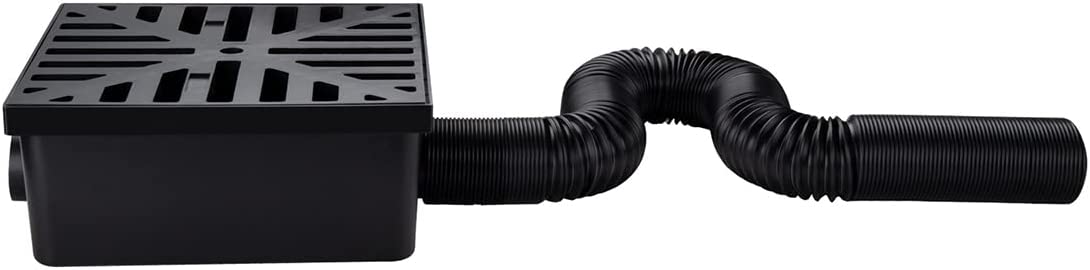
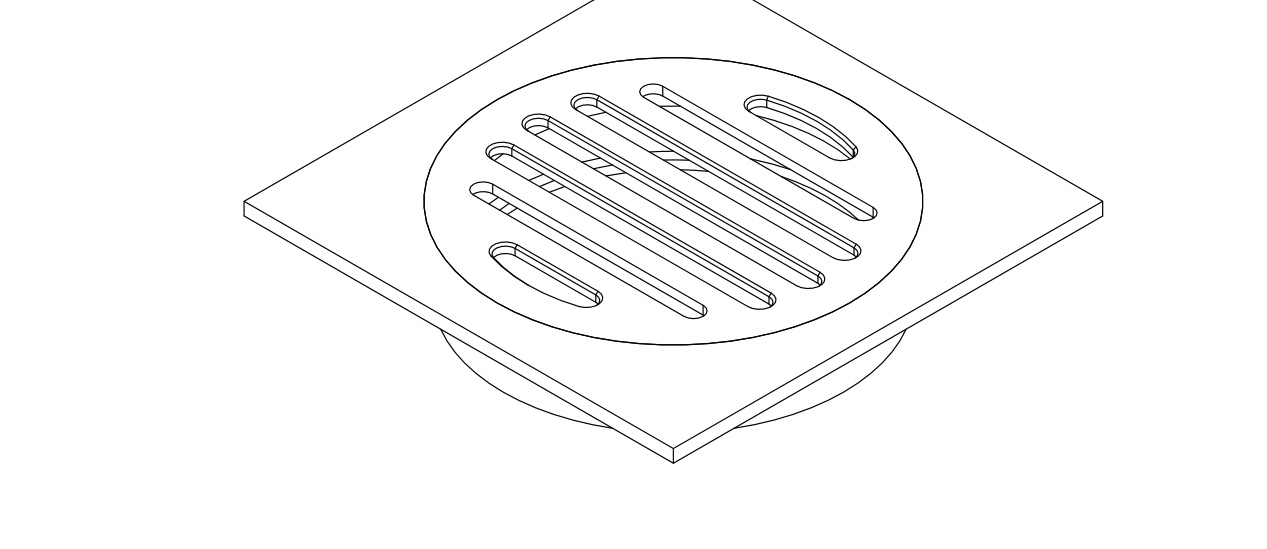
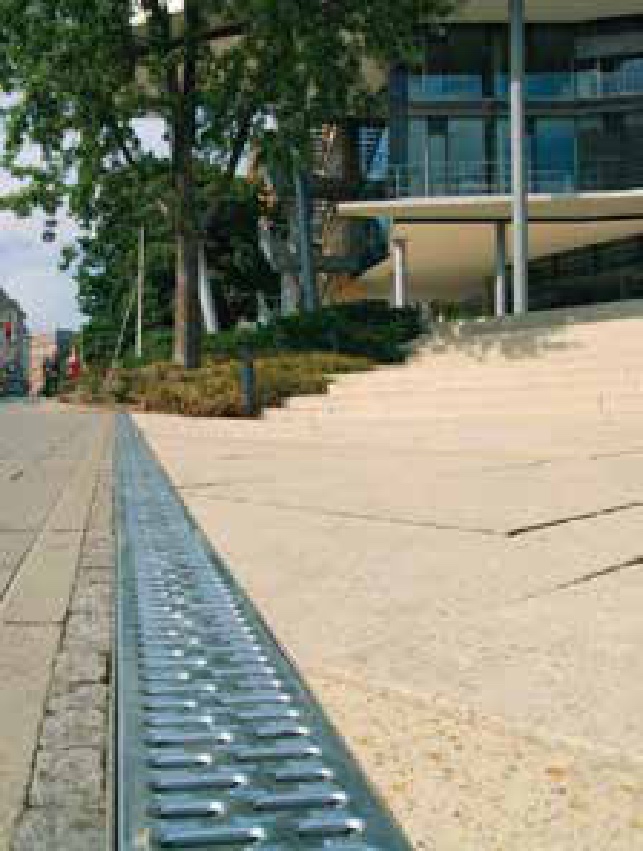
The sink trap is only the first line. The floor around the station needs a drainage point that can be cleaned without removing tile, and a trap that holds enough water to stay sealed. For a wash area handling mineral solids, specify a floor drain, shallow trench drain or drainage channel with a removable basket, a smooth invert and a cleanout on the line. A plastic catch basin can serve as an accessible sedimentation point where the layout allows it. The outlet and the fall should be checked before the screed is poured.
- Water seal: minimum 50 mm, with a trap that can be opened for cleaning. A shallow trap in a work sink loses its seal quickly and lets odour into the room.
- Material: 304 stainless for normal indoor use; 316 where chloride cleaners or coastal air are present. Avoid painted or coated sanitary ware in a room where plaster dust and water are both present.
- Load class: A15 for a pedestrian wash area; B125 where a trolley or cart crosses the grate. A domestic sink area does not need a heavy vehicle class, but the grate must not flex under a full bucket.
- Access: a cleanout or removable trap within reach of the maintenance route. If the only access is through the sink trap, the line will be neglected.
- Layout: keep the horizontal run short, give it a consistent fall and avoid a long flat section after the trap. A drainage system that cannot carry the solids to the outlet should not be asked to store them.
Certification and the handover file
For the drainage components, request CE EN1253 Certified floor drains where the standard applies, WaterMark Certified products where the Australian project requires it, and ISO 9001 Certified manufacturing. Record the trap volume, the outlet size, the water seal depth and the service interval in the handover file. The certification belongs to the product; the service interval belongs to the way the room is used. Both need to be checked at commissioning.
A plaster problem is rarely solved by a better cleaner. It is solved by a trap that catches the solids, a drain that can be opened, and a routine that empties the trap before it saturates. The sanitary ware and the drainage channel can be perfectly specified and still fail if the plaster is allowed to reach them.
Where to start
If a clinic or workshop sink is backing up with white sludge, stop rinsing plaster into the sink, open the trap and remove the deposit, then install a dedicated plaster trap before the line is used again. For the floor drainage around the station, browse plastic catch basins, stainless cleanouts, heavy-duty access covers and trench drain options, or send us the sink layout, the volume of plaster used per week and photographs of the existing pipe. We can help specify a drainage system that catches the solids at the source instead of turning the pipe into a settling tank.