
The complaint comes from a café manager: the floor drain behind the espresso bar smells of sour milk every afternoon. The staff rinse pitchers at the sink, wipe the counter, and mop the floor at closing. By the next morning the smell is back. Hot water and a disinfectant make it worse for an hour, then the odour returns.
Café drainage is not the same as bathroom drainage. Milk is a protein and fat load. Coffee grounds are a fine, heavy solid. Neither belongs in a shallow trap or a channel that is cleaned only with a mop. The smell is a residue problem, and the residue is being spread across the floor rather than removed.
The complaint: clean at opening, sour by mid-afternoon
The scene is a small espresso bar, bakery counter or staff kitchen. A drainage channel runs along the base of the counter or across the washdown area. Milk pitchers are rinsed, cloths are wrung, and the floor is mopped with a solution that goes into the channel.
The first sign is a thin film at the grate edge. The second is a sour smell when the floor is wet. The third is a slow channel at peak service. The staff respond with more hot water and more disinfectant. The film spreads, the smell moves, and the line still has not been cleaned.
Five reasons the smell keeps coming back
- Milk residue is a fat and protein load. Rinsing a pitcher sends a thin stream of milk into the channel. Protein sticks to the wall and the trap; fat sets when the water cools. A mop cannot reach either surface.
- Coffee grounds settle like sand. They are heavy, fine and easy to sweep past the grate. In a channel with low flow they form a layer at the invert and decompose under the water.
- Hot water coagulates the protein. A bucket of hot water can make the film feel clean, but it can also set the protein and push the fat further into the trap. The smell returns as the residue cools.
- The washdown spreads the film. A mop that is dunked in the same bucket carries milk and coffee residue across the floor. The line is not the source of the whole problem; the cleaning method distributes it.
- The channel has no fine screening or accessible trap. A wide grate lets grounds through. A shallow trap holds a small volume and is hard to reach. Without a basket or a removable strainer, the solids stay in the line.
What actually fixes the complaint
Separate the solids at the source. Knock out the espresso puck into a knock box, not the sink or the drain. Scrape pitchers and utensils into a bin before rinsing. Wipe milk residue with a cloth and send the cloth to laundry, not into the wash water. These steps remove most of the load before it reaches the channel.
Add a fine screen or basket at the channel. A wedge-wire or mesh insert in a drainage channel catches grounds at the surface, where they can be emptied into a bin. The screen must be easy to lift and must not rely on a sealed cover. In sanitary ware, the channel is cleaned several times a day; a cover that needs a tool will not be cleaned.
Clean the trap, not just the floor. Remove the grate and strainer, brush the invert and trap throat, and rinse with warm water. Use a cleaner compatible with stainless and free of sticky film. A neutral cleaner and soft brush are usually enough. For biofilm, use an enzymatic dairy cleaner and follow the contact time.
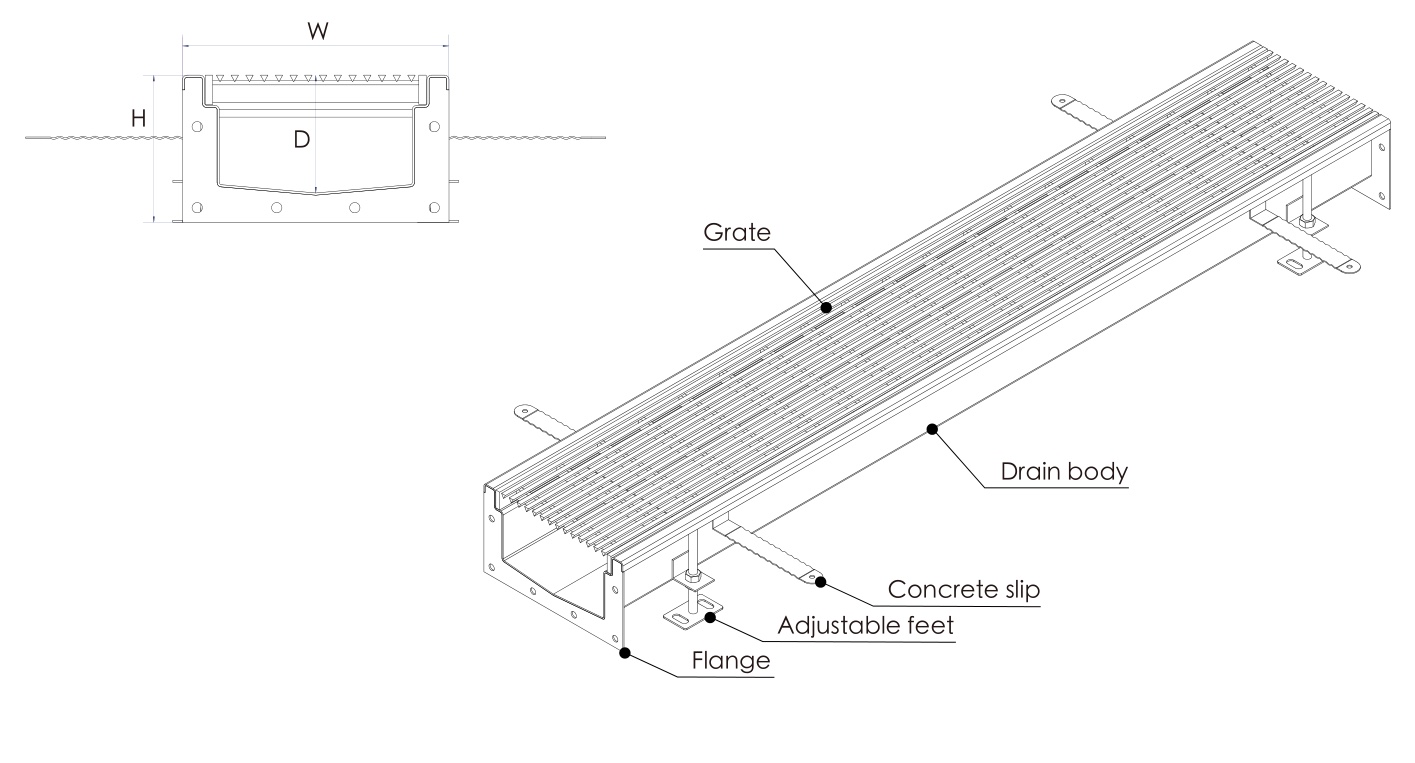
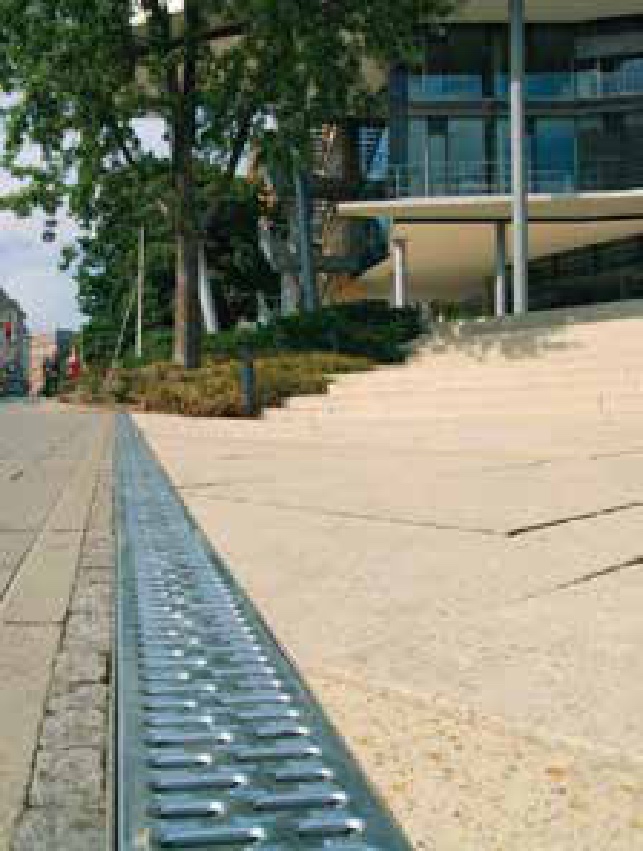
For a new fit-out, choose a channel that can be cleaned. A stainless trench drain with smooth internal welds, a removable grate and a flanged outlet is easier to keep hygienic than a rough channel with a narrow slot. A catch pit or basket at the low point gives the solids a place to stop before the outlet. In a small café, a 100 mm channel may be enough; in a washdown area with several sinks, a 300 mm channel gives more volume and a wider opening for cleaning.
Control the washdown. Use clean water and a clean mop, change the bucket water before it turns grey, and avoid pushing residue toward the channel with a squeegee. The goal is to remove the milk and grounds from the floor, not to send them into the channel.
Numbers that matter
A hygienic stainless channel in the 181 mm width range comes in 1000, 1500 and 2000 mm lengths, with depths of 80 or 100 mm. SS304 suits most café interiors; SS316 is safer with chloride cleaners or coastal air. The outlet should sit below the invert with a gasket or flange, not sealant.
A heavy-duty cleanout of 150×150 mm with a 75 mm outlet gives access for rodding without removing the whole channel. It is a Heavy Duty model for parks, car parks and walkways, which matters with trolleys. The cover should be anti-sliding and removable. A cleanout that is sealed shut is a future complaint.
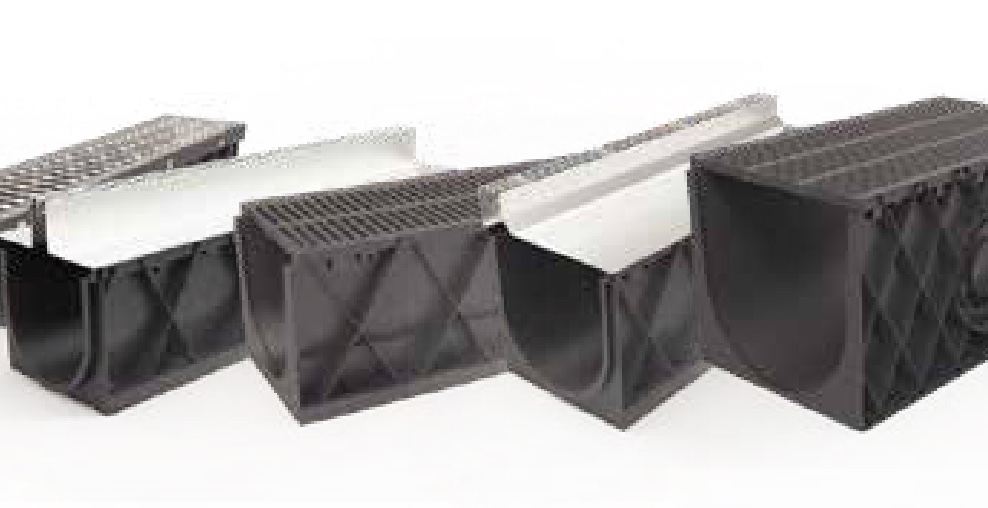
A 300×300 mm HDPE channel is A15 rated and suits high washdown volume. It is not a substitute for a basket: a larger invert gives grounds more places to settle if flow is slow. Size for peak washdown, then screen solids before they reach it.
Fall and trap depth decide whether the drain self-cleans. Keep about 1:100 to 1:150 across the washdown area and make sure the channel has no flat spot. A 50 mm water seal is the common baseline for a floor drain; a shallow trap loses its seal and lets odour through. In sanitary ware, the trap must be reachable for cleaning, or the seal will be maintained by guesswork.
Certification and the handover check
Ask for a trench drain and grate CE marked to EN 1433 where the product is used in a trafficked area, and a floor drain assembly CE marked to EN 1253 where it is in scope. Confirm the supplier and the drainage system work under ISO 9001. WaterMark should be requested only where the product page states it; do not assume every model in a range carries it.
At handover, test the cleaning route. Remove the grate, reach the trap, lift the basket, and rod the outlet from the cleanout. If any step needs a tool that is not part of the maintenance kit, the line will be neglected. Record the channel width, the outlet size, the trap depth and the cleaning frequency in the handover file.
Where to start
If the café smells of sour milk, start by removing the milk and grounds before they reach the channel, then clean the trap and the invert. If the channel is shallow, rough or impossible to open, replace it with a serviceable stainless channel and a reachable cleanout. Browse hygienic trench drains, heavy-duty cleanouts and HDPE channels, or send us the counter layout, the washdown volume and photographs of the existing channel. We can help specify a drainage system that is cleanable at the end of every shift, not just at the end of the week.