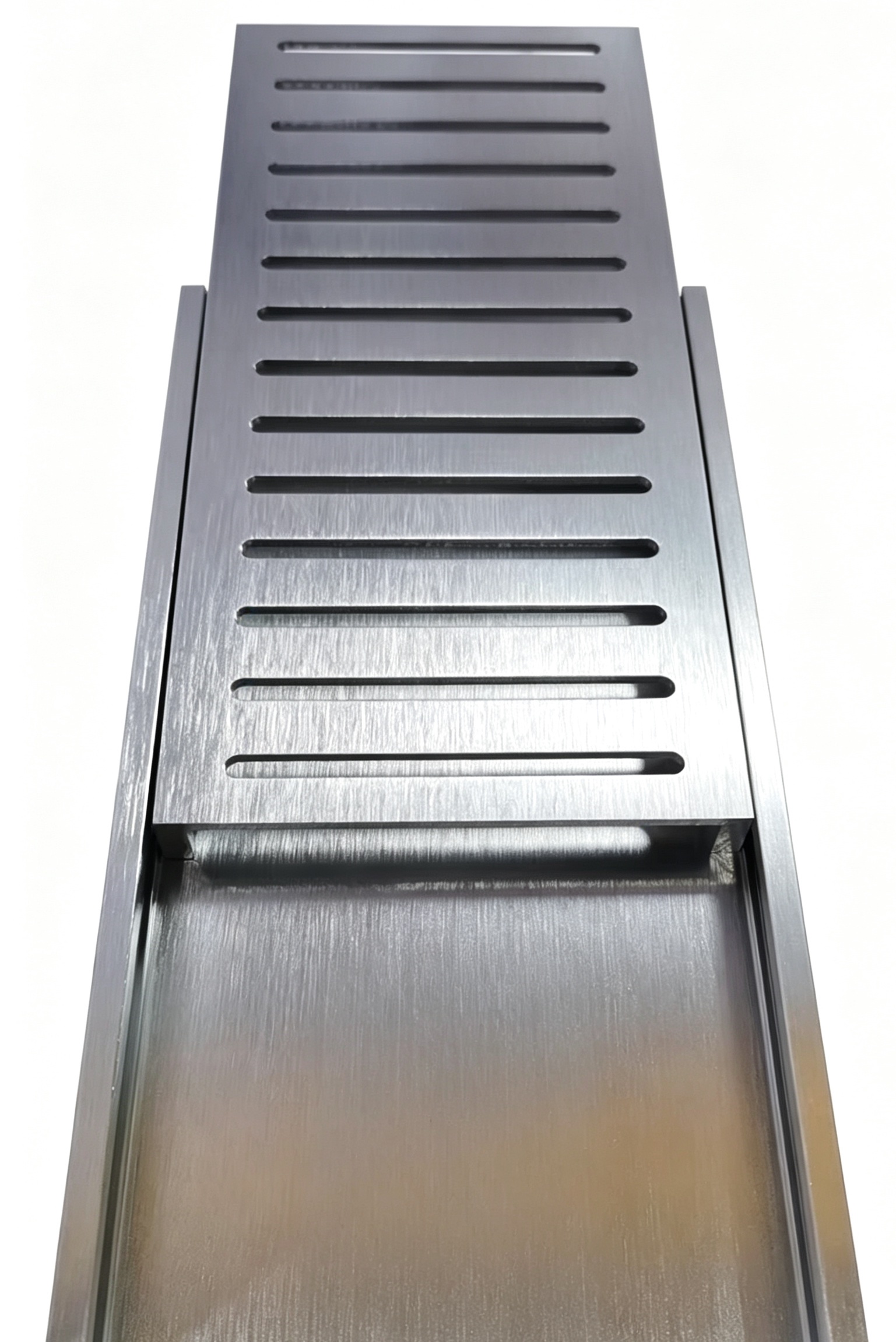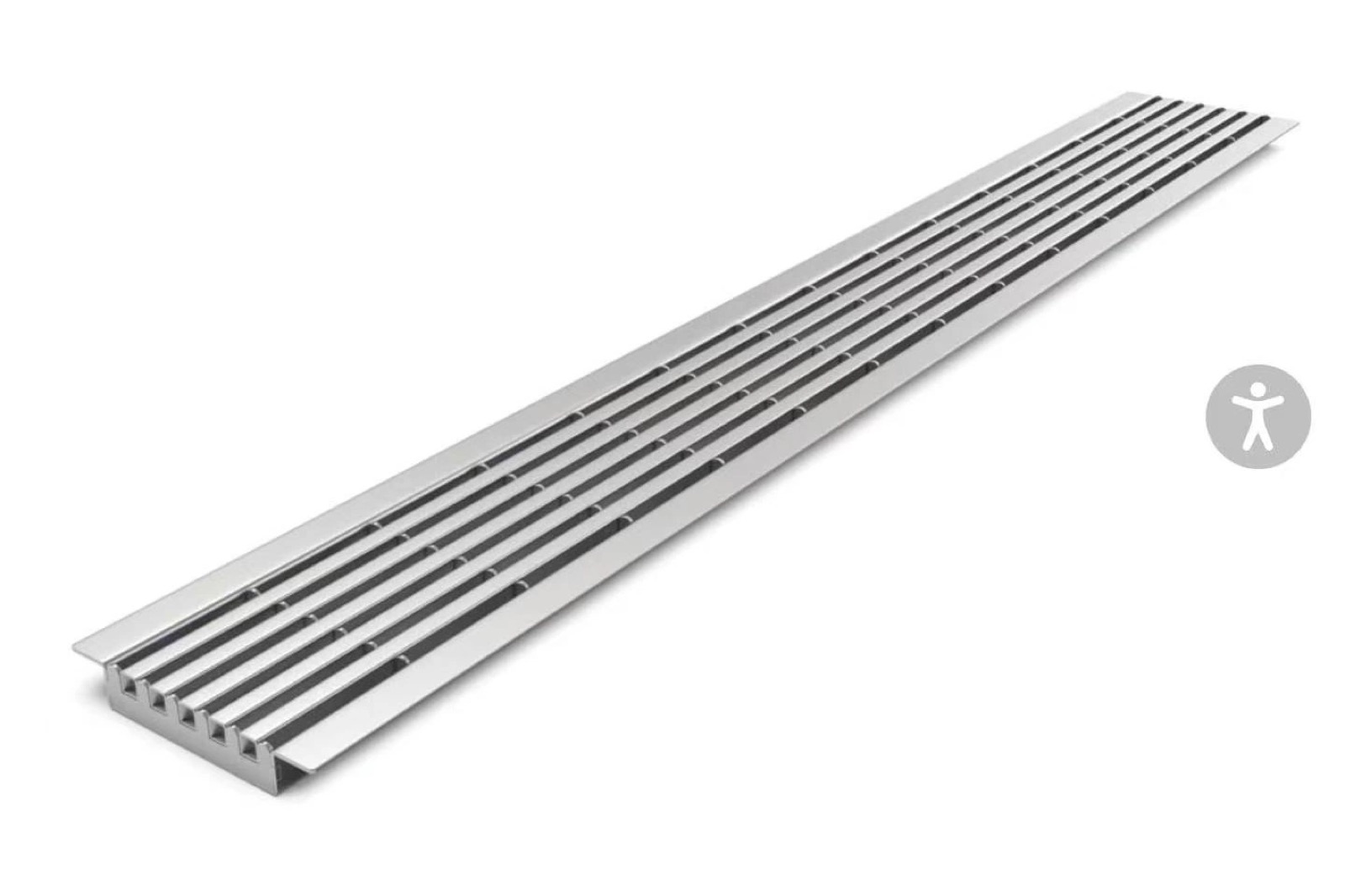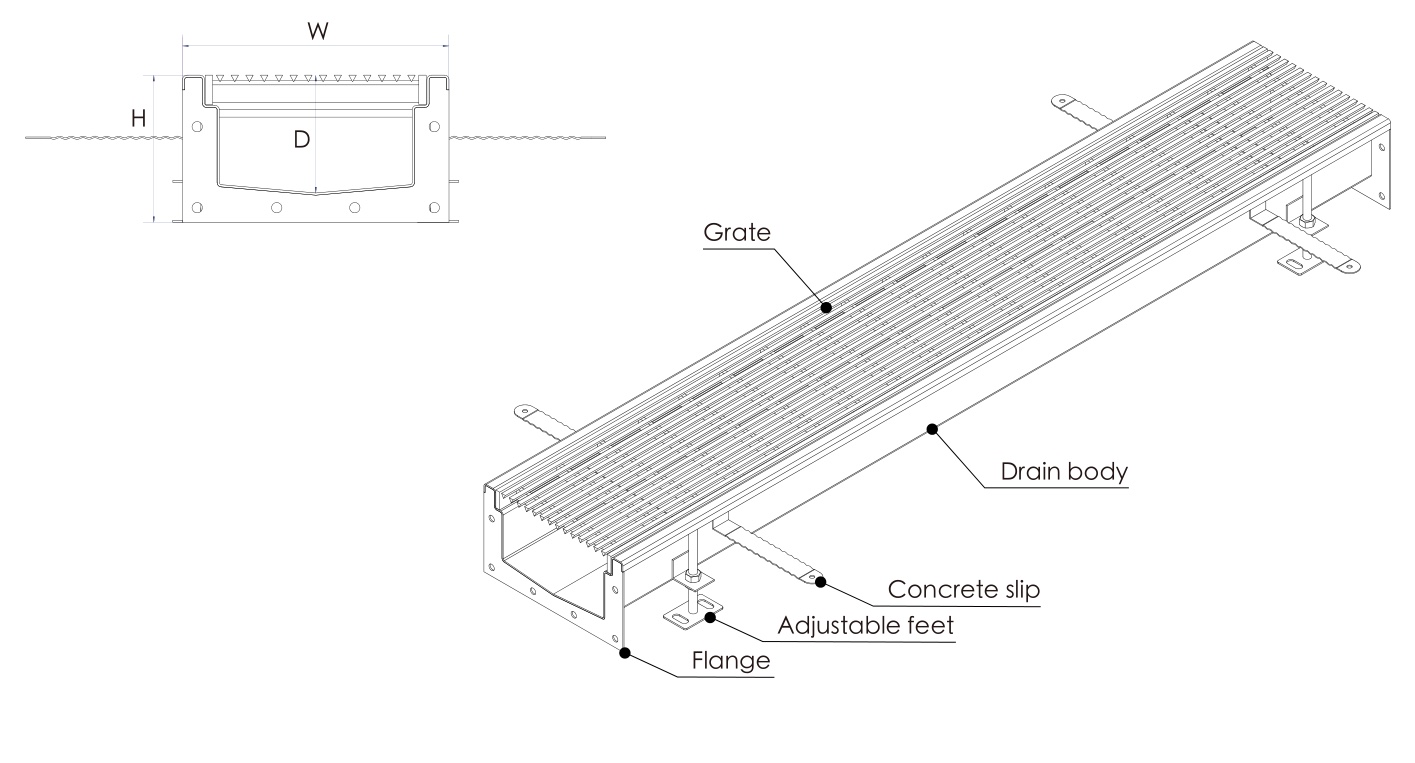

The maintenance fitter tries to remove the cover from an aluminium linear drain to clean the trough. The stainless screws turn a quarter turn and stop. There is no visible rust, no white powder, and no obvious damage. The fitter applies more force, the head rounds, and the cover stays on.
The complaint sounds like a stuck fastener. It is a materials problem. Stainless steel and aluminium are far apart on the galvanic series. In a wet area, with cleaning chemicals and tap water as the electrolyte, the two metals form a small battery. The aluminium becomes the anode and corrodes; the stainless screw becomes the cathode and stays intact. Corrosion products fill the thread clearance, and the screw seizes.
The complaint: no rust, no movement, and a cover that will not come off
The scene is a bathroom, shower room, balcony or a commercial washroom with an aluminium linear floor drain. The cover is stainless or a stainless grate sits on an aluminium base. The installation looked clean and modern. Two or three years later, the screws will not move. In a coastal building or a pool area, the problem can appear much sooner.
The fitter often diagnoses the wrong cause: stainless "cannot rust" and aluminium "cannot corrode". Both are half true. The stainless screw does not rust in the ordinary sense, but it can gall and seize. The aluminium frame does corrode, and the white or grey oxide is often hidden inside the thread or under the cover.
Six reasons the screw seizes
- Dissimilar metals in a wet environment. Stainless and aluminium form a galvanic couple. Water, salt and cleaning chemicals complete the circuit. The aluminium anodes away at the thread.
- Chlorides accelerate the cell. Coastal air, swimming-pool water, bleach and some bathroom cleaners increase conductivity and attack the aluminium. A frame that is fine inland can fail quickly at the coast.
- Aluminium oxide fills the clearance. Aluminium oxide is less dense than the metal it replaces and occupies more space. The thread binds, and the screw loses the clearance it needs to turn.
- The wrong fastener was used. Zinc-plated steel screws are anodic to both stainless and aluminium and can corrode sacrificially. A mismatched screw can seize even when the frame material is correct.
- No isolation or lubricant. A stainless screw threaded directly into aluminium, with no isolating washer or anti-seize compound, has no barrier at the joint. The thread is the weakest point.
- The repair repeats the materials. The fitter replaces the seized screw with another stainless screw into the same aluminium hole. The galvanic cell is rebuilt, and the next service call has the same outcome.
What actually fixes it
The durable fix is to remove the dissimilar-metal joint from the wet zone. Specify an all-stainless drain body and grate where the cover is expected to be removed for cleaning. A stainless trench drain with a stainless frame and stainless cover has no galvanic couple at the thread, provided the fasteners are also stainless and the grades are compatible. A drainage channel in a wet room should be all stainless for the same reason. Sanitary ware buyers often choose a finish first, and a trench drain is the safer default.
Where aluminium is chosen for weight, cost or finish, isolate the fastener. Use a stainless screw with an isolating washer, apply a suitable anti-seize compound to the thread, and keep the detail dry. Do not rely on a bead of silicone around the cover; it traps water and can make the situation worse. In a shower or a commercial washroom, an aluminium body should be treated as a dry-zone product, not a wet-zone one.
When removing a seized screw, do not use an impact driver on an aluminium frame. The frame is softer than the screw and the head, and the impact can crack the extrusion. Use penetrating lubricant, a correctly sized driver, and a screw extractor only after the head is damaged. If the frame is cracked, replace the cover and frame as a set.
For new projects, choose material by the cleaning regime. A bathroom cleaned with a mild neutral cleaner can use 304 stainless. A pool area, coastal site or kitchen with chlorinated sanitisers should use 316 stainless. An aluminium linear drainage channel can suit a dry balcony or a decorative slot drain, but it should not be the default in a wet room.
Numbers that matter
Grade is the first number. 304 stainless is the general-purpose choice; 316 adds molybdenum and is more resistant to chlorides. The difference matters at the coast and around pools. Aluminium alloy is lightweight and easy to extrude, but it is anodic to stainless in the galvanic series. A 2 mm aluminium wall is not a substitute for a stainless body in a wet zone.
Fastener grade should match the body. Use A2 or A4 stainless screws with the appropriate strength for the cover, and check that the screw is not a zinc-plated steel item supplied as a cost reduction. The thread should be clean and dry before assembly, with anti-seize applied where the materials differ. Tighten to the manufacturer's torque, not by impact. In sanitary ware, finish is often sold before the fixing detail.
Load class still applies. A15 is for foot traffic; B125 for light vehicles; C250 for heavier traffic; D400 for roads. A decorative aluminium cover that is not rated for the traffic will bend, and shear loads the screws. A floor drain in a wet room needs the same check.
Maintenance matters. In a public washroom, remove and clean the cover at least quarterly, inspect the threads, and replace any screw that shows binding. A drainage system that is never opened cannot be inspected, and a screw that is never turned will eventually stop turning.
Certification and verification
Ask for a drain and grate CE marked to EN 1253 or EN 1433 where the product is in scope, and supplied under an ISO 9001 system. For Australian projects, ask for WaterMark where the product page states it. Check the material certificate for the body and the fastener, not only the cover. On delivery, confirm the stainless grade with a magnet and a grade test if the project requires it, and check that the screws are stainless rather than plated steel.
Do not accept a finish warranty that excludes corrosion at the fasteners. The joint between screw and frame is part of the product, not an installation accessory. If the frame is aluminium and the screw is stainless, the assembly has a known galvanic risk.
Where to start
If a cover screw will not move, stop before the head rounds. Photograph the frame, note the materials, and check whether the body is aluminium or stainless. If the frame is already cracked or the thread is stripped, replace the cover and frame as a set. For a new wet area, choose an all-stainless assembly or isolate the fastener properly. Browse stainless linear drains, wedge-wire grates and stainless trench drains, or send us close-up photos of the frame and screw with the project location and cleaning chemicals and we will recommend a material for the whole drainage system.