
The complaint usually arrives on Monday morning, before the first customer walks in. A cafe, a small office, a clinic or a village hall was cleaned on Friday afternoon. The floor was mopped, the sinks were flushed and the drains looked fine. By Monday, the back kitchen smells of sewage, the cleaning cupboard has a damp, metallic odour, and someone has poured half a bottle of bleach down the floor drain without solving anything.
This is not a grease problem and it is not usually a blocked pipe. It is a trap-seal problem created by the way commercial premises are used: five days of steady traffic, then sixty hours of silence. The same building that smells fine on Friday can lose its water seal by Saturday night and refill the drain with sewer gas by Sunday. The drainage system has not failed; the water that should sit in the trap has simply gone.
The complaint: the smell comes back every Monday
The pattern is familiar from customer enquiries. A member of staff reports that the smell is worst in the morning, disappears after the kitchen starts working, and returns the following Monday. Cleaning chemicals make it worse for a day because the fragrance masks the gas, then the smell returns. A plumber rods the line, finds no obstruction, and tells the site manager the drain is clear. Both statements can be true: the pipe is clear and the trap is dry.
In a closed building, three things happen at once. Water evaporates from the trap surface, warm extract air pulls moisture out faster, and the drain receives no new water to replace what is lost. A 25 mm seal in a warm, negatively pressurised room can disappear in a few days. A 50 mm seal buys more time, but it is not unlimited. If the trap is shallow, if the drain is rarely used, or if the extract fan runs all weekend, the seal will go.
Five hard failures behind a dry trap
- The trap is too shallow for the building. A 25 mm water seal is common in cheap floor drains. It is adequate in a house with daily use, but it is a poor match for a commercial kitchen that closes for two days. The seal volume is small and the surface area is large, so evaporation wins.
- No trap primer and no priming routine. Many premises rely on someone remembering to pour a bucket of water down the drain. That routine survives until the person who remembers goes on leave. A trap primer or a scheduled priming point makes the refill part of the building, not part of a person's memory.
- Extract air pulls the seal out. A strong kitchen extract or a badly balanced toilet extract can depressurise the room. The trap then siphons or evaporates faster, and the smell appears while the building is occupied, not only after a weekend. A smoke test or a simple pressure check will show whether the room is pulling air through the drain.
- Grease and biofilm hold the smell. A dry trap is only half the problem. Grease, food residue and biofilm on the channel walls continue to produce odour when water returns. The drain can pass water and still smell because the surface is colonised. Cleaning must reach the trap and the channel walls, not only the grate.
- The wrong grate and body for the duty. A light grate on a kitchen floor, a shallow body under a heavy traffic route, or a plastic body in a hot washdown area will all fail early. The smell is the symptom; the specification is the cause.
What actually fixes it
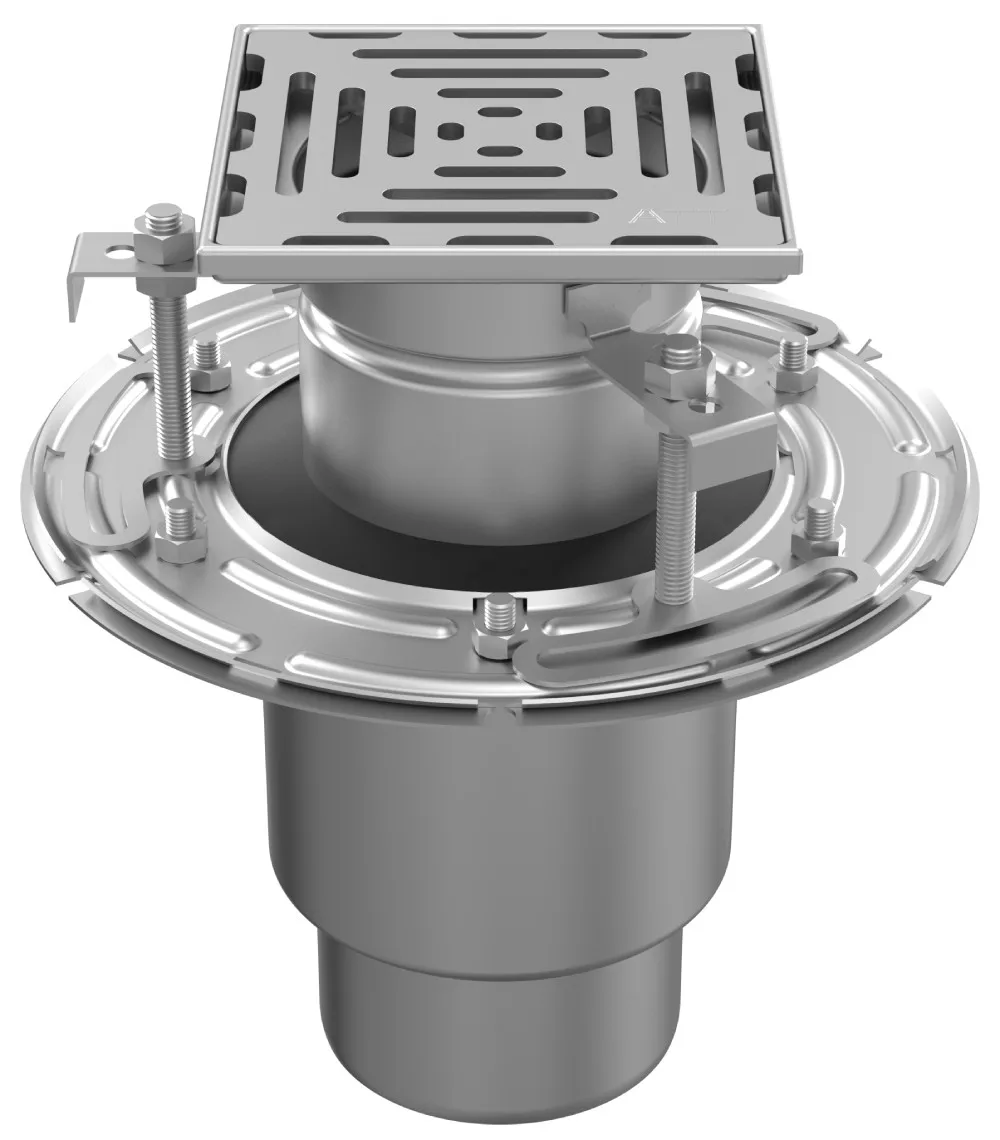
Start with the water seal, then make the refill automatic. For commercial kitchens, plant rooms, bin rooms and staff washrooms, specify a floor drain with a 50 mm trap where the building use allows it, and a body deep enough to hold that seal. A cleanout with a removable cover makes the trap accessible for cleaning and inspection. If the drain is in a remote plant room or a seasonal facility, add a trap primer or an anti-dry valve so the seal is maintained between use cycles.
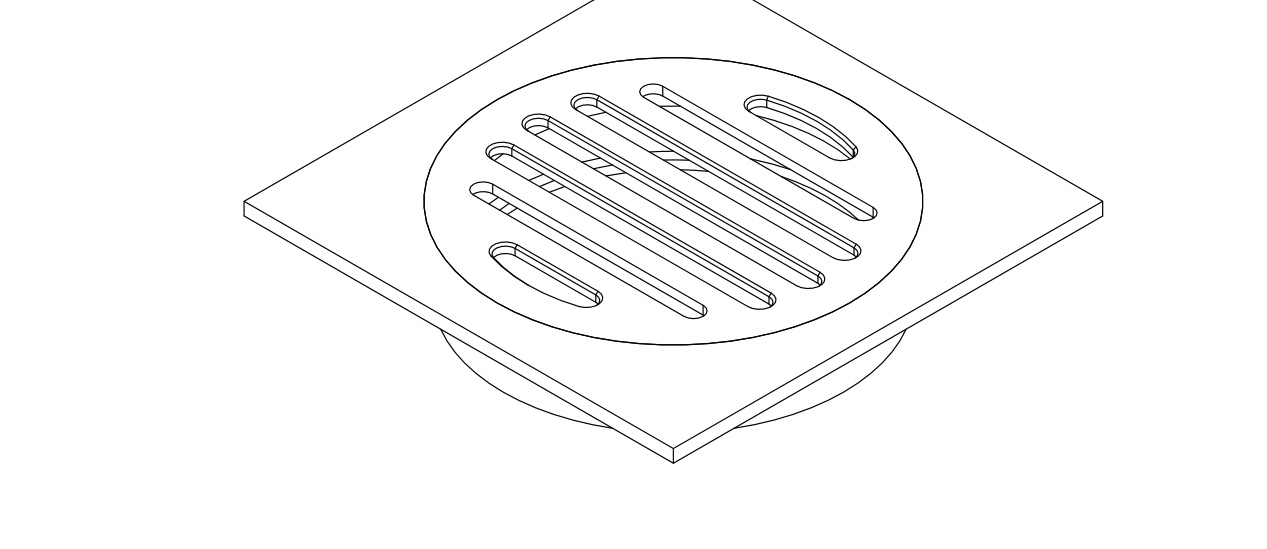
The drain body should be stainless steel 304 for most interior duties and 316 where chloride cleaners, coastal air or salt are present. The grate should match the load: A15 for foot traffic, B125 for trolleys and light vehicles, C250 for heavier traffic. A drainage channel with a removable grate and a smooth internal profile is easier to clean than a deep, narrow trough. In food areas, avoid ledges and dead corners where residue can sit.
For a closed premises, the maintenance routine is simple and unglamorous. On Friday, fill every trap with clean water after cleaning. On Monday, check the trap level before the kitchen opens. Once a month, lift the grate, brush the walls and check the trap for grease. If the building has a trap primer, test it on the same schedule. If it does not, a five-litre watering can and a marked route is a cheap interim measure.
Numbers that matter
A 50 mm water seal is the useful minimum for a drain that may sit idle for several days. A 25 mm seal is not a commercial specification for a building that closes. The drain outlet should be sized to the peak flow, not the average: a DN50 outlet is common for a single kitchen sink or washdown point, while a drainage channel serving a bank of sinks or a washdown bay needs a larger outlet and a fall that keeps water moving. A floor fall of about 1:50 to 1:80 towards the drain is typical for wet areas; flat floors and reverse falls leave water standing, which feeds biofilm. The grate open area matters too: a fine slot looks neat but blinds quickly under food waste, hair or grit, while a wider grate passes solids and relies on a basket or catch pit downstream.
Certification and verification
For a commercial project, ask for a drain that is CE marked to EN 1253 where the product is in scope, and supplied under an ISO 9001 quality system. For Australian work, ask for WaterMark where the product page states it. Certificates should be current and should name the product family, not only the factory. On site, verify the body material, the trap depth, the outlet size and the grate load class against the submittal. A photograph of the open trap before the floor is closed is cheap insurance.
The sanitary ware around the drain matters as much as the drain itself. A failed joint, a missing gasket or a tile lip that holds water will undo a good body.
Where to start
If your building smells on Monday, do not begin with bleach. Check the trap level, check the extract, and check the cleaning routine. Then specify a drain that can hold a deep seal, be cleaned without removing the floor, and be refilled automatically. Browse our commercial floor drains and cleanouts, or send us the room use, the number of fixtures and the closing pattern, and we will propose a drainage system that survives the weekend.