
The bin room that smells before the bins do
A residential or commercial bin store is washed down at least once a day, sometimes twice in summer. The hose goes across the floor, the leachate from the bins runs ahead of the water, and the floor drain at the low corner takes both. By August the room smells of rotting fruit and drain, the floor stays wet in the corner, and the caretaker is told to "clean it more often". The drain is not under-cleaned; it is under-specified.
Bin room drainage is a small area with a heavy duty: organic load, grit from wheels, cleaning chemicals, and a floor that must dry between washes. The drainage system has to pass a hose flow rate while catching the solids that cause the smell.
Why the bin room drain fails
- Too small a channel for the washdown flow. A 100 mm light-duty channel is fine for a patio, not for a 4-bar hose emptying a bin store. Water spreads sideways before it reaches the outlet.
- No basket, or a basket that is never emptied. Leachate carries labels, wrap, cigarette ends and food waste. Without a basket these reach the trap and stay there, and a trench drain without a basket is simply a trap with a long approach.
- A trap that is inaccessible. The trap is the source of the odour, and if it needs a bar and two people to open, it will not be opened.
- Insufficient fall. A bin room floor is often poured flat to the door. Water ponds, the pond dries, and the residue becomes the next odour.
- The wrong material for daily chemical washdown. HDPE is the right choice for a bin room: it does not corrode, it tolerates the cleaners, and it is light enough to install on a refurbishment. Stainless is the right choice where the floor is also trafficked by heavy bins or where the building standard demands it.
- Wheel loads ignored. A 240 L bin on castors concentrates load at four points. A plastic grate that was fine on day one can crack at the castor path within a year.
| Requirement | Common failure | Specification | Check at handover |
|---|---|---|---|
| Take washdown flow | Water bypasses a small channel | 300 × 300 mm channel, 1 m modules | Hose test at full flow, 10 minutes |
| Catch solids | Wrap and food waste reach the trap | Basket or trash box upstream of outlet | Basket removable without tools |
| Control odour | Accessible trap never cleaned | Liftable grate, removable trap core | Trap opened and refilled during test |
| Drain the floor | Flat corner ponds | 1:50 fall to channel, no ponding | No standing water 30 minutes after wash |
| Survive cleaning | Corrosion or stress cracking | HDPE body, compatible grate, correct sealant | Chemical list checked against data sheet |
| Survive bins | Cracked grate under castors | Load class matched to traffic, not to price | Grate flush, no rock under foot |
The table is a handover script. Each row can be tested in the room with a hose, a torch and a pair of gloves, and each failure has a visible symptom within one week of use.
Choosing the channel and the grate
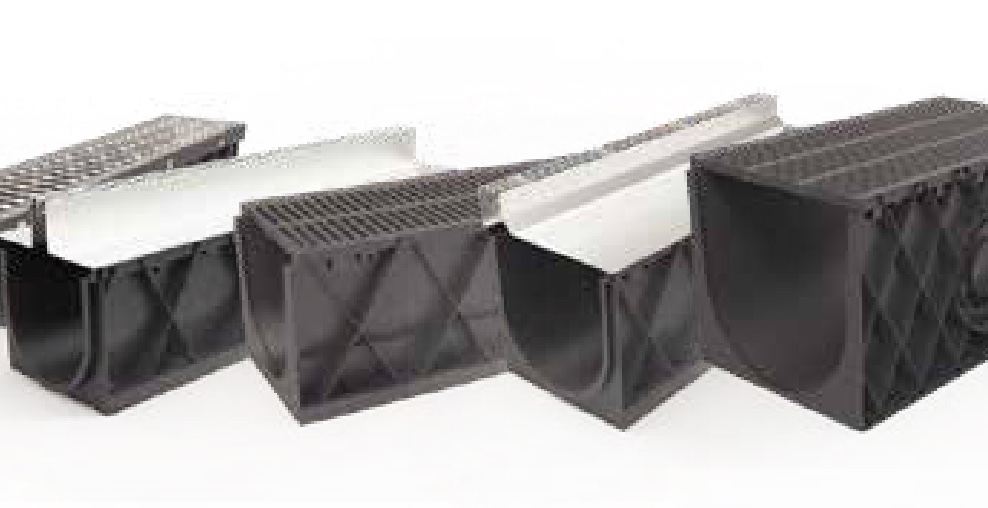
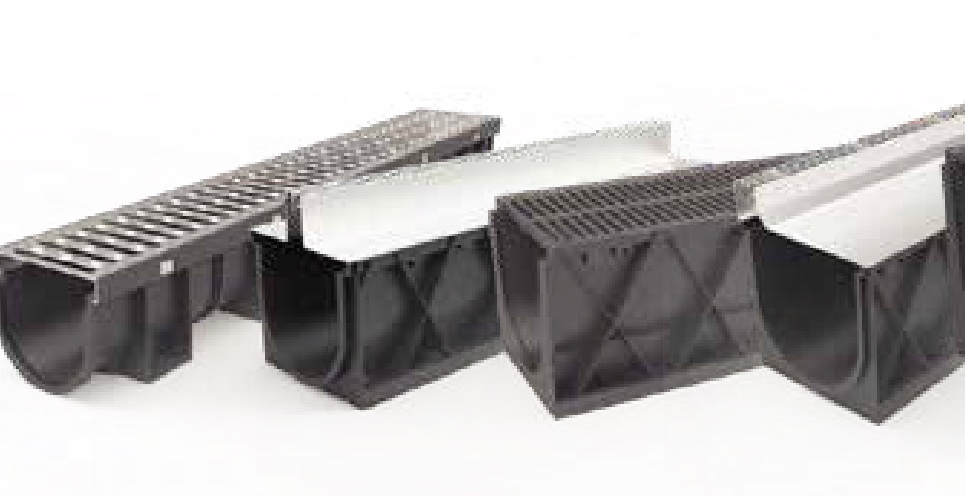
- HU3000 is 300 × 300 mm internal, 360 × 360 mm outer, 1 m modules, HDPE, A15, for commercial and industrial paved surfaces. The 300 mm width gives the washdown water somewhere to go and keeps the velocity high enough to carry grit.
- HU1000 is not a sanitary ware finish; it is a working surface for a small bin cupboard, and it should be sold as one. is 100 × 45 mm internal, 145 × 80 mm outer, 1 m modules, A15, for lighter pedestrian areas. It is the wrong choice for a busy bin yard with castored bins, and the right choice for a small residential bin cupboard with a mop and bucket.
- A stainless cleanout such as CFH-150A, 150 × 150 mm with a 75 mm outlet and an anti-sliding heavy-duty cover, gives the maintenance team a proper access point at the low end.
- Fall: 1:50 is the working target for a bin room floor, and the whole drainage system should be checked for ponding before handover. A 1:80 fall is acceptable only where the floor is short and the channel is at the door; anything flatter ponds.
- Grate: choose a grate with an open area that passes mop water but not cigarette packets, and check that it can be lifted by one person with a hook.
Layout that keeps the room dry
Put a 300 mm trench drain along the wall where the bins stand, not across the middle of the room: leachate runs out of the bins at the wall, and that is where it should be caught. Slope the floor from the back wall to the channel, and from the door to the channel, so the door threshold is high and dry. Keep the drainage channel at least 150 mm from the wall to allow a brush and a squeegee to reach the invert, and terminate the run with an end cap rather than an open end that collects debris.
This is utility drainage, not bathroom sanitary ware: the finish matters less than the body, the fall and the access. The floor drain should be the last line of defence, not the first. Where the room is below the sewer line, a sump and pump are unavoidable; size the sump for one washdown, not for the average, and fit a high-level alarm. A pump that cycles twice per wash is cheaper than a flood that reaches the corridor.
Maintenance that takes five minutes
Empty the basket after every wash. Scrub the channel invert weekly with a stiff brush and a compatible detergent, not just a hose. Open the trap monthly, remove the core, clean it and refill the seal. Check the grate for cracks at the castor path quarterly, and replace a cracked section rather than patching it — a cracked grate drops a piece into the channel and blocks the outlet.
Certification and traceability
Our drainage range is CE EN 1253 certified for floor drains, EN 1433 compliant where a channel is specified to that standard, WaterMark certified on the covered models, and manufactured under ISO 9001. Ask for the certificate that matches the model and the market, and check that the grade and load class on the certificate match what is being supplied — a certificate for a different body size is not evidence for this one.
Next step
Send us the room size, the number and size of bins, the washdown method and whether the floor is new or being refurbished. We will specify the drainage channel width, the grate and the cleanout so the drain handles the washdown and the smell stops coming back before the bins do.