
The floor that smells like a bakery and a sewer at the same time
Every brewery has the same morning: the mash tun is emptied, the spent grain is shovelled toward the drain, the hose comes out, and half of it ends up in the trench drain instead of the grain bin. By mid-afternoon the floor smells sweet and sour at once, the floor drain runs slow, and by the end of the week the floor drain has a grey cap of fermented grain over it. The brewer cleans it with a squeegee and a bucket, and the same thing happens next brew day.
The complaint is not "the drain is blocked", and the drainage system is asked to separate sugar, fibre and caustic at the same time. It is "the drain is blocked every week, the floor never dries, and the inspector can smell it at the door". Brewery drainage fails because the waste is not ordinary dirt: it is sugar, fibre, yeast and caustic cleaning chemistry, arriving warm and in bulk.
What actually gets into a brewery drain
- Spent grain. About four parts water to one part grain, and it floats. It passes a 10 mm slot easily, then settles in the channel invert and the trap, where it ferments.
- Yeast and trub. Fine solids that do not settle like sand; they form a biofilm on the channel wall and in the trap seal, which is where the sour smell lives.
- Sugar and wort. Soluble, invisible, and food for everything above. A floor that looks clean can still be sticky, and sticky floors grow.
- Caustic and acid cleaning agents. CIP rinse water at elevated temperature, plus peracetic acid and chlorine-based sanitisers. This is a chemical duty, not just a water duty.
- Glass, caps and labels. Small hard solids that jam a basket and chip a pump impeller.
- Hot water. Washdown at 60–80 °C is normal in a brewery, and it is the temperature that decides whether a plastic channel is suitable at all.
| Waste | Behaviour in the drain | Design response | Maintenance point |
|---|---|---|---|
| Spent grain | Floats, then settles and ferments | Pre-screen at the source; basket at the channel; 5–10 mm slot | Empty basket at every brew, not every shift |
| Yeast / trub | Biofilm on walls and trap | Smooth 304/316 channel, accessible trap | Weekly enzymatic clean, not just water |
| Wort / sugar | Invisible, sticky, fermentable | Slope to drain, no ponding, rinse to drain | Final rinse until water runs clear |
| Caustic / acid | Attacks sealant and lower-grade steel | 316 body, EPDM gaskets, chemical-resistant grout | Rinse after CIP; check gaskets quarterly |
| Glass / caps | Jams basket, damages pumps | Coarse basket upstream of outlet | Empty before washdown |
| Hot washdown | Softens or deforms plastics | Stainless channel where temperature exceeds plastic rating | Check channel rating against washdown temperature |
Read the table by asking where each fraction is removed. Grain and glass should never reach the trap; yeast and sugar should never stay in the channel; chemicals should never sit on a gasket. A drain that tries to do all four jobs in one body does none of them well.
The specification that survives brew day
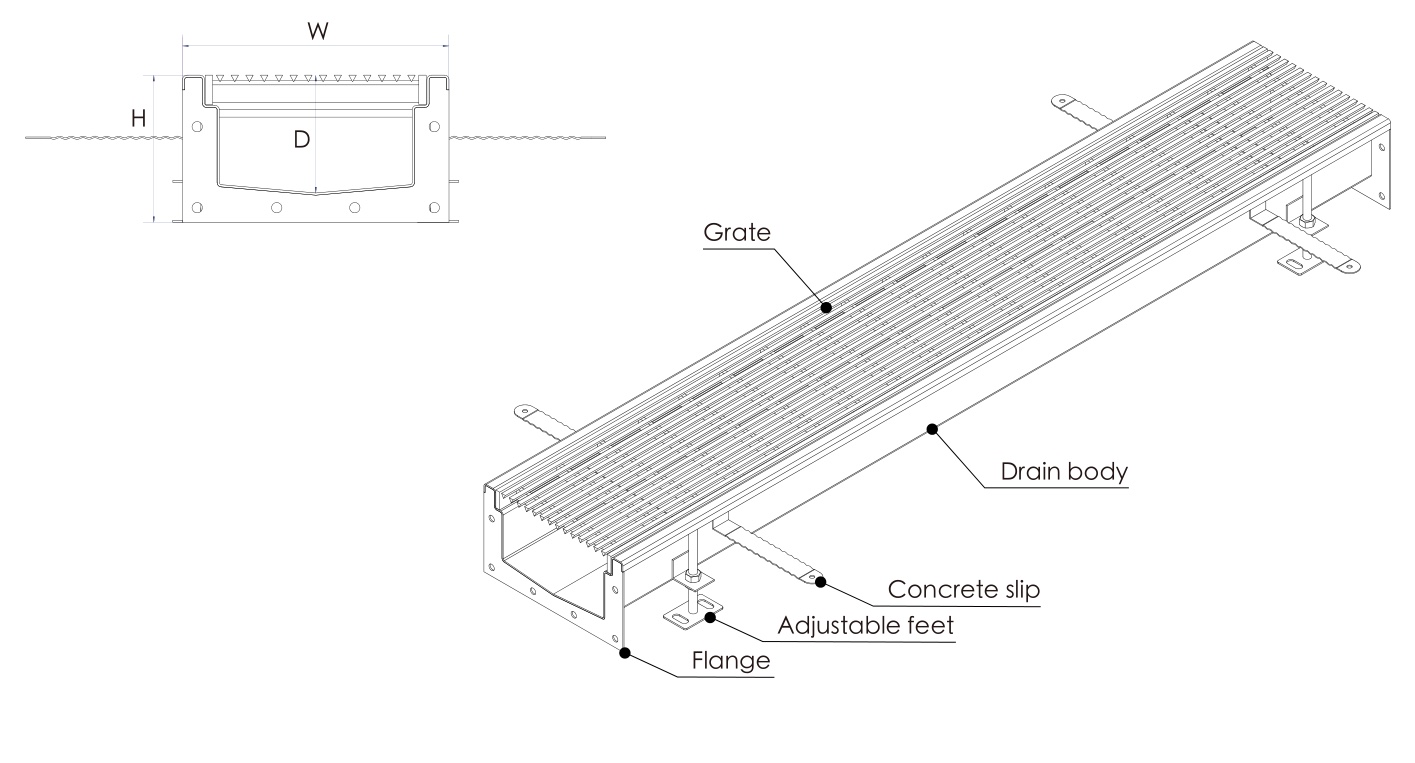
- Stainless channel, 304 or 316. TR80DE is 181 mm wide, 100 mm high, in 1 / 1.5 / 2 m lengths, with corner, branch, trash box, end cap and outlet accessories. The trash box is the part that catches grain before the trap does.
- 316 where chlorinated sanitisers and coastal humidity are both present. The same grade logic applies to sanitary ware in a washroom, but the chemical and thermal load here is higher. Stainless in a brewery is not bathroom sanitary ware: the duty here is chemical and thermal, and the grade has to be chosen for it. 304 is adequate for many brewhouses; 316 earns its cost where chlorine exposure is routine. Specify the grade, not "stainless".
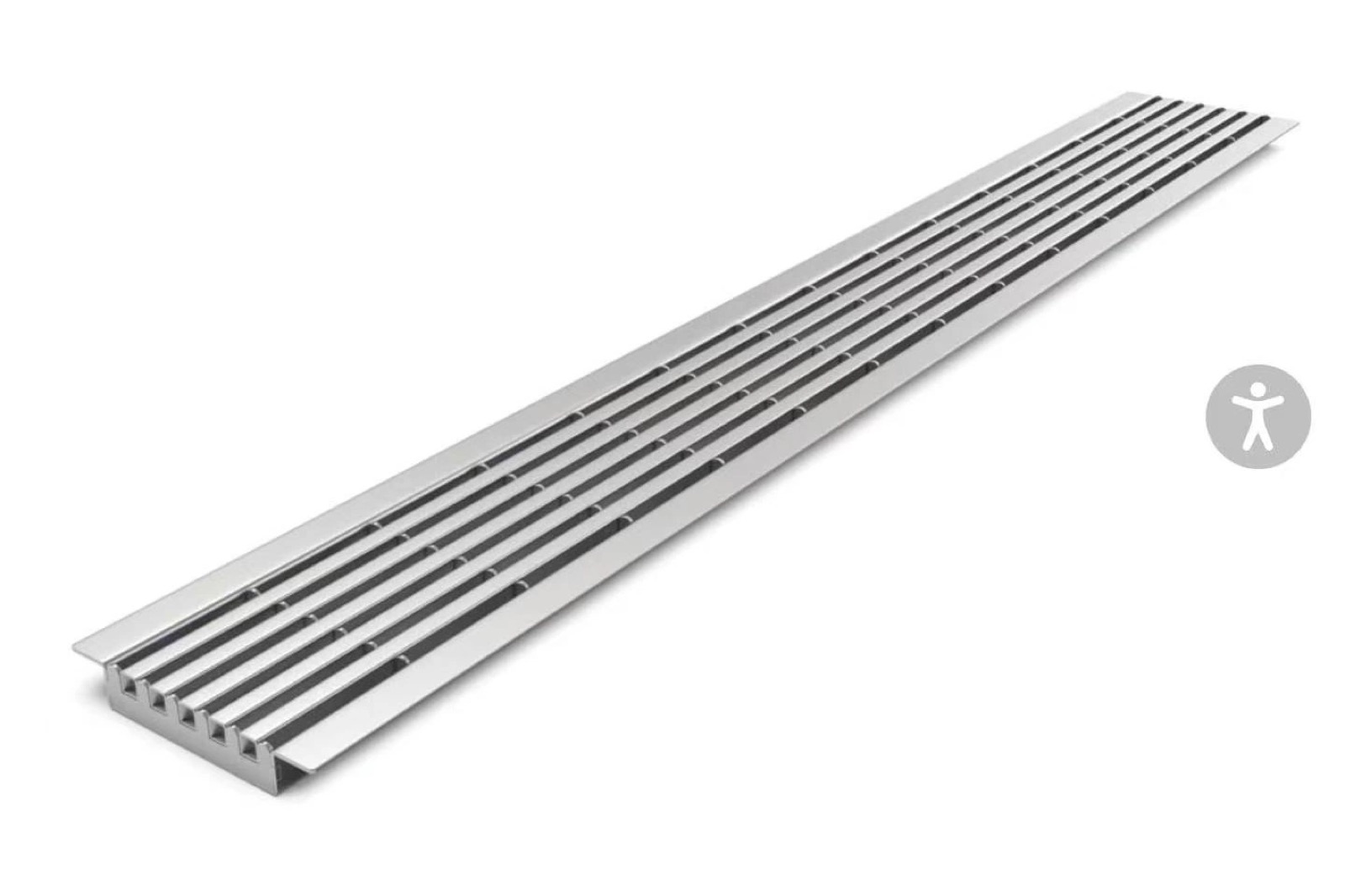
- A wedge-wire grate rather than a punched plate. HW05W has 5 × 4 mm V-wire, 100 / 200 / 300 mm widths and made-to-measure lengths, in 304 or 316. A V-profile passes liquid while the flat top keeps grain from wedging in the slot.
- A real cleanout. CFH-150A is a 150 × 150 mm stainless cleanout, 75 mm outlet, anti-sliding cover, heavy duty. It gives the brewer a rodding point that is not the grate.
- Falls of 1:50 to 1:80 in the brewhouse floor, with no flat spots between the channel and the wall. Standing water is the substrate for the next biofilm.
- Traps that can be reached without lifting a grate with a bar. Access is a specification item, not a luxury.
Cleaning sequence that stops the weekly blockage
- Dry-sweep spent grain into the bin before the hose starts. Every kilogram that does not enter the drain is a kilogram the trap does not have to pass.
- Remove the basket and empty it. Rinse the basket away from the channel, not over it.
- Flush the channel from the high end with warm water, then brush the invert with a soft brush; do not pressure-wash biofilm toward the outlet.
- Clean the trap and refill the water seal. A dry trap after washdown is an open pipe to the sewer, and that is the smell the inspector records.
- Rinse with clean water until the outlet runs clear, then squeegee the floor dry. A dry floor is the cheapest odour control available.
- Log the clean. Brewery hygiene audits look for a record, not a promise.
What not to specify
A plastic channel in a brewhouse is a false economy, and a trench drain selected for a car park is the same mistake in metal: hot washdown, caustic and wheeled pallets are three separate reasons to choose stainless. A 100 mm slot grate over a grain-heavy floor will pass grain and block at the trap; choose a basket and a narrower slot. And do not put a shallow seal trap under a floor that receives 60 °C water — the seal evaporates faster than anyone expects, and the odour complaint arrives before the next brew.
A drainage channel with a basket at the inlet is the working detail: the basket takes the grain, the channel takes the water.
Certification and traceability
Our drainage range is CE EN 1253 certified for floor drains, EN 1433 compliant where a channel is specified to that standard, WaterMark certified on the covered models, and manufactured under ISO 9001. Ask for the certificate that matches the model and the market, and check that the grade and load class on the certificate match what is being supplied — a certificate for a different body size is not evidence for this one.
Next step
Tell us your washdown temperature, the cleaning chemicals, whether pallets or drums cross the floor, and the volume of spent grain per brew. We will size the drainage channel, the grate slot and the basket so the grain stops at the basket and the drainage system stays open through the brew.