
The complaint arrives at the hotel front desk, not the maintenance office. A guest in a public washroom catches a heel between the bars of a floor drain, stumbles, and twists an ankle. The duty manager looks at the drain, sees that it is clean and unblocked, and concludes that nothing is wrong.
Nothing is wrong except the part that matters: the opening between the bars is wide enough to accept a heel, and the grate sits where people walk in heels every day. This is a common complaint in hotels, theatres, airports and schools. It is rarely treated as a specification issue because the drain still works.
The complaint: the drain works, but the floor is not safe to walk on
The scene is usually the same. A drainage channel runs across the washroom entrance or in front of the basins. The grate is a bar-type or slot-type cover with openings wide enough to pass water quickly. A guest steps across it, the heel lands between two bars, and the foot stops while the body continues. The result is a stumble, a broken shoe or a fall. In a wet area, the consequence is worse because the floor is already slippery.
There is a residential version too. A dog's claw, a child's toe or a stiletto heel catches in a shower grate. The owner asks for a "safer grate" but cannot describe what safer means, so the supplier sends the same spacing in another finish.
Five reasons a grate catches heels
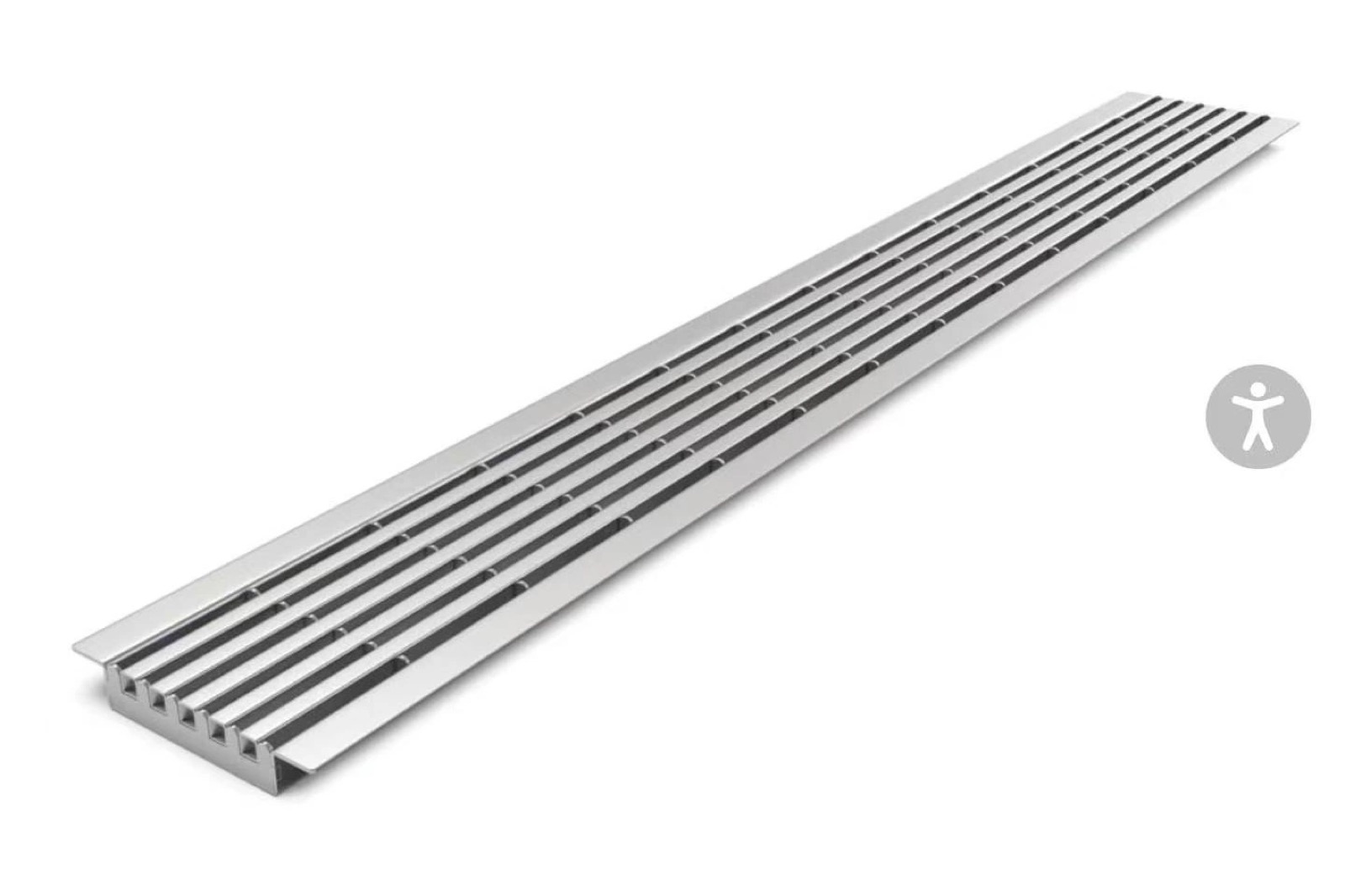
- The slot or bar spacing is too wide. A grate designed for maximum open area has wide gaps. That is good for flow and bad for small contact points. A heel needs only one gap slightly wider than the heel tip to wedge.
- The bars run in the wrong direction. A grate with long slots parallel to the direction of travel gives a heel a long channel to slide into. A heelguard pattern with shorter openings or a wedge-wire profile reduces the chance of wedging.
- The grate is loose or rocking. A cover that moves underfoot changes the effective gap as it shifts. The heel enters a gap that was not there when the grate was seated. Loose covers also rattle, cut feet and break their frames.
- A bar is missing or bent. One broken bar can double the opening at the worst point. In a public washroom, damage is often local and hidden by water or debris.
- The wrong product was used for the scene. A high-flow channel grate specified for a plant room is reused in a pedestrian area because it fits the channel. Flow capacity is checked; heel safety is not.
What actually fixes the complaint
The fix is a grate with a heel-safe opening geometry, seated in a frame that does not move. In sanitary ware, this is usually called a heelguard or heel-safe grate. Sanitary ware catalogues rarely publish it. The principle is simple: keep the openings small enough and short enough that a heel cannot wedge, while keeping enough open area for the design flow.
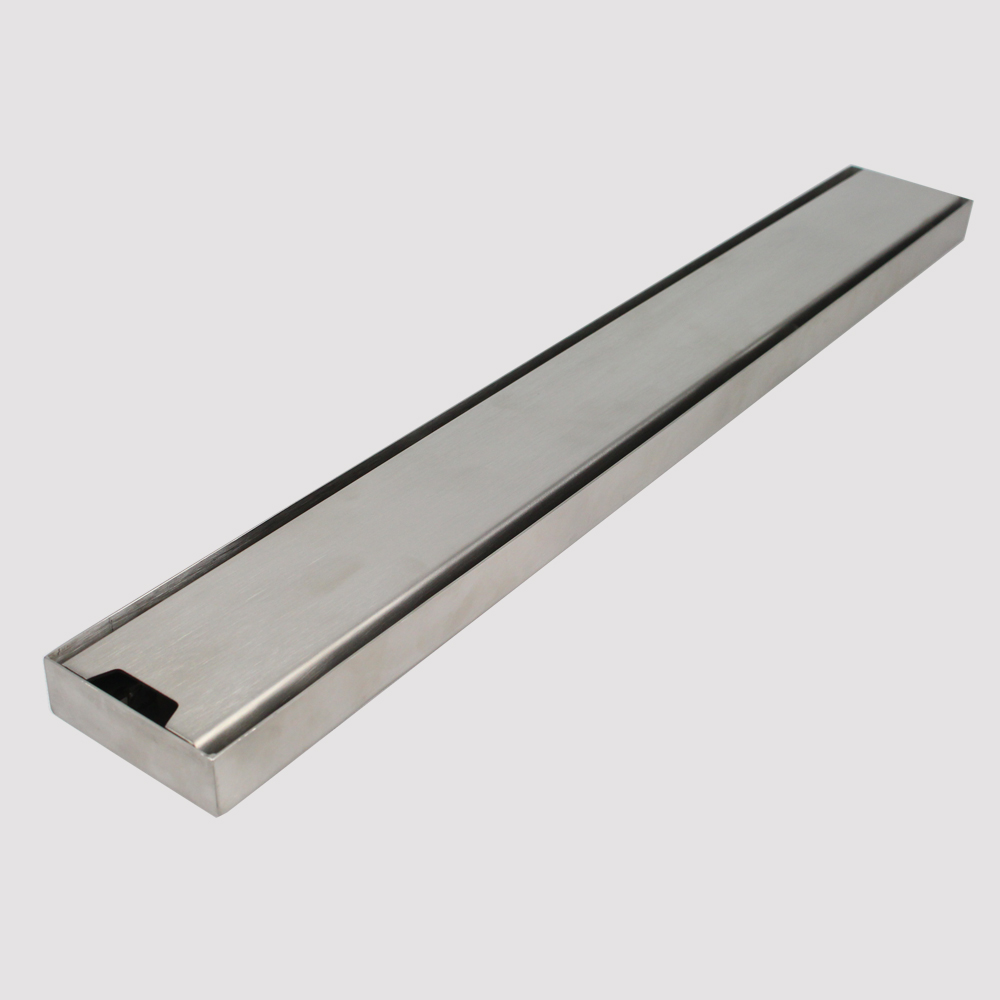
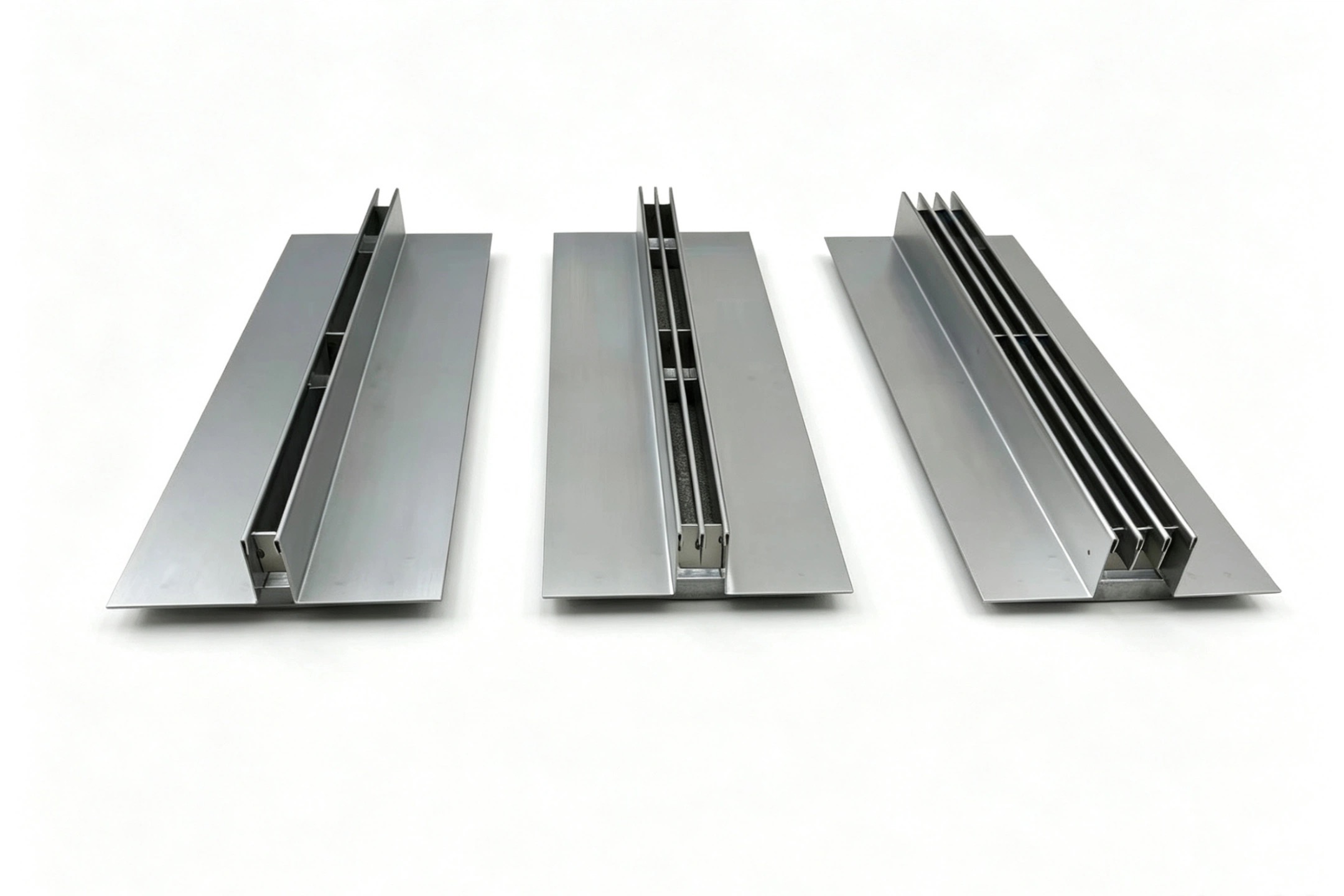
For pedestrian areas, specify the grate as part of the drainage system, not as an accessory chosen after the channel is installed. Ask for the slot width, the bar pitch, the open area and the load class in writing. A wedge-wire grate with a 5×4 mm wire profile gives a narrow, consistent opening. A stainless slot cover with one narrow slot can be a better choice than a three-slot cover where heels and trolleys share the floor. Check every floor drain crossed in heels.
The frame matters as much as the cover. The grate should sit flush, with no lip that catches a shoe, and it should be held down so that it cannot lift or slide. In a channel, the cover should be removable for cleaning but retained under normal foot traffic. In a shower, a solid metallic grate with a controlled hole pattern can be safer for bare feet than a wide-slot cover, provided the flow still meets the shower duty.
Numbers that matter
Start with the opening. For pedestrian areas where heels are present, a maximum clear opening in the order of 6–8 mm is a practical starting point; wider slots increase the risk, and very narrow slots increase the risk of debris blockage. Confirm the figure against the project's safety assessment and the grate manufacturer's data rather than treating it as a universal rule. Check the bar pitch as well as the slot width, because a narrow slot with a long unsupported span can still accept a heel.
Load class is the next number. A15 is suitable for foot traffic and light trolleys; B125 for car parks and light vehicles; C250 for heavier commercial traffic; D400 for roads and heavy industrial areas. A washroom grate is usually A15, but a drainage channel at a hotel entrance may see luggage trolleys and should be specified for the actual duty. The frame, bedding and grate must be in the same class.
Flow is the trade-off. A heel-safe grate has less open area than a high-flow bar grate. Size the trench drain for peak flow at the available fall, not for the grate alone. A 100 mm channel with a 1:100 fall and a narrow-slot cover may be adequate for a washroom but not for a washdown bay. In a trench drain, check the water depth against the channel depth. Do not solve a flow problem by opening the slots wider in a pedestrian area.
Finish and material also matter. Wet areas need corrosion-resistant stainless steel, normally 304 for general washrooms and 316 for coastal, chlorinated or heavy cleaning environments. Slip resistance should be specified for the floor and the grate; R10 or R11 are common wet-area targets, but the class depends on the surface.
Certification and verification
Ask for a grate and frame CE marked to EN 1433 for drainage channels or EN 1253 for floor drains where the product is in scope, and supplied under an ISO 9001 quality system. For Australian projects, ask for WaterMark where the product page states it. Check that the certificate covers the assembly and the load class, not only the steel. On delivery, measure the clear opening with a caliper at several points, check that the grate seats without rocking, and confirm that the retaining fixings are present and the correct grade.
Do not accept a certificate that lists a load class but not the grate pattern. The openings must be safe for heels as well as rated for traffic.
Where to start
Walk the building and find the grates people actually cross in heels, not only the ones in the plant room. Measure the clear opening, check for missing bars, and test whether the cover moves underfoot. Then choose a heel-safe grate with the right load class and flow for that location. Browse wedge-wire grates, metallic shower grates and stainless slot covers, or send us a photo of the existing cover with a ruler across the slots and we will help match the pattern. For the whole drainage system, start with the cover people actually stand on.