
Every spring, the same complaint comes back from the courtyard. The first heavy rain fills the channel, water stands against the door threshold, and the grate is clear. A contractor rods the line, pulls out a mat of fine roots, and the water runs away. Twelve months later the courtyard floods again, and the roots are back in the same place.
The repeat is not bad luck. Tree roots do not enter a drainage channel through the grate. They enter through joints, cracks, unsealed connections and gaps around a frame that was never a root barrier. Clearing the pipe removes the growth but leaves the door open.
The complaint: clear grate, standing water, roots in the line
The scene is a courtyard, terrace, basement light well or a landscaped car park. A linear channel runs along the paving, usually at the low point. The grate may be a slot cover or a bar grate. Leaves and grit are cleaned regularly. The water still backs up in spring, sometimes after a storm, sometimes after several days of light rain.
When the line is opened, the blockage is not at the grate. It is downstream, at a joint or at the outlet. The material is not leaves or silt; it is a root mass. The roots may come from a tree ten metres away. The contractor cuts them, the flow returns, and no one asks how the roots got into a closed pipe.
Six reasons roots keep coming back
- The channel joints are not root-tight. A channel assembled from modules has joints every metre or so. If the seal is incomplete, a film of water and soil at the joint is enough for roots to find.
- The outlet connection is not sealed. The connection from the channel to the pipe is often the weakest point. A rubber coupler that is loose, or a mortar joint that has cracked, gives roots a path.
- The channel has settled or cracked. Movement opens seams. A channel that has lost bedding support can crack at a joint, and the crack becomes a root entry point.
- There is no root barrier under the paving. In planted courtyards, roots grow through the soil under the paving and find the channel from below. A geotextile or root barrier around the channel is omitted because it is not visible in the finished work.
- The fall is too flat, so water stands. Standing water at a joint keeps the area damp and attracts roots. A channel that holds water after rain is not only a mosquito problem; it is a root nursery.
- The repair cuts roots but not the entry. Rodding or jetting clears the pipe. If the joint or crack is not sealed, the root returns to the same opening.
What actually fixes it
The first step is to find the entry point, not just the blockage. Camera inspection of the line is the reliable way. If roots enter at a joint, the joint needs repair or the affected module replacement. If they enter at the outlet connection, the connection needs a proper seal and, where the soil is planted, a root barrier around the outside of the channel. Specifiers of sanitary ware often detail the grate and forget the joint.
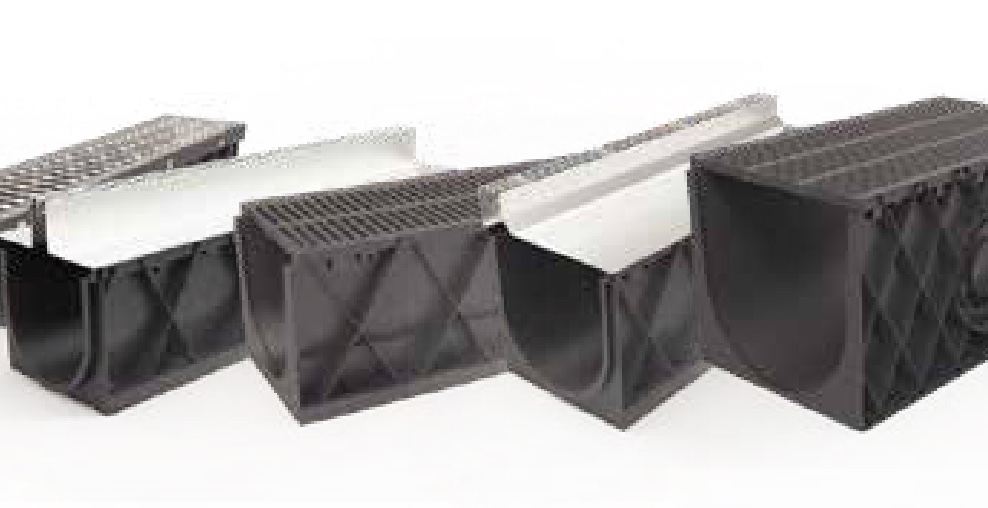
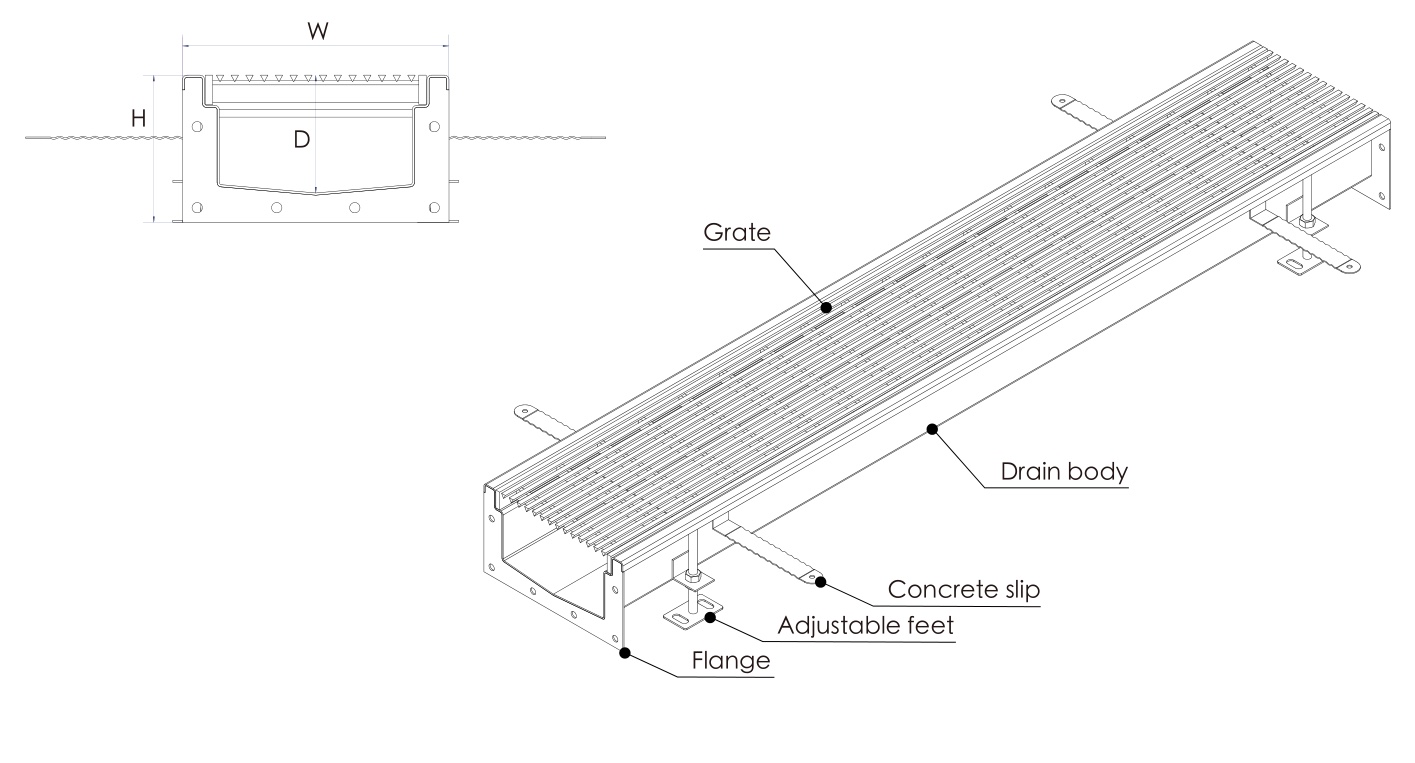
For a new courtyard drainage system, specify a channel with root-tight joints and a continuous body. A modular HDPE drainage channel with sealed joints and a concrete surround reduces the number of entry points. A stainless trench drain with welded or gasketed joints is another option where the duty and the budget allow. The grate should be removable for cleaning, but the frame should be fixed and sealed to the paving.
Detail the outlet. A sump or catch pit at the low end gives roots and debris somewhere to collect and makes maintenance possible. A channel that runs directly into a pipe with no access is difficult to inspect and clear. The outlet should be sized for peak flow and should have a removable strainer.
Where trees are close, a root barrier is not optional. Install a root-resistant membrane along the planted side of the channel and around the outlet, and keep the barrier continuous at corners. Do not rely on a coat of bitumen or a bead of sealant at the joint; roots exploit the smallest discontinuity.
Numbers that matter
For courtyard paving, a fall of about 1:100 to 1:150 along the channel is a practical target, with the paving falling toward the channel at a similar or slightly steeper grade. A flatter channel will hold water and silt. Confirm the fall against the project design and the channel depth; a 100 mm deep channel with a flat run has very little hydraulic margin.
Channel width depends on the catchment and the peak rainfall. A 100 mm wide channel is common for small courtyards and balconies; 200 mm and larger channels are used where the paved area is big or the outlet is restricted. Size for the flow at the design storm, not for the size of the grate opening. A floor drain at a low point can handle local ponding, but a floor drain is not a root barrier.
Load class matters in a courtyard that takes vehicles. A15 is for foot traffic; B125 for car parks and light vehicles; C250 for heavier commercial traffic; D400 for roads. A plastic channel rated A15 should not be used in a driveway just because it is outdoors. The grate, frame and channel must be in the same class. Most sanitary ware catalogues omit the root barrier.
Material choice should follow the environment. HDPE is resistant to most salts and cleaning chemicals and suits planted courtyards where the channel is not exposed to high temperatures. Stainless 304 is suitable for general outdoor use; 316 is safer near the coast or where de-icing salt and chlorides are present. A stainless drain with a 2 mm wall is not the same as a thin pressed cover; check the section and the load rating.
Certification and verification
Ask for a channel and grate CE marked to EN 1433 where the product is in scope, and supplied under an ISO 9001 system. For Australian projects, ask for WaterMark where the product page states it. Check that the load class applies to the complete assembly. On site, inspect the joints before the paving is finished, confirm that the channel is continuously supported, and verify that the outlet connection is sealed and accessible. After planting, keep the root barrier visible until the paving is complete so that it is not omitted.
Where to start
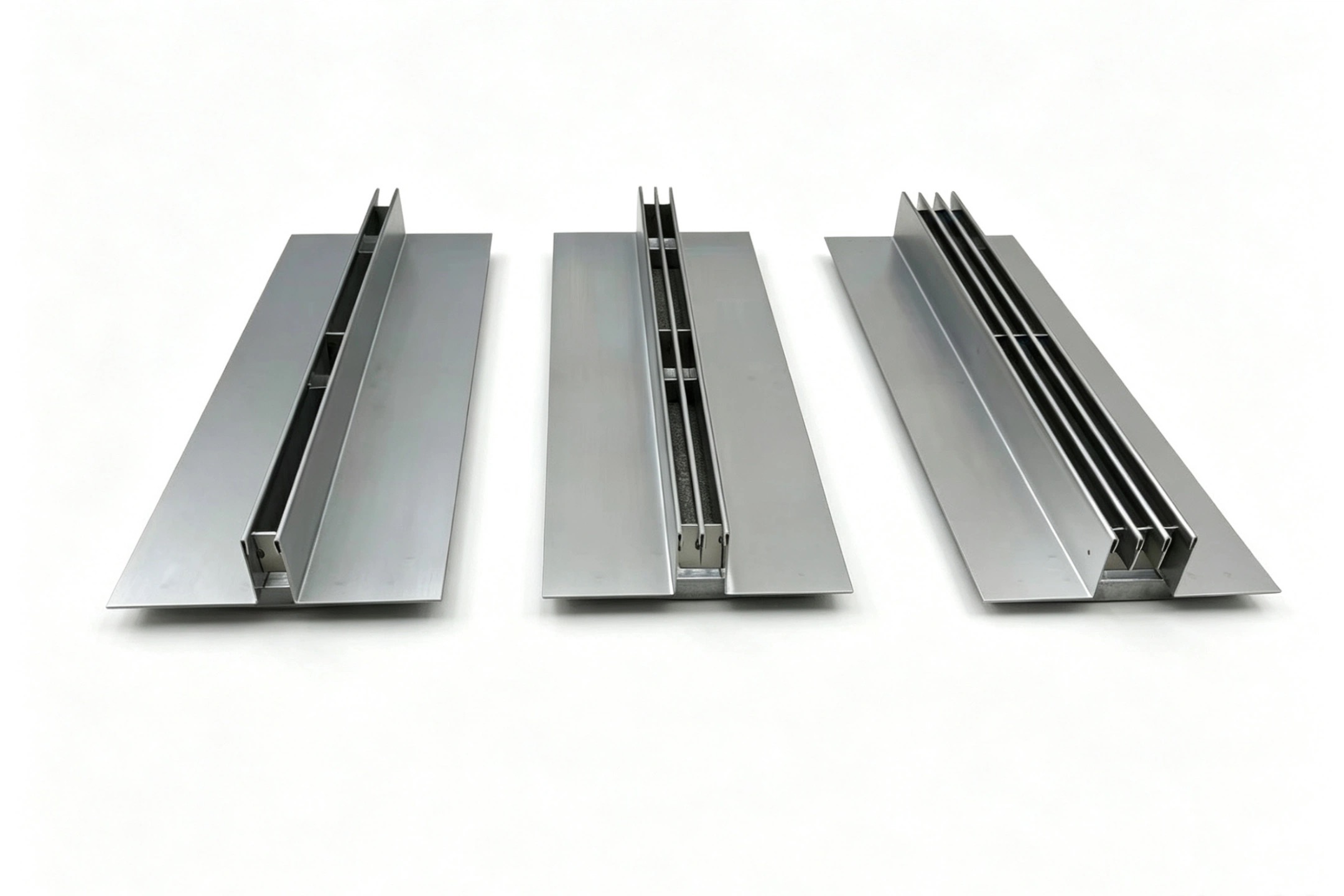
If the courtyard floods every spring, camera the line and find the entry point before rodding it again. If you are building a new courtyard, choose a channel with sealed joints, a removable grate, a cleanable sump and a root barrier on the planted side. For a trench drain, the same rule applies: inspect the joints, not only the grate. Browse HDPE linear channels, stainless slot covers and stainless trench drains, or send us the catchment dimensions, the outlet size and photos of the planting layout and we will help size the whole drainage system.