
The complaint arrives with a photograph: a clean courtyard, a stainless slot cover, and a white line of powder along both edges of the drainage channel. The owner has scrubbed it with acid, rinsed it, and watched it return within a week. The stone looks stained, the cleaner is blamed, and the channel is suspected of leaking.
The white powder is efflorescence. It is not a coating failure and it is not grout haze that was missed at handover. It is salt carried by water through the cement bedding or the screed, arriving at the surface and evaporating. Cleaning removes the evidence; it does not close the water path.
The complaint: the white line that comes back after every clean
The scene is a paved courtyard, terrace, driveway or podium. A linear channel runs along the low edge, set into cementitious bedding under the paving. After rain or irrigation, water moves through the bed to a frame gap or joint and evaporates.
The salts in the cement and ground water stay behind as a white or grey crust. It traps dirt, hardens, and leaves the tile edge looking damp. In coastal or clay-soil sites, it appears faster.
Six reasons the crust keeps returning
- The bedding has no drainage path. Cementitious bedding absorbs water and holds it. If the paving has no weep detail and the channel is the only low point, water moves toward the channel through the bed.
- The waterproofing is missing or discontinuous. A channel set into paving needs a waterproof membrane and a sealed flange where the water enters. A bead of mortar around the frame is not a waterproofing detail.
- The channel joint or outlet leaks. Water below the channel finds a joint, a cracked outlet connection or an unsealed end cap and wicks outward. The crust appears at the exact place where the water exits.
- The frame is not sealed to the paving. A frame fixed with mortar but not backed by a flexible seal creates a capillary gap. Water sits in the gap and evaporates at the visible edge.
- The fall is too flat. Water that should run to the outlet stands in the channel or under the paving. Standing water keeps the bed saturated and feeds the cycle.
- Acid cleaning makes it worse. Muriatic acid or strong descaler attacks the cement and liberates more salts. The surface looks clean for a few days, then the next rain brings a heavier bloom.
What actually fixes the complaint
Stop cleaning the salt and control the water. Keep water out of the bedding, give any that enters a path to the drain, and seal the channel to the structure.
For a new courtyard, specify a drainage channel with a sealed body and a flanged outlet. Set the channel on a continuous, compacted base, not on a wet mortar bed that has no exit. Detail a waterproof membrane under the paving and turn it into the channel flange. At the frame, use a flexible sealant that stays bonded; do not rely on mortar alone.
For an existing channel, start with a water test. Fill it and watch the joints and outlet. If water appears under the paving, the joint or connection is the source. Cut out the joint, clean it, and reseal with the system gasket or a suitable sealant. If the frame edge is the path, remove the mortar fillet, dry the gap, and install backing rod and sealant.
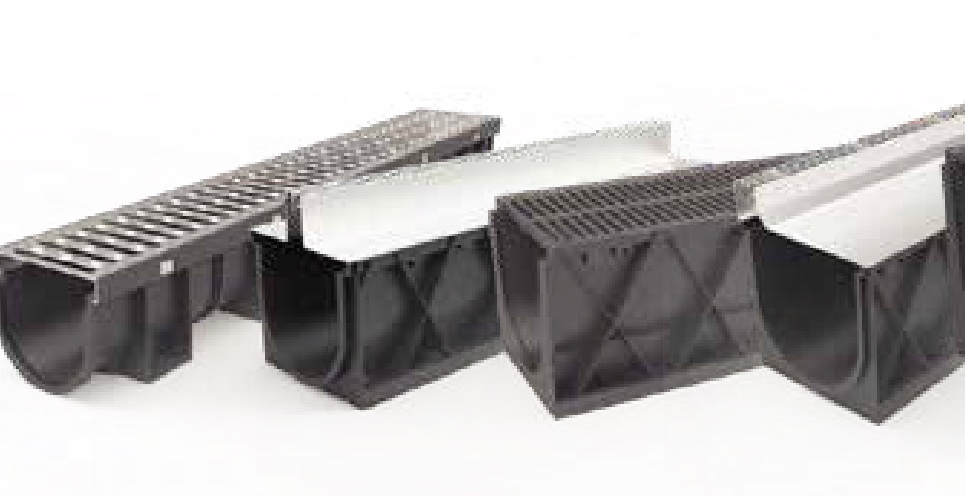
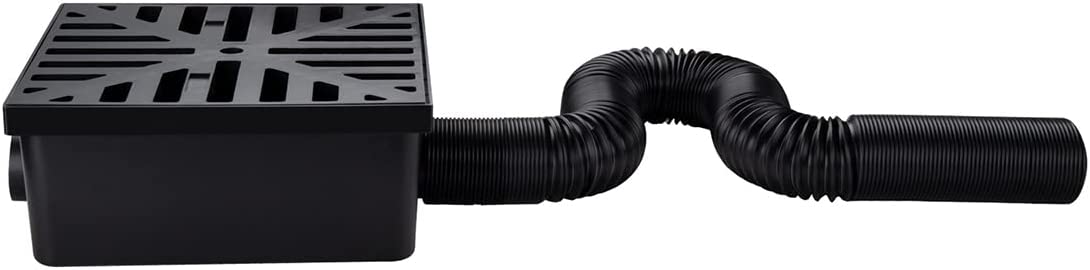
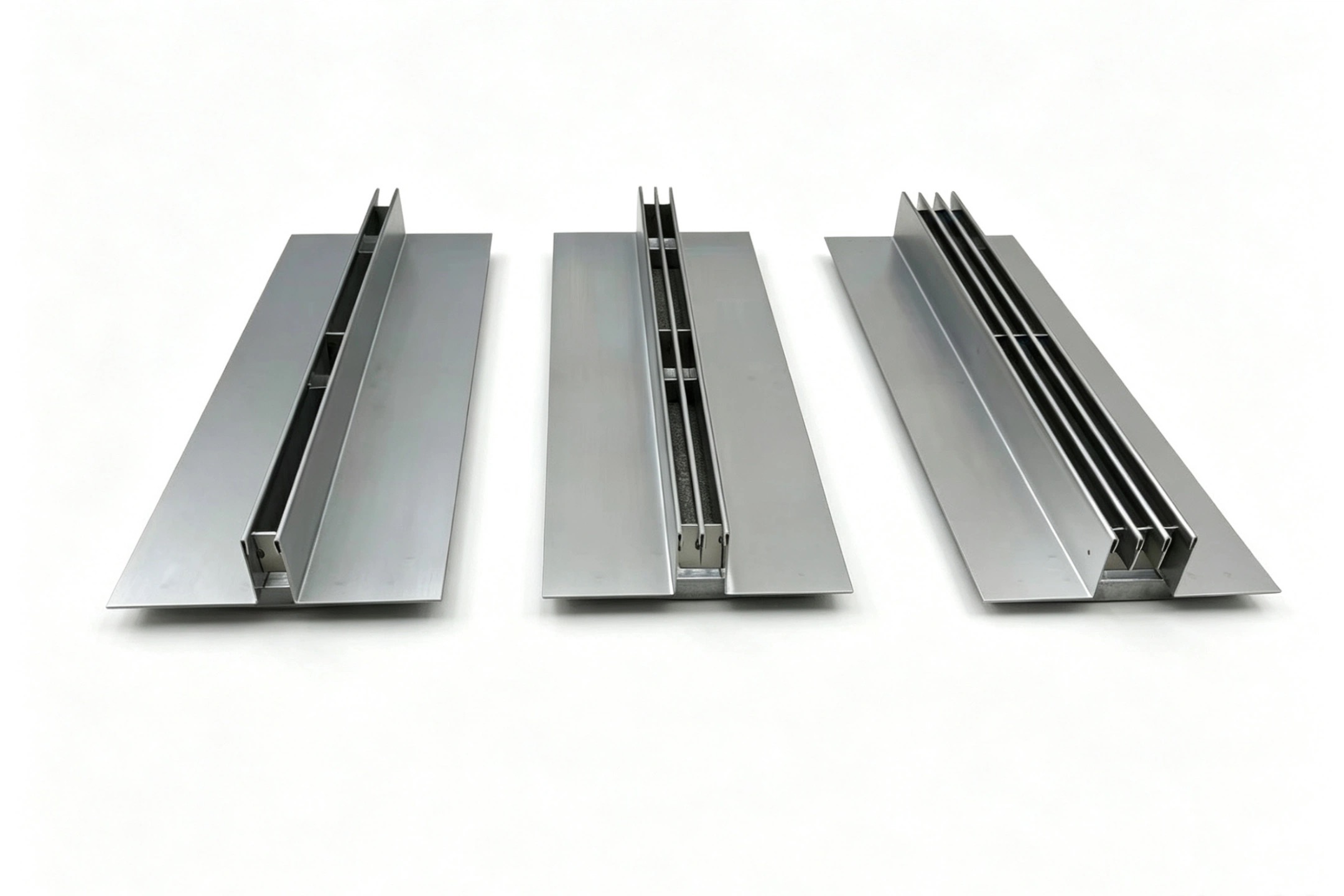
A drainage system that is designed for maintenance is easier to keep dry. A catch pit at the low point collects silt before it reaches the outlet, and a removable slot cover lets the channel be cleaned without lifting paving. A smooth HDPE drainage channel does not absorb water the way cement does, and a stainless trench drain with a welded or gasketed body gives a more predictable seal. Add a floor drain at the low point only if it has a 50 mm trap and a removable strainer. In sanitary ware terms, the channel is only part of the assembly; the flange and the bedding detail decide whether it stays dry.
Do not acid-wash the paving as routine. Use a neutral cleaner and soft brush, and rinse thoroughly. If a chemical cleaner is needed, test a small area and follow the supplier's dilution. Remove the crust without opening the cement further.
Numbers that matter
Fall is the first number. Aim for about 1:100 to 1:150 along the channel and keep the paving falling toward it. A flatter channel will hold water and silt. A 100 mm HDPE channel suits a small courtyard; 300 mm gives more capacity where the area is large or the outlet restricted. Size for the design storm, not for the width of the slot.
Load class decides the assembly. A15 is for foot traffic and light garden trolleys; B125 for car parks and light vehicles; C250 for heavier commercial traffic; D400 for roads. A residential courtyard channel is usually A15, but a driveway crossing needs B125 or higher. The grate, frame and channel must be in the same class.
Water seal and outlet sizes matter at the low point. A floor drain used as a secondary intake should have a 50 mm water seal and a removable strainer. A 50 mm outlet is common for small catch pits; a 100 mm outlet gives more margin where the catchment is large. Check that the outlet is below the channel invert and that the pipe has enough fall to self-clean.
Material choice should match the water. HDPE is unaffected by the salts and suits planted courtyards and most cleaning chemicals. Stainless 304 is a good general choice; 316 is safer near the coast or where de-icing salt is used. The visible white crust is a symptom of water movement, not a reason to change the metal without fixing the detail.
Certification and verification
Ask for a trench drain and grate CE marked to EN 1433 where the product is in scope, and supplied under an ISO 9001 quality system. For Australian projects, ask for WaterMark where the product page states it. Check that the load class applies to the complete assembly, including the frame and the bedding detail.
Before paving, inspect membrane, flange and joints. Run water through the channel and look for damp edges. After paving, check frame flush and sealant continuous. A crust within the first month means water is still moving; reopening the detail is cheaper than cleaning every season.
Where to start
If the white line returns after every clean, test the joints and the frame edge before buying another cleaner. Fix the water path, then clean the salt. Browse HDPE linear channels, compact catch pits and stainless slot covers, or send us the paving detail, the channel dimensions and photos of the crust so we can help specify a channel and outlet for the whole drainage system. In sanitary ware, the detail that keeps a channel dry is the flange, not the finish.