
The complaint comes from housekeeping, not from the plumbing contractor. Every evening someone drops a chlorine tablet into each floor drain in the public washroom, leaves it at the bottom of the trap, and closes the door. The smell disappears for a week. Then it returns, the stainless around the grate looks dull, and brown streaks appear at the screw holes.
The tablet was supposed to clean the drain. Instead it is cleaning the metal. The odour returns because the source was never removed, and the pitted surface now holds biofilm more easily. In sanitary ware, this is a failure caused almost entirely by maintenance.
The complaint: a cleaner channel, a dirtier grate and a smell that returns
The setting is a hotel, office block, gym or hospital washroom. The cleaning team was told to control odour, and a chlorine tablet is cheap and easy to leave behind. It sits in the water seal or on the trap shelf, where the concentration is highest and the contact time is longest.
At inspection, the grate is discoloured and the frame edge has small dark pits. Maintenance replaces the grate; the new one fails because the tablet is still part of the routine. The original complaint, the smell, remains.
Six things the tablet actually does
- It over-doses a very small volume of water. A tablet designed for a pool or a large tank is dropped into a trap that holds a litre or two. The concentration is far above what a routine surface cleaner is designed for.
- It strips the stainless passive film. Chlorine is an oxidiser. At high concentration and long contact time it attacks the chromium-rich layer that protects 304 stainless, leaving the surface open to pitting.
- It concentrates in crevices. The tablet rests against a screw, a weld or the frame lip. Those gaps are where oxygen is scarce and chloride attack is most aggressive. Rust streaks appear at the fixing points first.
- It kills the surface, not the biofilm. A tablet may reduce bacteria in the water, but the gelatinous film on the trap wall survives. When the chlorine is gone, the film regrows and the odour returns.
- It can produce chlorine gas. Bleach or chlorine tablets mixed with an acid descaler release chlorine gas. This is a serious risk in a small, poorly ventilated washroom.
- It replaces mechanical cleaning. Deposits, hair and soap scum stay in the trap. The tablet hides the problem for a few days and adds a corrosion problem on top.
What actually fixes the complaint
Stop leaving tablets in the trap. Clean the trap mechanically, rinse the walls, and remove the deposits that feed the biofilm. Use a neutral cleaner at the supplier's dilution, then rinse. If disinfection is required, use a measured solution for a controlled contact time and rinse; never leave a tablet against metal.
Check the water seal. A 50 mm seal is the usual minimum for a floor drain; if the trap is shallow or the fixture is unused for weeks, the seal evaporates and the sewer path opens. A trap primer or a scheduled refill is a better answer than chlorine. Check venting too: a trap that is sucked dry after another fixture discharges will not hold a seal no matter how much cleaner is used.
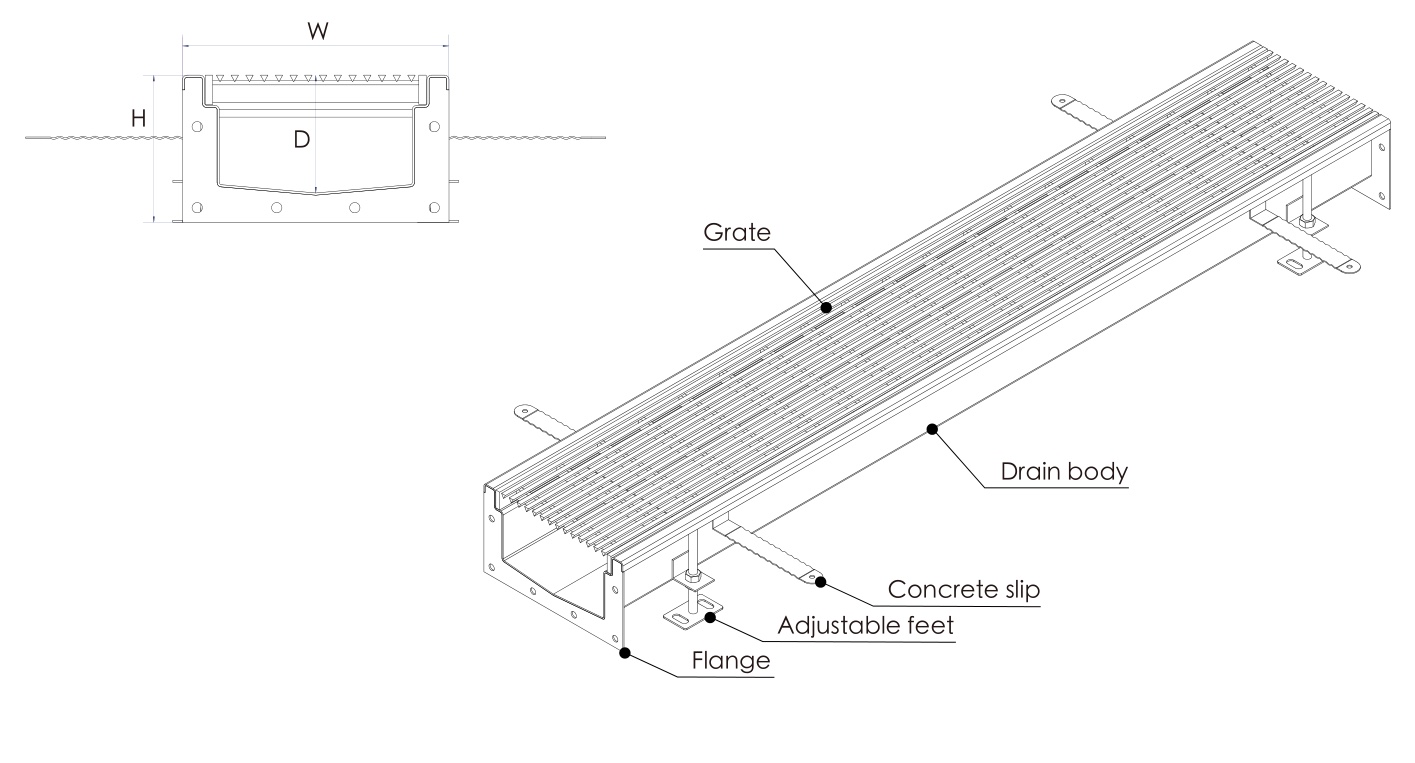
For a new or refurbished drainage system, choose a material that matches the cleaning regime. A general washroom cleaned with neutral products can use 304 stainless. A site that repeatedly uses chlorinated sanitisers, a pool area or a coastal building should specify 316 stainless. A stainless trench drain with smooth welds and a removable grate is easier to clean than a body full of crevices. Where the washroom uses a linear drainage channel, specify a body with smooth welds and a drainage path that can be brushed end to end. In sanitary ware, the finish is often discussed before the chemical routine; that is the wrong order.
Give maintenance access. A cleanout at the low point lets the trap be brushed without removing the channel. A removable grate and catch basin reduce the solids reaching the trap. If the trap cannot be opened, the tablet becomes the only tool, and the cycle repeats.
Numbers that matter
The water seal is the first number: 50 mm is a practical minimum for odour control, subject to the trap design and the project standard. The fall is the second: 1:100 to 1:150 along a channel or floor keeps water moving and reduces deposits. A flat run holds water and cleaning chemicals against the metal for longer. In a trench drain, check the invert along the full length; in a drainage channel, check that the joints do not create a ledge where water can stand.
Load class is separate from corrosion. A15 is for foot traffic and light trolleys; B125 for light vehicles; C250 for heavier commercial traffic; D400 for roads. A washroom cover is normally A15, but a channel at a service entrance may need B125. The frame, bedding and grate must be in the same class. Slip resistance for the surrounding floor is commonly R10 or R11 in wet areas; confirm the actual test result for the surface supplied.
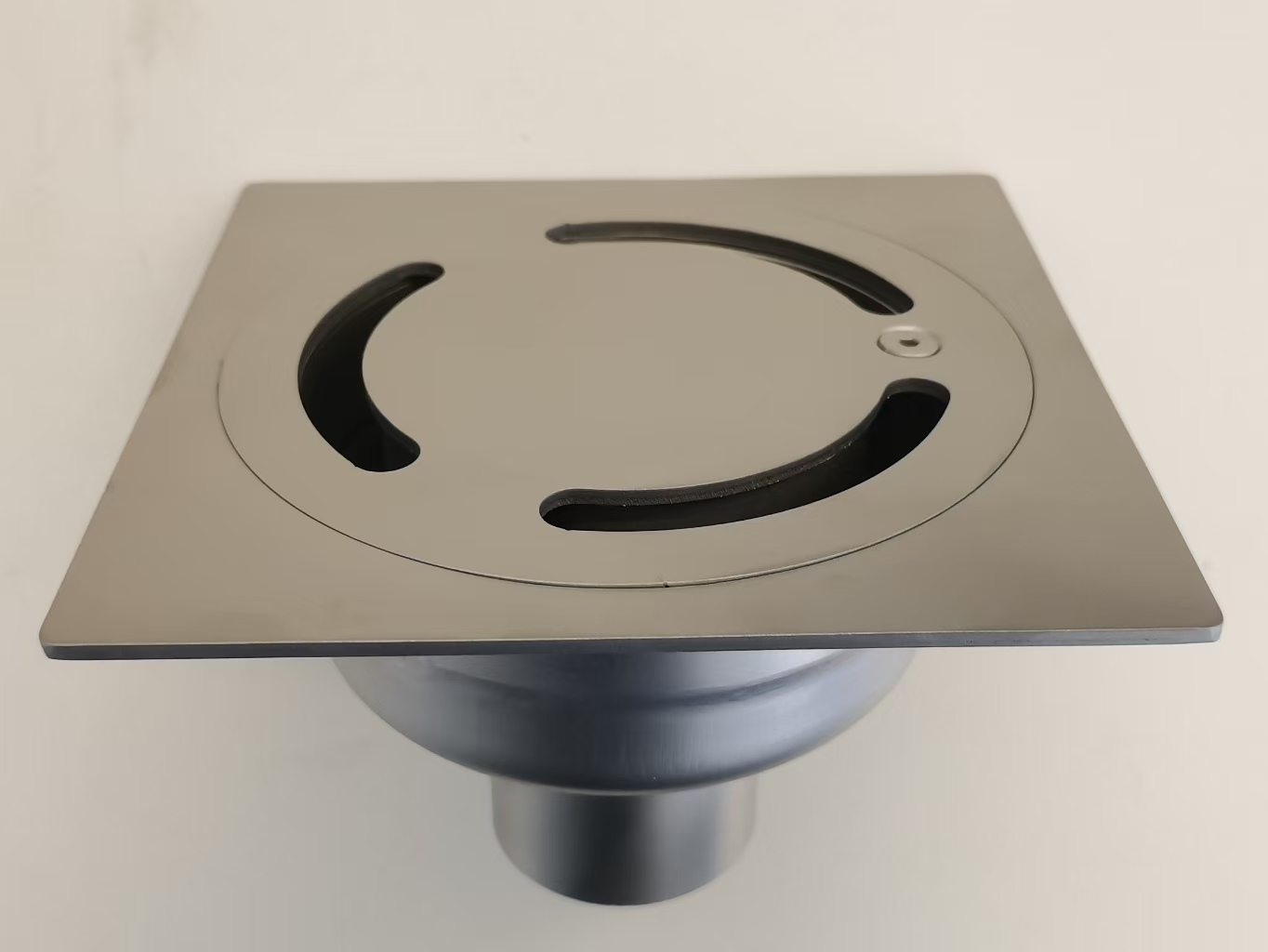
Material grade is the corrosion number. 304 is the general-purpose grade. 316 adds molybdenum and is more resistant to chlorides, which is why it is the safer choice where bleach, pool water or coastal air is present. A 100×110 mm cleanout cover, a 181 mm stainless channel and a 150×150 mm shower drain are different products, but the same rule applies: the cleaning chemical has to be compatible with the grade.
Concentration and contact time are the numbers most often missing from the cleaning schedule. Follow the chemical supplier's dilution and contact time, and rinse after the stated period. Never translate " stronger" into " safer". More chlorine is not more cleaning; it is more corrosion.
Certification and verification
Ask for a drain and grate CE marked to EN 1253 for floor drains or EN 1433 for drainage channels where the product is in scope, and supplied under an ISO 9001 quality system. For Australian projects, ask for WaterMark where the product page states it. Check that the certificate covers the assembly and the load class, not only the steel.
On delivery, confirm the grade, inspect the welds and the frame edges for crevices, and check that the cover is removable without damaging the fixings. Add the cleaning chemical to the operation and maintenance file. An assembly that is correct at handover can fail within a year if the cleaning team is left to improvise.
Where to start
If the smell returns after every tablet, stop buying tablets and inspect the trap. Brush the walls, refill the seal, check the vent, and match the stainless grade to the chemicals actually used. Browse stainless cleanouts, hygienic trench drains and shower drains with built-in water seals, or send us the cleaning products and a photo of the pitted area and we will recommend an assembly and a maintenance routine for the whole drainage system that do not fight each other.