
The complaint comes from a building services team: the floor is mopped twice a day, the drainage channel looks clear, and the room still smells. The grate is dry. Under it, a grey mat of lint, sand and detergent has built up along the invert. The cleaning crew has been emptying the mop bucket into the channel because the slop sink is on another floor and the bucket is heavy.
This is a common operational failure, not a defective drain. A trench drain designed to take surface water is being used as a waste sink. The volume is small, so nobody notices at first. The load is concentrated, so the silt settles in the same place every day.
The complaint: a clean floor over a dirty channel
The scene is a corridor, washroom, staff room, workshop or supermarket aisle. A linear trench drain runs along the low edge. The cleaner pours mop water into the nearest grate because it is quick. The water disappears, so the practice continues.
Mop water is not clean water. It carries floor finish, detergent, lint from the mop head, sand from the entrance, and the residue of whatever was on the floor. The channel has a shallow invert and a low velocity at normal flow. Solids settle, detergent holds them together, and the layer becomes a biofilm nursery. The smell arrives before the blockage does.
Five reasons the channel turns into a settling tank
- The mop bucket is treated as a drain. A channel is a surface water collector, not a trade waste connection. Mop water should go to a slop sink, a yard gully or a designated dirty-water point.
- Lint and sand are heavier than the flow. A mop head releases fibres that mat together. Sand and grit from shoes settle first. At low flow, neither reaches the outlet.
- Detergent acts as a binder. Cleaning chemicals leave a sticky film on the channel wall. The next load of lint sticks to it, and the layer grows faster than it can be flushed.
- The grate hides the problem. A slot cover or a bar grate looks clean from above. The invert is never inspected, so the deposit is found only when water backs up or the smell becomes obvious.
- The outlet is undersized for the practice. A 50 mm outlet can take normal rainfall from a small area. It cannot take a bucket of dirty water plus the solids that come with it, especially when the pit has no basket.
What actually fixes the complaint
Stop the practice first. Give the crew a discharge point within reach, or a mobile bucket with a filter sock. A sign helps, but a convenient alternative changes behaviour. If the only sink is far away, the bucket will keep going into the grate.
Second, add a catch point in the drainage system. A compact pit or basket at the low end collects lint and grit before they reach the outlet pipe. The basket must be removable without lifting the whole channel, and it must be emptied on a schedule, not when someone remembers.
Third, change the screening. A fine wedge-wire or mesh grate holds lint at the surface where it can be swept off. A wide bar grate lets it through. The trade-off is flow: a finer screen needs more frequent cleaning. In an area with mop water, frequent cleaning is the point.
Fourth, change the cleaning method. Sweep or vacuum the dry floor before wet mopping. Use a mop that is rinsed and wrung in a bucket, not one that is dunked and splashed. Rinse the channel with clean water after the mop water has been removed.
Fifth, inspect the invert. Remove the grate at least weekly for the first month after a new cleaning contractor starts. If a grey layer is forming, the practice has not changed. A smooth HDPE drainage channel is easier to clean than a rough concrete invert, but no material stays clean if the solids keep arriving.
Numbers that matter
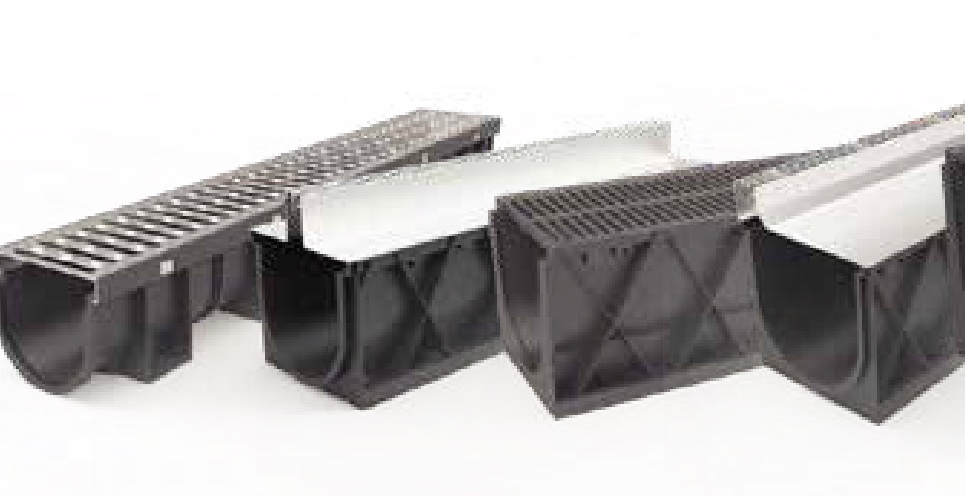
Channel size should follow the water, not the bucket. A 100×45 mm HDPE channel is light-duty and suits pedestrian areas, small courtyards and staff rooms; it is A15 rated. A 300×300 mm channel gives much more volume for washdown and commercial traffic, but it also gives solids more room to settle if the flow is low. A large channel is not a substitute for a basket. A floor drain at the low point adds access, but not a substitute for screening.
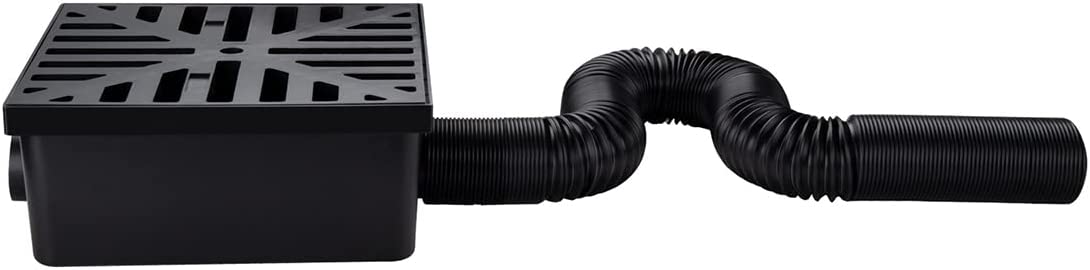
A compact catch pit such as a 250×250×108 mm unit with dual 50 mm horizontal outlets fits tight spaces and accepts a flexible hose up to 180 cm. It is a practical retrofit where the channel outlet is shallow. Check that the pit can be reached and that the basket or lid can be lifted without removing the grate run.
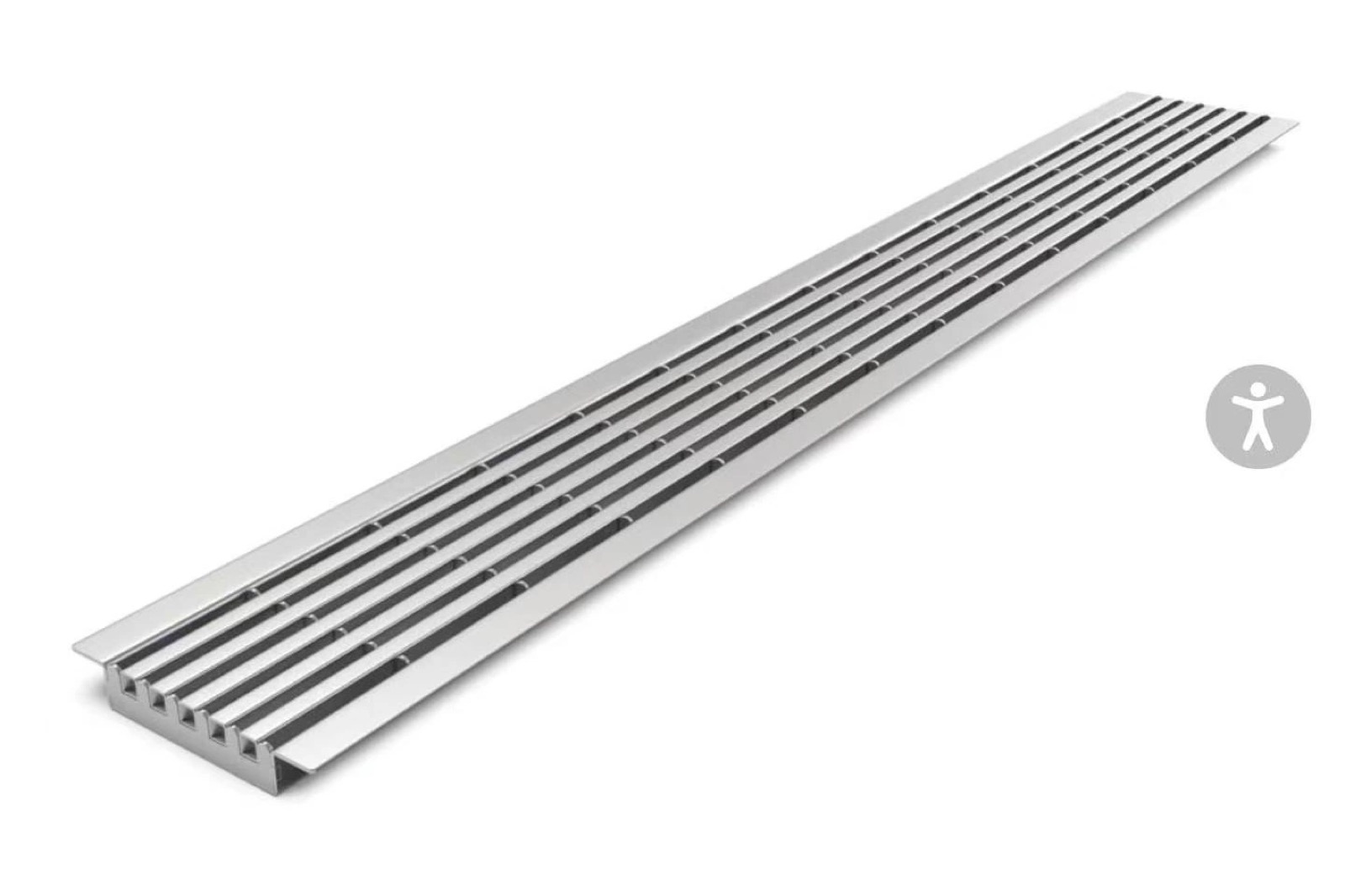
For a wedge-wire screen, a 5×4 mm V-wire profile gives fine openings while keeping a strong open area. Widths of 100, 200 and 300 mm cover most channel runs. The screen must sit flush enough for trolleys and foot traffic, and it must be light enough for one person to lift.
Fall is the quiet number. Keep about 1:100 to 1:150 along the channel and avoid a flat invert; that is where the first mat forms. The outlet must sit below the invert, with a pipe fall that self-cleans. If water remains after the bucket is emptied, the fall or outlet is wrong.
Cleaning frequency is a specification, not an afterthought. A channel that takes mop water needs the basket emptied daily and the invert rinsed weekly. A channel that takes only rainwater can go longer. Write the frequency into the cleaning contract so it survives a change of staff.
Certification and the handover check
For a channel and grate in a pedestrian or light vehicle area, ask for CE marking to EN 1433 in the appropriate load class, and an ISO 9001 quality system. In sanitary ware specifications, the load class belongs to the assembly. A15 is for foot traffic and light trolleys; B125 is for car parks and light vehicles. Grate, frame and channel must share the class; a heavy grate on a light channel is not stronger.
At handover, confirm three things: the catch pit is reachable, the basket lifts out, and the outlet can be rodded from the channel or a cleanout. If the only access is through the grate, the maintenance team will postpone the work. In sanitary ware, a floor drain or cleanout at the low point provides a second access route, but it needs a 50 mm trap and a removable strainer to stay useful.
Where to start
If the mop water is still going into the channel, fix the practice and the hardware together. Add a reachable discharge point, a removable catch basket and a finer screen, then set a cleaning frequency that matches the load. Browse HDPE channels, catch pits and wedge-wire grates, or send us the channel length, the outlet size and a photograph of the invert. We can help size a drainage system that takes the water you intend and keeps solids within reach.