
The complaint arrives with two photographs: a clean shower floor and a drain cover that will not lift. The owner says the installer sealed it properly, and for a few months it looked convincing. Then the flow slowed, the trap could not be reached, and a knife chipped the tile. Nobody can clean the fitting without damaging the floor.
This is not a waterproofing success. It is a service access failure. A floor drain has to do two jobs: keep water inside the pipe and let a person reach the trap, the strainer and the joint below. Sealant around the visible lid can satisfy the first job and destroy the second.
The complaint: a cover sealed like a tile
The scene is a bathroom, shower room or utility area. The body sits in a recess, the tile is cut around the frame, and the cover is meant to be removable. Instead, the installer runs a bead of silicone around the lid, fills the gap with tile adhesive, or grouts the perimeter.
At handover the result looks tight. Months later, soap, hair and grit collect under the cover. Water stands at the edge, the room smells, and the only way into the trap is through the sealed lid. The complaint is always the same: the cover cannot be cleaned, and every attempt to open it damages the tile.
Six reasons the cover becomes permanent
- Silicone is used as an adhesive, not a gasket. A bead under the cover bonds the lid to the frame. The seal is strong, but it was never designed to be opened.
- Tile adhesive bridges the gap. Thin-set or adhesive left in the frame rebate hardens like cement. The cover is now part of the bedding.
- Grout is run around the perimeter. Grout is rigid and slightly porous. It locks the cover and traps water at the edge, which is exactly where the smell starts.
- The installer tries to stop a leak from above. If water is leaking past the flange, sealing the lid hides the symptom. The leak continues below the tile.
- The cover has no lifting point. A flat tile insert with no holes, slots or screws gives a cleaner nothing to grip. A thin blade only scratches the finish.
- Nobody records how the drain is serviced. The handover pack shows the tile layout but not the trap access. The next cleaner treats the cover as a fixed part of the floor.
What a serviceable cover looks like
Separate the two seals. The waterproofing seal belongs under the body flange, between the body and the membrane. The service seal belongs at the cover, where a gasket or O-ring keeps water in while allowing the lid to lift.
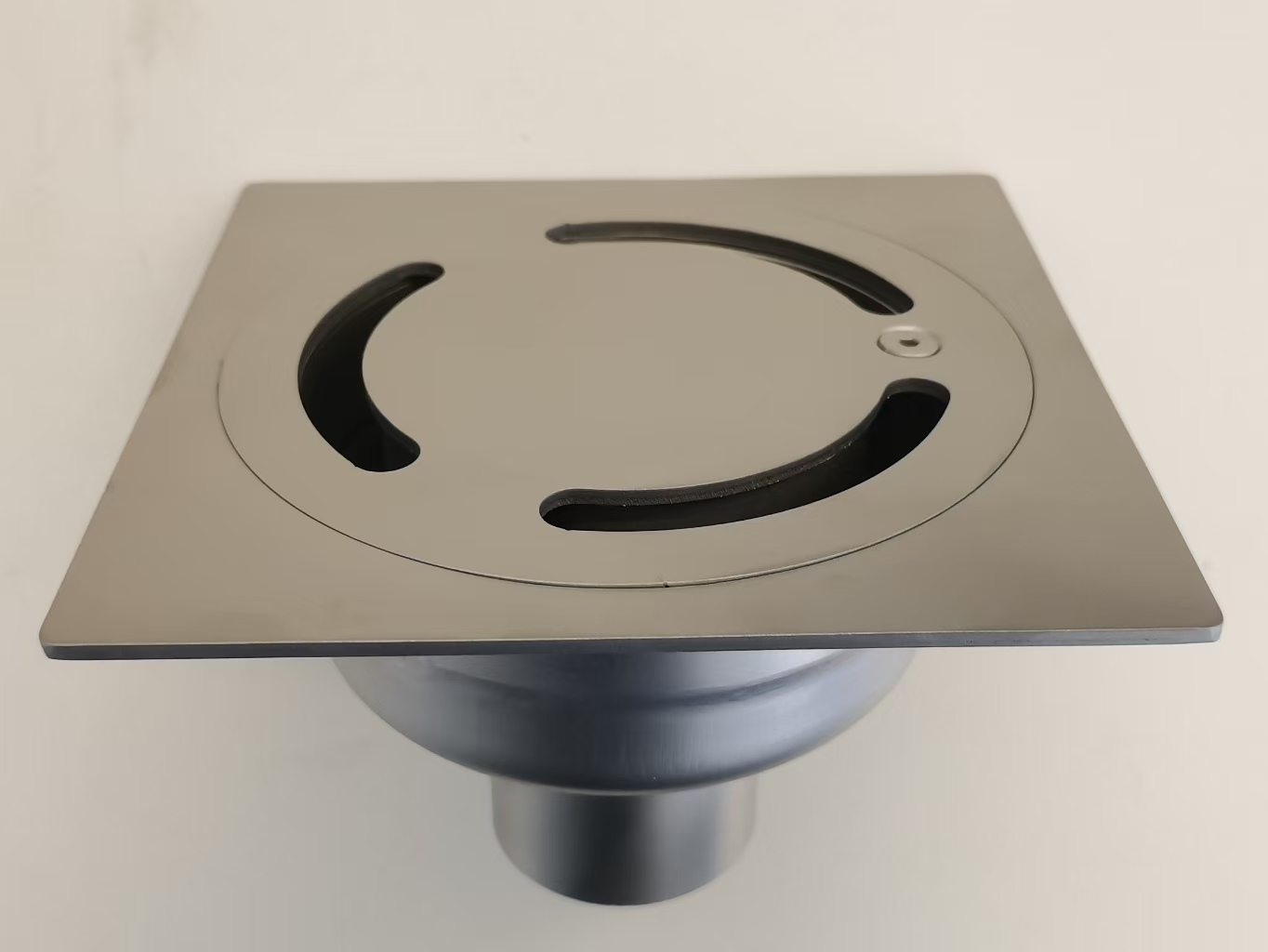
A removable cover should have a clear lifting point: two holes, a slot, a screw-fixed plate or a handle. It should sit in a frame independent of the tile bond. The strainer below should be reachable without removing the body.
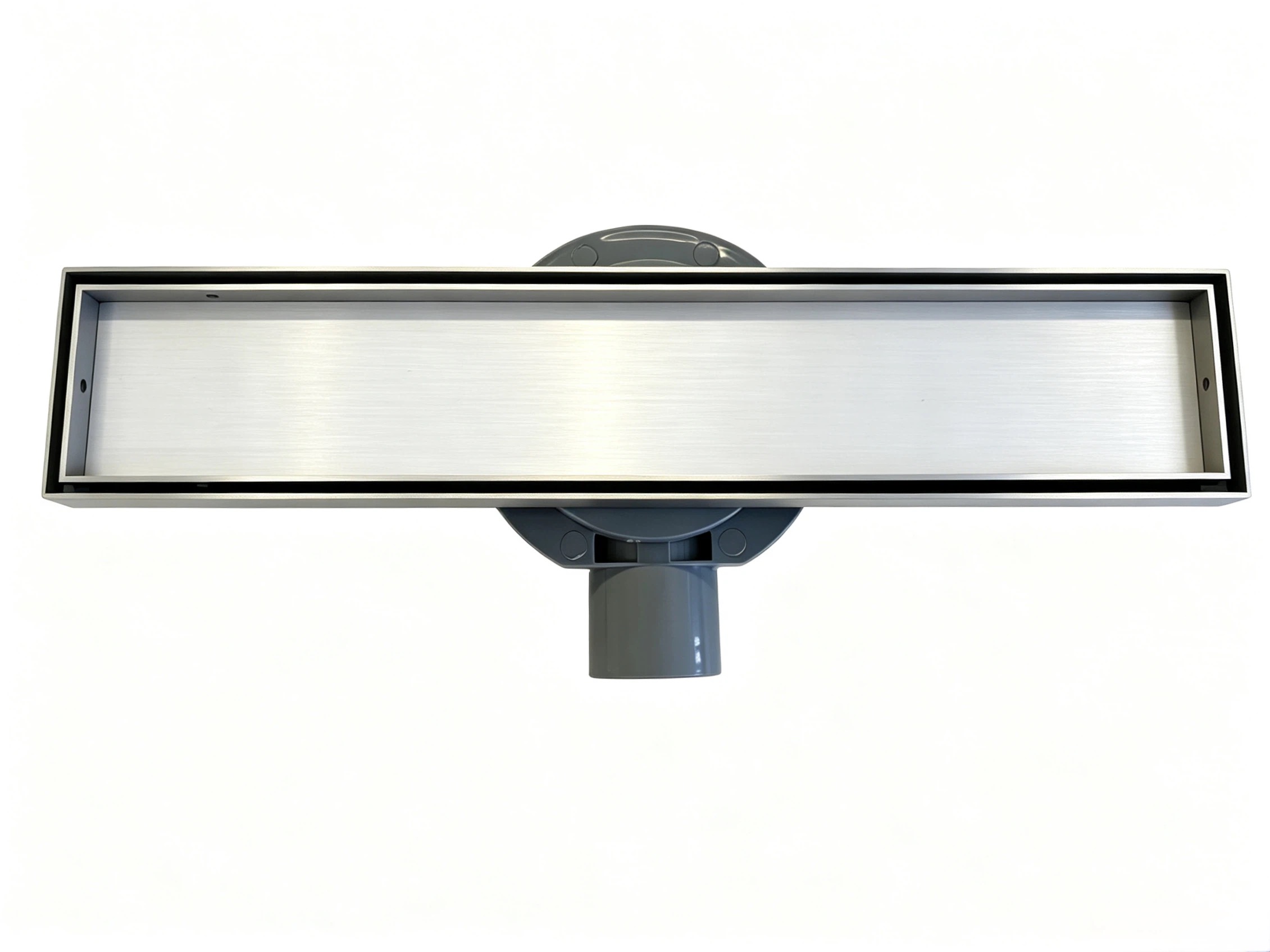
For a shower, a drainage channel or linear drain needs the same discipline. The cover is a service part, not a decorative tile. A tile insert still needs a lift hole and a recess that lets it be removed without levering the tile edge.
For a floor cleanout, the cover is the access point. The body can be set in the slab, but the lid must remain removable. In sanitary ware, a cleanout that is grouted shut is no longer a cleanout; it is a bump in the floor.
Do not pry with a chisel against the tile; the tile edge is weaker than the bond. Cut the perimeter with an oscillating tool and a thin blade, parallel to the joint. Break the sealant bond before lifting.
If the cover is tile-filled, protect the tile and work from the lifting holes. If there are none, drill two small access points in a hidden part, lift with a pin spanner, then replace the insert with one that has proper lifting points.
Once out, clean the frame rebate. Remove old sealant and adhesive with a plastic scraper and compatible solvent. Dry, fit a new gasket or O-ring, and set the cover without adhesive. A neutral-cure sealant belongs at the outer frame-to-tile joint, not under the lid.
If water was leaking past the flange, fix the flange. Replacing the cover will not solve a leak below the body. In a shower, check the membrane clamp and outlet joint before closing the floor.
Numbers that decide whether it can be reopened
The first number is the trap depth. A 50 mm water seal is the common baseline for a floor drain; a shallow trap loses its seal faster. The second is the outlet: 50 mm is normal for a shower, while a larger outlet gives more margin where flow is high. Match the outlet to the pipe, not the tile hole.
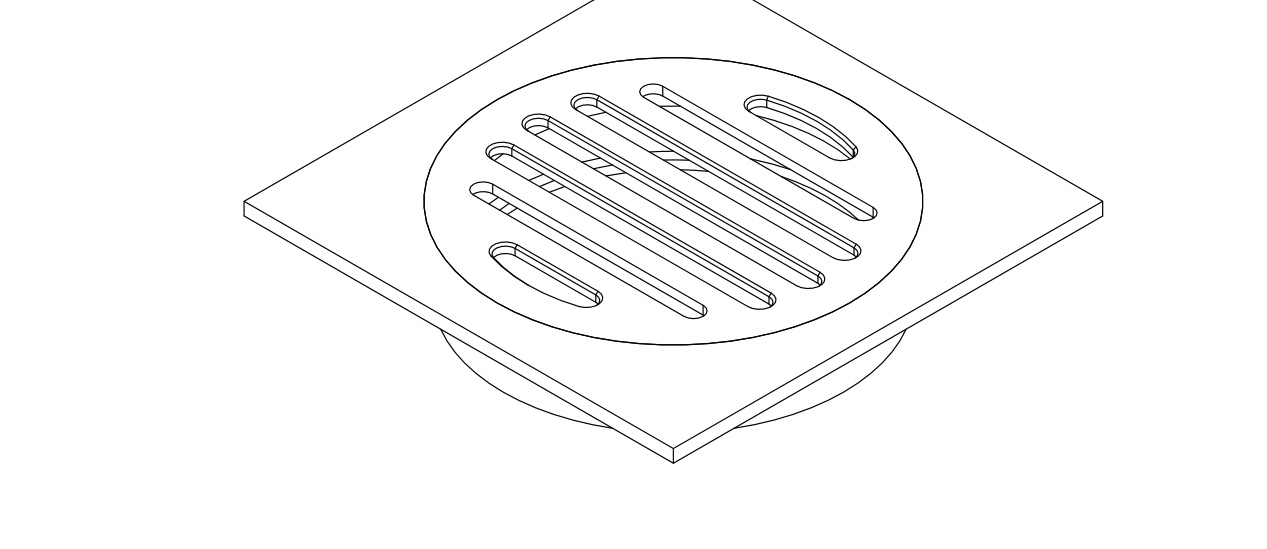
The third is cover size. A 150×150 mm drain gives a useful opening for a hand and brush. A 100×100 mm cleanout is enough for rodding but not a deep trap clean. A linear trench drain cover from 600 to 1200 mm gives length for a squeegee, but only if the insert lifts.
The fourth is fall. Aim for about 1:100 to 1:150 across the wet area and keep the channel perimeter slightly lower than the tile. Water that stands at the frame will find the sealant joint first.
The fifth is fixing. Screws should be stainless and thread into a metal insert, not tile adhesive. A screw-fixed cover is quicker to service than a friction-fit lid that has been siliconed. In public areas, choose a fixing that can be replaced when the thread wears.
Material matters at the joint. SS304 suits most bathrooms; SS316 is safer near the coast or with chloride cleaners. The cover and frame should be the same grade. In sanitary ware terms, the service detail decides whether the fitting survives, not the finish.
Certification and the handover check
Specify a floor drain and trap assembly CE marked to EN 1253 where the product is in scope, and supplied under an ISO 9001 quality system. For a linear trench drain and grate, check EN 1433 where the product is intended for vehicular or public areas. WaterMark only where the product page states it; it is not a range-wide claim.
At handover, lift the cover, remove the strainer, reach the trap and refit it without extra tools. If it takes more than a minute, the installation is not complete. Record the cover type, trap depth and outlet size in the handover file, and note how the wider drainage system is to be serviced.
Where to start
If the lid will not move, stop prying and cut the sealant joint. Then replace the cover with a serviceable type: a screw-fixed square waste, a tile insert with lifting points, or a cleanout cover with a proper frame. Browse shower drains, drainage channel covers, tile-insert covers and floor cleanouts, or send us photographs of the frame, the tile rebate and the trap below. We can help match a cover and body that keep the drainage system sealed without sealing the service access shut.