
The complaint arrives with two photographs. In the first, a new shower has just been handed over: bright porcelain, clean grout, a brushed stainless floor drain. In the second, taken the next morning, the same drain has brown streaks around the grate, a cloudy white etch on the frame and a dark ring at the weld. The tiler says the metal was like that before. The owner says it was not.
The cleaner used between the two photographs was muriatic acid, also called hydrochloric acid or brick acid. It is common on tiling jobs because it removes cement grout haze quickly. It is also one of the worst chemicals to use in a room containing stainless sanitary ware. The damage is not a coating of dirt. It is corrosion of the metal itself.
The complaint: the tile got brighter, the drain got darker
The sequence is almost always the same. The tiler finishes, sees a grey film of grout across the tile, and applies an acid wash. The floor is rinsed once, maybe twice. The acid sits in the grout lines, around the drain frame and under the grate. By the end of the day the tile looks clean. By the next morning the stainless has changed colour.
Sometimes the owner is told to scrub harder. A wire pad makes the surface look more even for an hour, then the brown marks return. A stainless steel cleaner hides the marks temporarily. Underneath, the protective oxide layer has been damaged and the surface is now more likely to pit every time it gets wet.
Five reasons muriatic acid damages a stainless drain
- Hydrochloric acid attacks the passive layer. Stainless resists corrosion because a very thin chromium oxide film forms on its surface. Chloride and strong acid break that film down. Once the film is broken, the metal beneath is exposed and corrosion starts in small pits.
- The fumes are corrosive too. Acid does not have to touch the drain to damage it. Hydrogen chloride vapour condenses on cool metal, including the underside of a grate and the frame hidden by tile. Restoration contractors report stainless appliances rusting after acid was used elsewhere in the same room. A covered drain is not protected if the vapour can reach it.
- Rinsing is usually too little, too late. One rinse dilutes the acid but does not neutralise it. Residue remains in the frame rebate, the screw threads and the gap between the grate and the body. Each wetting re-activates the acid and pushes the attack deeper.
- Grout haze removers are not all acid-free. Some products sold as safe contain phosphoric acid, sulfamic acid or chlorides. They can be milder than muriatic acid, but they are still not a cleaning agent for stainless. Read the label for hydrochloric acid, HCl, muriatic acid and chloride salts before opening the container.
- Mechanical cleaning after the damage makes it worse. Wire brushes and steel wool remove the discolouration and also remove more of the passive layer. They can embed iron particles in the stainless surface, which then rust and create new stains.
What to do in the first hour
Stop using the acid. Ventilate the room. Rinse the drain and the surrounding tile with clean water, then apply a paste of baking soda and water to the metal and the frame. Leave it for five to ten minutes to neutralise residual acid, wipe it away and rinse again. Dry the surface with a clean cloth. Do not use a wire brush, steel wool or a strong alkaline cleaner immediately afterwards.
If the surface is only cloudy, a non-abrasive stainless cleaner used along the grain may improve the appearance. If there are dark pits, black marks around the screw holes or a rough texture under a fingertip, the metal has lost material. Polishing will not restore it. In a shower or a commercial wash area, replacement of the affected grate or frame is usually the only durable repair.
Specify for the next installation
The best repair is to keep acid away from the drain in the first place. Write the cleaning method into the tiling specification: no hydrochloric acid in rooms containing stainless, and no acid wash without protecting the drain. Cover the drain with a plastic sheet and tape the edges before any acid product is opened. Remove the cover before handover and inspect the frame and grate under a torch.
- Material: specify 304 stainless for normal indoor wash areas and 316 where chlorides are present, such as coastal sites or areas cleaned with chloride-based products. Do not accept 201 as a substitute.
- Water seal: the drain should have a minimum 50 mm water seal and a removable trap or basket that can be cleaned. The trap must be reachable without removing tile.
- Load class: A15 is suitable for pedestrian areas; B125 is the next step up where light trolleys or vehicle wheels cross the grate. The load class should match the actual traffic, not the budget.
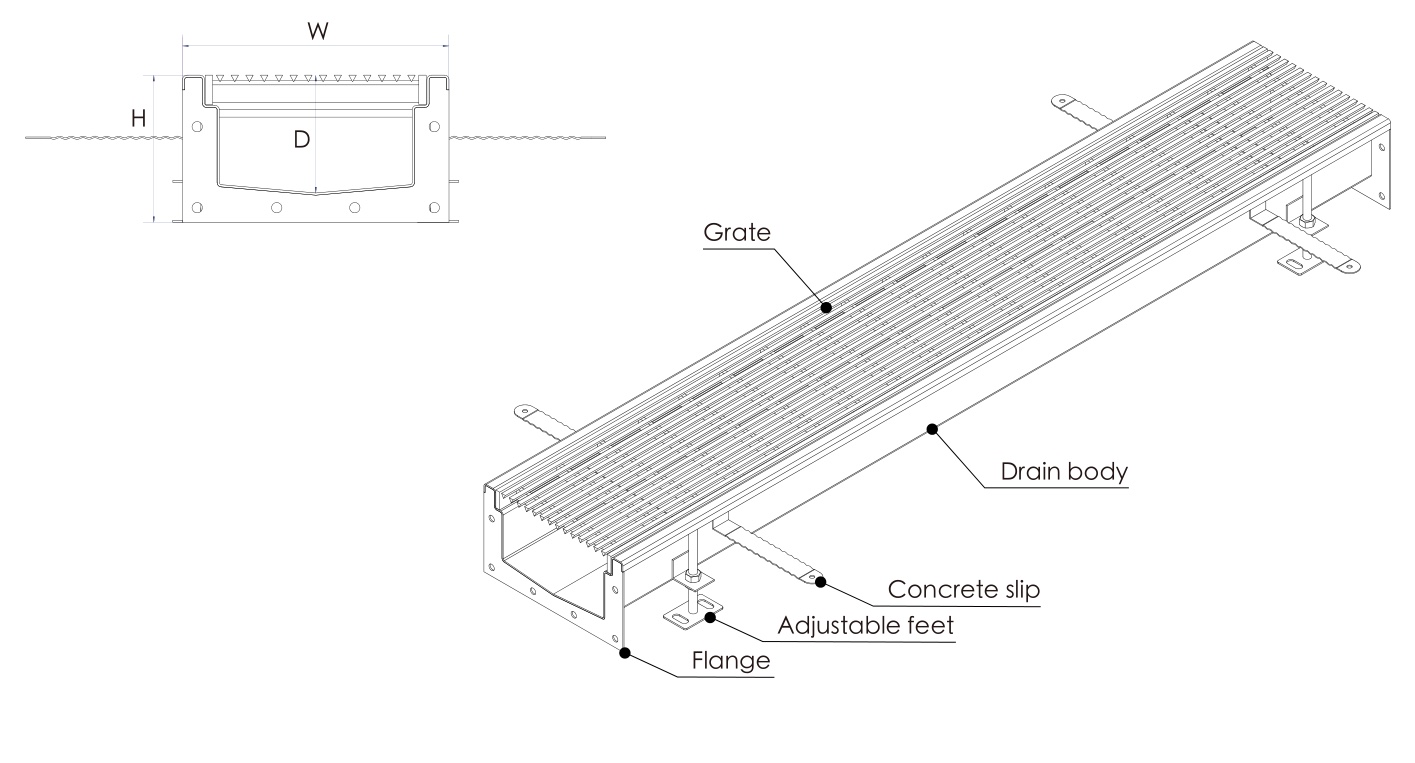
- Drainage channel: in a wet room, a stainless drainage channel with a sealed joint and a smooth invert is easier to clean than a rough concrete channel. A trench drain with a removable grate lets maintenance inspect the channel before residue sets. Confirm the outlet size and the fall before the screed goes down.
- Protection at handover: leave a written cleaning schedule that names the approved cleaners and prohibits acid. A drainage system is only as good as the chemicals used on it.
Certification and documented handover
Ask for the product data before the tile is ordered. Floor drains within scope should be CE EN1253 Certified, and projects in Australia should use WaterMark Certified products where the product page states that certification. Manufacturing should be ISO 9001 Certified, with material grade and load class recorded on the submittal. These documents do not prevent acid damage, but they make it harder for a contractor to substitute a lower grade and easier to prove what was installed. For a stainless trench drain or a shower drain, the grade and finish of the sanitary ware should be written into the same submittal as the tile adhesive, not left to a verbal instruction on site.
At handover, keep a photograph of the drain before the acid wash, the product label of every cleaner used and the name of the person who applied it. If a stain appears later, the record answers the first question: was the metal defective, or was it cleaned with the wrong chemical? A second photograph after the final rinse is worth more than a verbal promise that the acid was diluted.
Where to start
If a stainless drain has already been attacked, stop the acid, neutralise, rinse and assess the pitting before ordering a polish. If the metal is pitted or the frame is stained around the fixings, replace the affected parts and specify a grade that suits the room. Browse stainless trench drains, heavy-duty floor drains and mesh grates, or send us the cleaner label and close-up photographs of the damage. We can help you choose a drainage system that survives the tiling programme, not just the first wash.