
On Monday the wheel wash works. A truck leaves the site, the spray bars run, the water crosses the pad and disappears into the trench drain. By Friday there is a brown pool at the entrance, the grate is half covered and the site manager blames the drain for “not having enough fall.” The fall may be fine. The channel is full of sand.
Wheel washes are not clean-water drains. Every tyre brings soil, crushed aggregate, cement dust and road grit. Spray water carries that load into the channel, where velocity drops and heavier particles settle. A channel designed only for water becomes a settling tank with no way to remove solids. Once the invert is covered, flow area shrinks, velocity falls further and the next load settles faster.
This is a predictable maintenance complaint, not a mysterious blockage. The fix is to design the drainage system around settlement and removal, not around a single floor drain at the low point.
The complaint: clear on Monday, full by Friday
From above, the grate may look partly open. Lift it and the channel is packed with a graded layer: gravel upstream, sand in the middle, cement fines at the outlet. The material is sorted by the water. Coarse particles drop first; fines travel further and settle where flow slows.
The outlet is usually checked first. It may be open, or buried under a soft layer of fines. Rodding the outlet does not restore the channel upstream. The blockage is the settled bed, and it must be removed with a shovel or vacuum, not pushed into the pipe with a hose.
Six reasons a wheel-wash channel silts up
- The channel is sized for water, not solids. A shallow channel has little storage before solids reach the invert. The first week of site traffic can fill it.
- There is no settling pit before the outlet. Sand and grit reach the branch line and settle where they cannot be seen or removed.
- The fall is lost during construction. A channel set on soft bedding, or one that settles with the pad, develops a low section. Water stops and solids stay.
- The grate traps gravel at the surface. A fine grate keeps coarse stone on top but blinds under wet sand. A wide grate passes stone into the channel. Both need a basket or pit.
- The cover class does not match traffic. A pedestrian-rated HDPE channel under a truck wheel path will deflect or crack. The load path is separate from the flow path.
- Cleaning with a hose makes it worse. Water fluidises fines and pushes them toward the outlet. The channel looks clean for an hour, then silt settles again in the pipe.
Build a three-stage system
Sanitary ware is usually judged on finish; a wheel-wash channel is sanitary ware judged on access. The first stage is a channel that can be opened and cleaned. The second is a pit where heavy material settles before the outlet. The third is a covered access point that lets maintenance remove solids without breaking the pad.
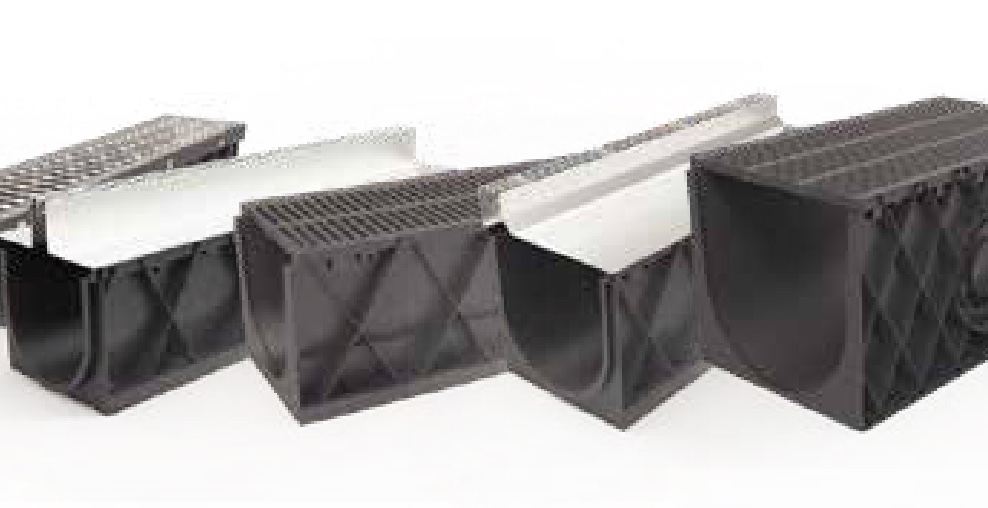
For a wash bay, a 300×300 mm HDPE channel gives useful storage and a wide invert. The HU3000 is 300×300 mm inside, 360×360 mm outside, in 1 m modules, made from HDPE and rated A15. A15 is a pedestrian and light-load class, not a truck rating. Do not install this channel directly under a wheel path and assume the vehicle load is covered. Keep it outside the tyre zone, or use a properly engineered frame and cover for the actual load.
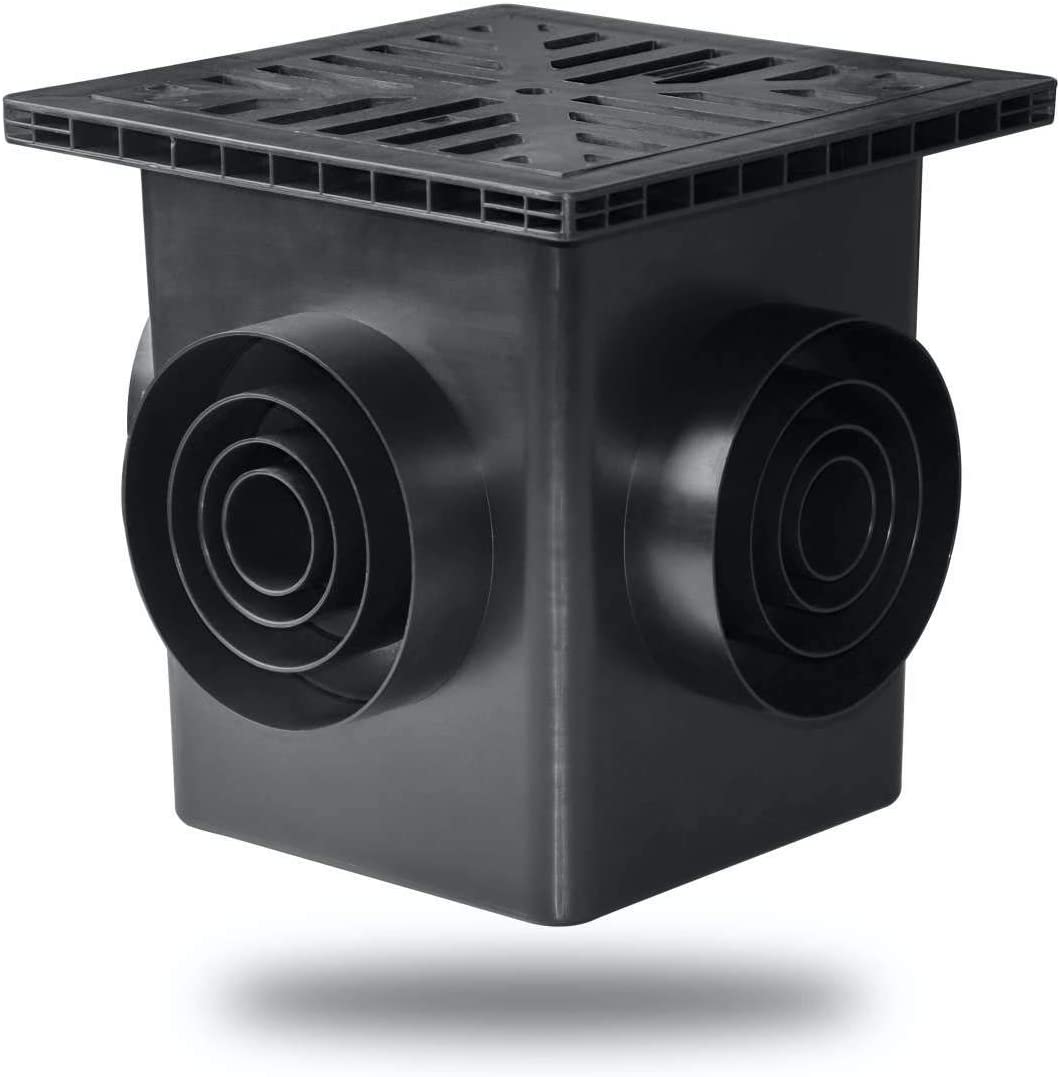
The second stage is the settling pit. The HU300 plastic pit is 305×305×305 mm, with horizontal outlets of 50, 76, 110 or 156 mm on four sides. It gives sand and grit a place to drop before the branch. Size the outlet to the flow, not the smallest pipe on site. A 300 mm body with a 50 mm outlet is a collector, not a high-flow separator; it still needs emptying before it fills.
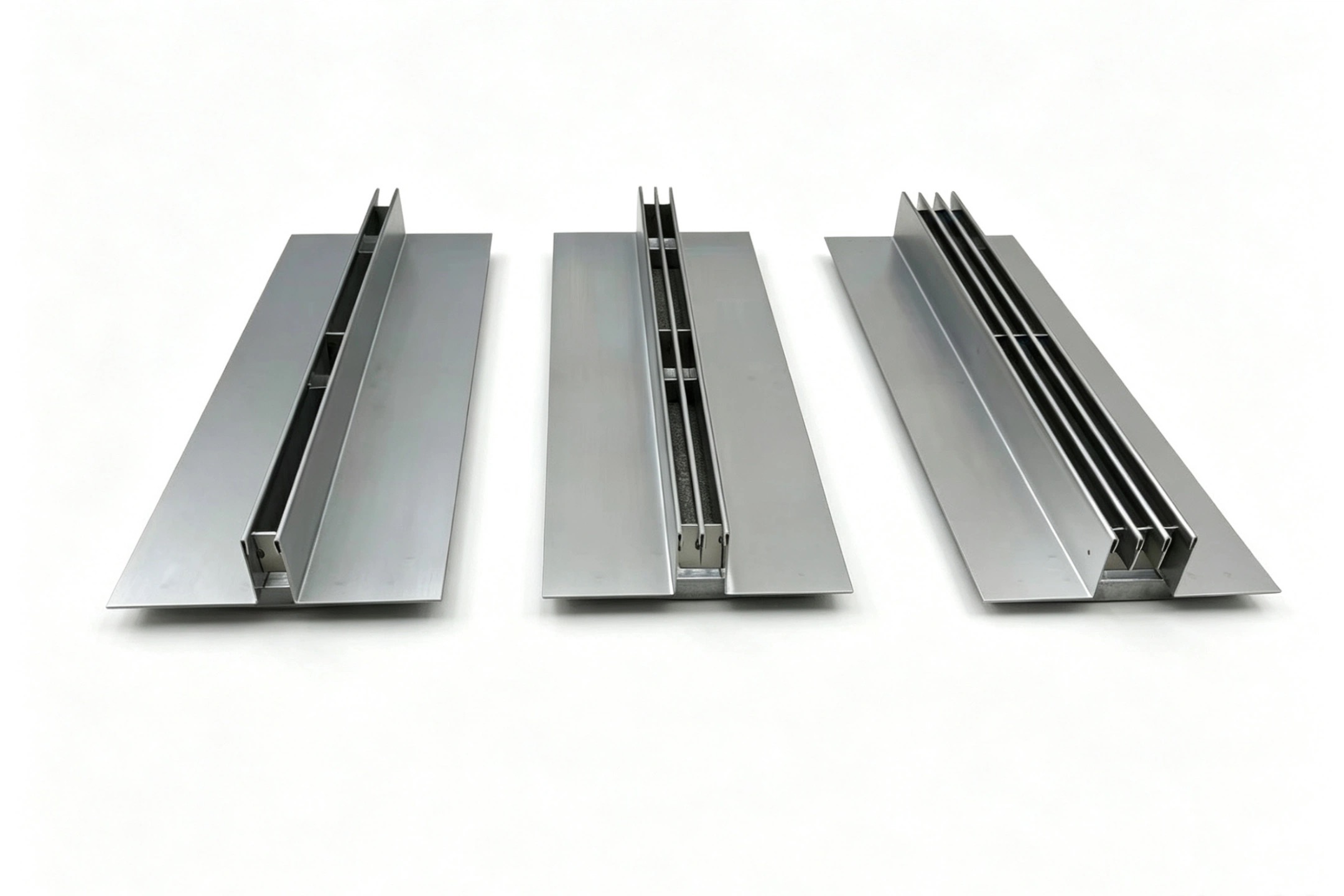
The third stage is the surface. The SS slot cover is available in one, two or three slots, in middle or side position, SS304/316, and can be used over a stainless trench, HDPE channel or polymer concrete canal. A slot cover reduces open area and keeps larger stone at the surface where a shovel can reach it. It also creates a narrow opening that can blind under wet sand, so it must be removable and cleaned on schedule.
The numbers that keep the channel alive
- Channel: 300×300 mm inner, 360×360 mm outer, 1 m modules, HDPE, A15.
- Settling pit: 305×305×305 mm, outlets 50/76/110/156 mm, four-side options.
- Cover: 1/2/3 slot SS304/316, removable for cleaning.
- Fall: 1:100 along the channel, with a sump at least 300 mm below the invert at the low point. Confirm against pad and outlet.
- Freeboard: keep settled solids below one-third of channel depth. Once the bed reaches the invert, it is no longer a drain.
- Load: A15 is pedestrian/light duty. A truck wash needs a load path designed for the actual wheel load, not a default channel class.
Set the channel on a stable base, not loose fill. A channel that settles will hold water even after cleaning. Anchor the frame and check joints; a joint that opens lets fines into the bedding and creates a void under the channel. Confirm the pit is below the invert and the outlet leaves a settling volume.
Maintenance that removes the solids
At the end of each shift, check the grate and remove stone or mat at the surface. Weekly, lift the cover and measure the settled layer at the upstream, middle and outlet sections. If it reaches one-third of depth, shovel or vacuum it out. Do not use a high-pressure hose to push material toward the pit; that transfers the problem downstream.
Empty the settling pit when solids reach half its depth. Inspect the outlet with a torch and remove fines compacted at the pipe mouth. After cleaning, run clean water and confirm the channel empties without standing sections. Record date, depth and location of the low spot. A repeat low spot is a settlement or fall problem, not a cleaning problem.
Certification and the limit of the label
Specify CE EN 1433 for drainage channels where applicable, CE EN 1253 for floor drains, and ISO 9001 manufacturing. WaterMark is relevant where the product is supplied for the Australian market. The CE mark confirms testing to a declared class. It does not turn an A15 channel into a truck-rated channel, and it does not replace settling volume or a cleaning routine.
Where to start
If a wheel wash floods by Friday, lift the cover and measure the settled bed before changing the drain. Check fall, pit volume and outlet. Separate the vehicle load path from the water path. Browse our heavy-duty HDPE drainage channel, plastic catch basins and stainless slot covers, or send the pad dimensions, truck weight and washdown frequency. We lay out a trench drain and settling drainage system that stops grit before the pipe.