
The restroom looks clean at nine. By lunchtime a shallow pool sits beside the last cubicle and a brown edge rings the floor drain. The cleaner lifts the cover, finds a grey wad of paper towels and pushes it aside with a mop. Water drops for ten minutes, then returns. A plunger makes the pool worse and sends the wad deeper into the trap.
This is one of the least-reported drainage complaints in a public building. A restroom drain is sanitary ware, often treated as a hole in the floor. Paper towels stay strong when wet; they do not dissolve like toilet paper. One wad can cross the floor, reach the drain and compact against the cover. Add wipes or a missing cover, and the fixture becomes a solids trap with a small opening.
The failure is not a cleaning problem; it is a mismatch between the fixture and how the room is used. A drainage system must assume solids reach the drain, staff remove the cover, and the cleanout gets used. If any assumption is false, the next complaint is a backup.
The complaint: water returns after every clean
The pattern is consistent. The drain clears, then hand dryers and the next wash add water. Paper pulp swells and closes the gaps between cover and frame. Water rises because the outlet is partly sealed, not because the branch is full. A plunger drives the wad into the trap; the next symptom is odour cleaning cannot remove.
Staff often lift the cover with a mop handle, then leave it off “to drain better.” That creates a trip hazard and lets more towels enter. Access must be obvious, safe and quick.
Six reasons paper becomes a plug
- Paper towels are not toilet paper. They are engineered for wet strength. In water they soften, pulp and compact, but do not disperse fast enough for a normal trap.
- Wipes do not break down. Even “flushable” products can snag on a cover, trap or branch fitting. In a restroom, the bin should be closer than the drain.
- The slot admits a folded towel. A wide slot passes mop water and paper. A narrow slot keeps more on top but blinds faster if it is not cleaned.
- The cover is missing, loose or hard to lift. A missing cover turns the body into a cup. A loose cover lifts under a mop and lets the wad slide underneath.
- The cleaner uses a plunger first. Pressure pushes the wad deeper and can displace the trap seal. The blockage moves out of sight and the next backup is harder to reach.
- There is no accessible cleanout. If the only route into the line is through the cover, staff cannot remove a trap blockage without dismantling the finish.
Clear the drain in the right order
Stop using the fixture and divert traffic. Lift the cover with the correct tool, not a mop handle. Remove the paper wad by hand, then inspect the frame and trap with a torch. If the wad is below the cover, use a wet/dry vacuum before trying a plunger. Do not pour chemical opener into a restroom drain; it can damage stainless, attack the trap and endanger the next person who opens it.
If water still stands, open the cleanout and rod from the access point. Use a camera if the blockage is not visible. Remove solids; do not push them into the branch. Refill the trap, run water, and check that the cover seats and the floor falls to the drain without a low spot beside it.
Specify for the behaviour, not the brochure
The first decision is solids interception in the drainage channel. A floor cleanout with a heavy cover and a straight access path beats a decorative grate that cannot be opened. The CFH-150A is a 150×150 mm heavy-duty floor cleanout with a 75 mm outlet, an anti-sliding stainless cover and SS304/316 construction. It is the least glamorous piece of sanitary ware in the room, but it gives staff a direct route into the branch.
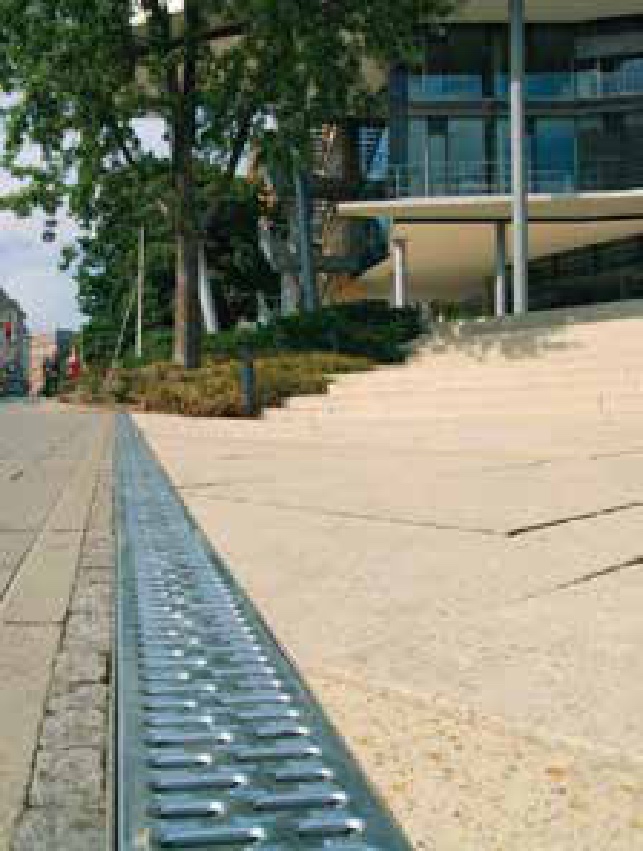
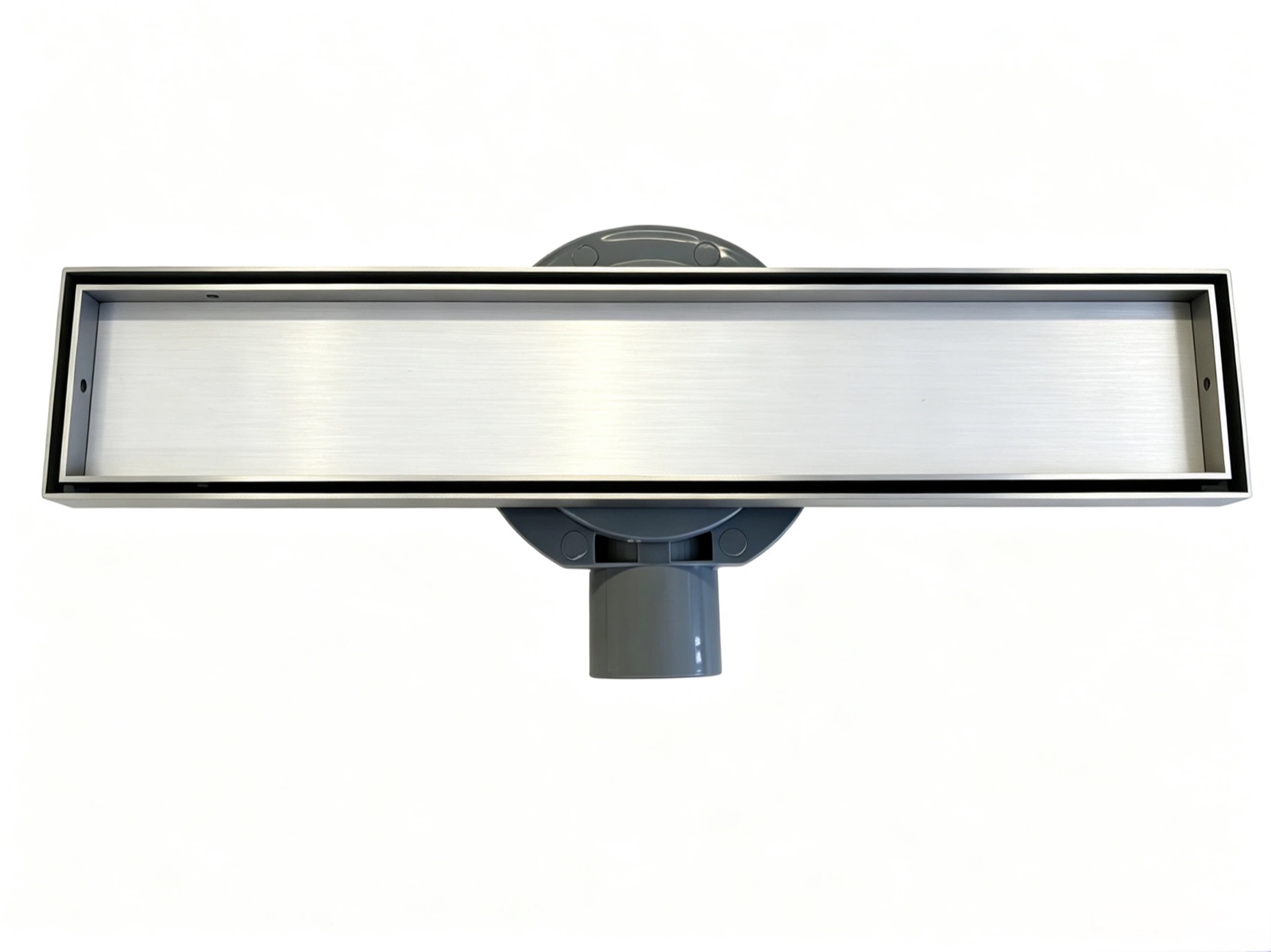
The second decision is the drain itself. A linear trench drain with a tile insert along the wet wall can remove the pool at the far end, but the tray must be removable and the body reachable. The TL-100-HD50 is a 100 mm linear tile-insert drain with a horizontal outlet and a brushed stainless body. The insert lets the finish continue across the channel, but the tray must be lifted regularly because paper pulp hides under the tile edge.
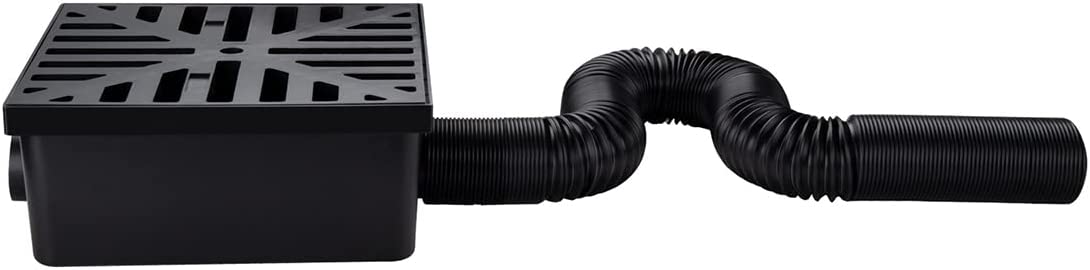
The third decision is upstream. In a janitor closet, a small catch basin lets paper, mop lint and grit settle before the line. The HU250 plastic pit is 250×250×108 mm, with two horizontal 50 mm outlets. It is not a floor drain for the public area; it is a solids trap where cleaning equipment is handled. The system is intercept, collect, access.
Numbers that make maintenance possible
- Floor cleanout: 150×150 mm cover, 75 mm outlet, heavy-duty loading, SS304/316.
- Linear drain: 100 mm body width, tile-insert tray, horizontal outlet, stainless body.
- Catch basin: 250×250×108 mm, two 50 mm horizontal outlets, light-duty plastic pit.
- Floor fall: 1:100 minimum toward the drain, with a local 1:50 fall within about 600 mm of the outlet where the floor allows.
- Cover access: removable without tile demolition; keep the correct lifting tool and a spare cover in the maintenance store.
- Clearance: leave at least the body depth below the finished floor; do not set the frame on tile edges.
After every deep clean, check that the cover seats and the frame is not low. A rocking cover lets paper and water pass; a low frame keeps pulp wet. A cleanout painted shut is not access.
A routine that prevents the wad
Put the bin where the towel dispenser is. Post a simple sign: paper towels and wipes in the bin, not the floor drain. Check the cover at the start and end of each shift. Remove paper on top before it is pushed through. Weekly, lift the cover and inspect the frame and trap; monthly, open the cleanout.
Keep a log with date, cover condition, water depth and odour. A repeat pattern at the same fixture points to a slope or cover problem, not a cleaning problem. If the same drain backs up after every event, the fixture is undersized or the access is wrong.
Certification and the limit of the label
Specify CE EN 1253 for floor drains and ISO 9001 manufacturing. WaterMark applies where the product is supplied for Australia. A certified drain is still defeated by a paper wad if the cover is missing or the cleanout inaccessible. Certification is a baseline; maintenance access is part of the design.
Where to start
If a restroom drain backs up, stop plunging. Lift the cover, remove solids and open the cleanout. Check the cover and frame before replacing anything. Browse cleanouts, linear tile-insert drains and catch basins, or send photos. We configure a trench drain or drainage channel that lets staff remove problems instead of pushing them deeper into the drainage system.