
The complaint comes from the pass, not the office. Every time a loaded trolley crosses the kitchen floor drain, the cover gives a short metallic rattle. At first it happens only when the trolley is full. Then it happens every time. By the end of the month the cover has moved sideways, the screws are loose and the frame is surrounded by a dark line of grease and grit. Nobody has fallen through, but the maintenance team knows the drain is no longer sitting as it should.
A drain cover is not a loose lid. It is a seat, a load path and a removable access panel. When one of those three jobs is wrong, the cover moves. In a commercial kitchen, the movement is amplified by caster wheels, trolley weight, heat, grease and frequent washdown. A small rattle is the first symptom of a seat that is wearing out, and it is a symptom of a drainage system that is being loaded outside its design.
The complaint: a rattle that starts at the pass
The rest of a commercial kitchen is specified like sanitary ware: smooth, cleanable and corrosion-resistant. The drain is often the one component left to the installer.
The pattern is usually consistent. The cover is quiet when a person walks over it because the load is spread across a foot. A trolley concentrates the load on two or four small wheels. The cover flexes, lifts on the leading edge and lands again. The sound is a metallic clack. If the cover has a tile insert, the insert may also move inside its tray.
Staff often tighten the visible screws first. That helps for a week if the screw is the only problem. If the frame is low, the cover is resting on two edges and the screws cannot pull it flat. If the seat is full of grease, the cover never reaches the frame. If the cover is too thin for the wheel load, it flexes between supports no matter how tight the screws are. The rattle is a symptom; the repair depends on which of these is true.
Five causes of a moving cover
- The frame is set low or out of level. A frame that sits 2 mm below the finished floor leaves the cover rocking on two edges. The gap is small, but a caster finds it every time.
- Debris holds the cover off its seat. Grease, grit and food waste build up in the frame groove. The cover appears closed but is resting on a film of debris, so it moves when loaded.
- The cover is too thin for the wheel load. A light pressed cover can flex between the frame edges. The repeated flex loosens the seat and the fixings.
- The load class does not match the traffic. A15 is a pedestrian rating, not a trolley rating. A loaded trolley puts most of its weight on one wheel, so the cover sees a point load rather than the total weight spread across the floor.
- The fixings are loose, missing or wrong. A screw that backs out under vibration, or a replacement screw that bottoms out in the frame, cannot hold the cover. Metal-to-metal contact also transmits every impact directly into the frame, and the rest of the drainage system does nothing to damp it.
What to fix first
Clean the seat before judging it. Remove the cover, lift out the debris and inspect the frame groove with a torch. Run a straightedge across the frame and the finished floor. A frame that is low at one corner needs bedding repair, not a thicker screw. A frame that is high needs grinding or re-setting; otherwise the cover will always rock.
Check the cover for distortion. Place it on a flat bench and look for a gap under one corner. A twisted cover cannot be corrected by tightening; it needs replacement. Check the screw holes for stripped threads and the screws for the correct length. A screw that is too long can bottom out before it clamps the cover, which feels tight but leaves the cover loose.
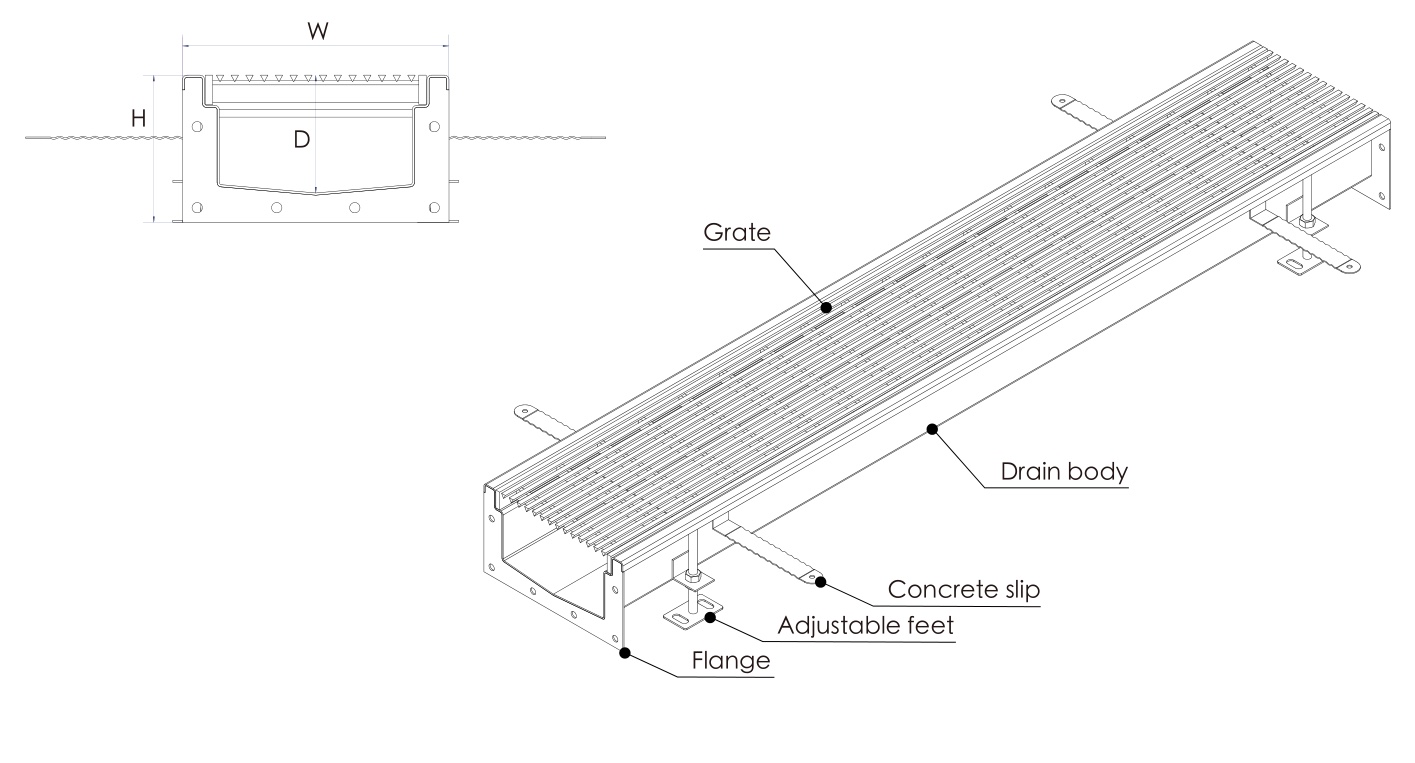
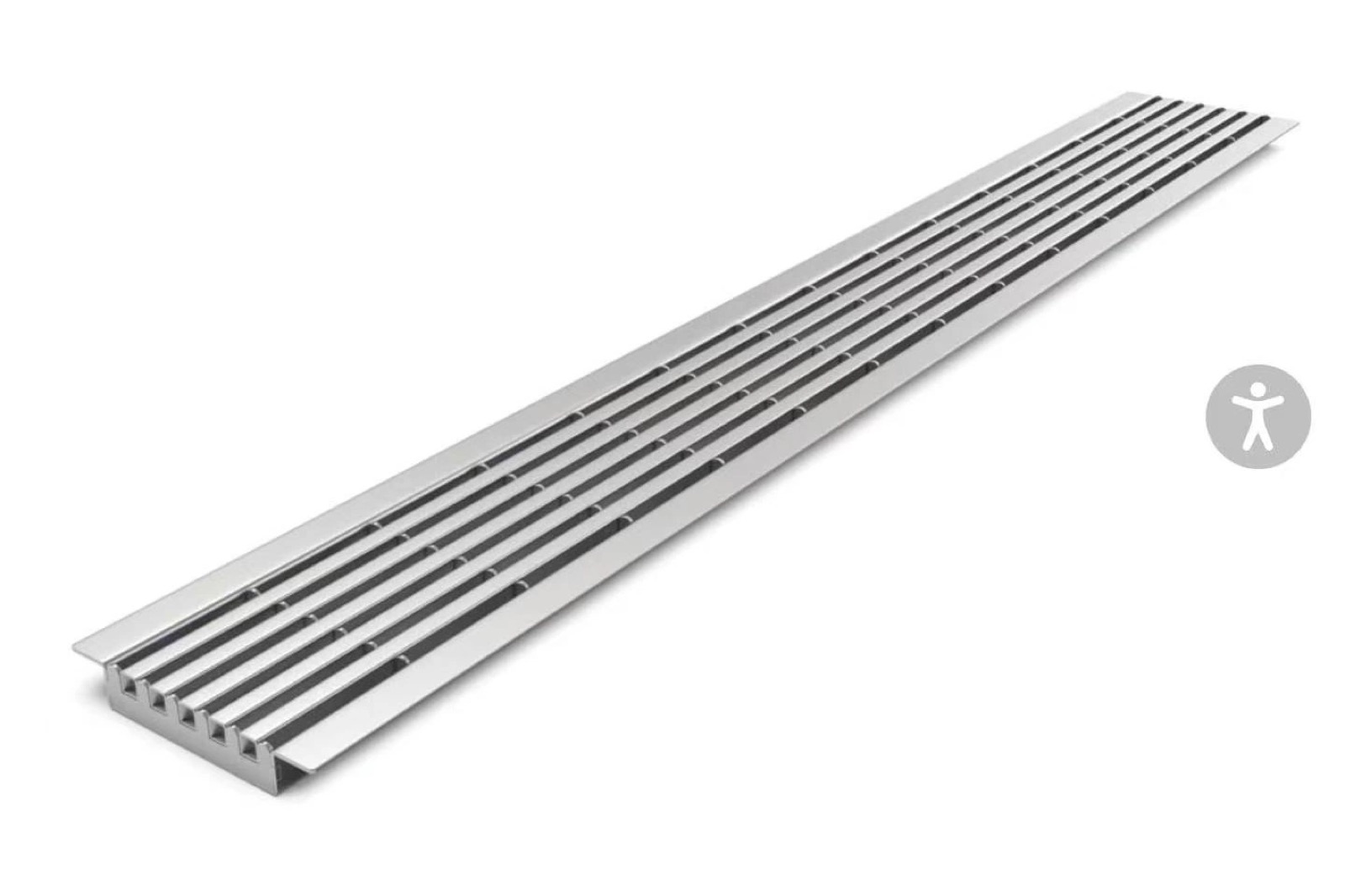
Then check the load path. A stainless cover with a proper frame and a resilient seat is more likely to stay quiet than a thin pressed cover resting metal-on-metal. The SS200X trench drain uses adjustable feet, a concrete slip and EPDM-sealed flange connections. The adjustable feet help set the frame to the finished floor, while the EPDM gasket addresses connection leakage rather than rattle. The HW05W wedge wire grate is made to measure in 100/200/300 mm widths in SS304/316; the V-wire construction gives a stiff, open grid where a project needs custom sizing. The TBS300 square floor drain is a 300×300 mm heavy-duty stainless unit for high-traffic areas.
Installation details that stop the noise
Set the frame to the finished floor, not to the screed. A frame that is 2 mm low leaves the cover rocking on two edges; a frame that is high leaves a trip. Fill the bedding under the frame; voids let the frame flex. Anchor the frame to the slab or structural screed, not only to the tile. Keep the seat groove clean; grease and food debris are enough to hold the cover off its seat. Use the specified resilient seat or gasket; a metal-to-metal seat transmits every caster impact.
Check the cover after a full service. A cover that has walked sideways under trolley traffic needs a locating pin or a fixed frame, not a tighter screw. If screws back out, use the correct thread and a thread-locking method specified by the manufacturer. Do not substitute a longer screw that bottoms out in the frame. On a tile-insert cover, confirm that the insert is seated and that the tray drains; water standing in the tray will pull grit into the seat.
Commissioning test
After installation, cross the drain with a loaded trolley at service speed. Listen at the pass, not from the office. Push the cover sideways with a gloved hand; it should not move. Check that water drains without ponding at the frame. Photograph the seat and the fixings before handover, and add the cover type and screw size to the maintenance file. A five-minute test at handover prevents a month of callbacks.
Certification and the limit of the label
Specify CE EN 1433 for drainage channels where applicable, CE EN 1253 for floor drains, and ISO 9001 manufacturing. WaterMark applies where the product is supplied for the Australian market. The load class is part of the specification, not a decoration on the datasheet. A certified cover rattles if it is installed on a low frame or a seat full of grease.
Where to start
If a kitchen drain cover moves under a trolley, start with the seat and the frame before changing the cover. Measure the frame level, clean the groove, check the fixings and confirm the load class against the actual wheel load. Browse our stainless trench drain systems, wedge wire grates and heavy-duty floor drains, or send a photograph of the frame and the trolley wheel. We can help specify a sanitary ware-grade drainage channel and cover that stay seated through service.