
In late autumn the calls change. A garden trench drain that handled summer storms starts to pond after every rain. Unlike a floor drain inside the house, it has no trap to hold a water seal; its job is to move surface water away before it reaches the building.
The homeowner clears the grate, fills a bag with leaves and watches the water disappear for a day. Then it comes back. By the third visit, the grate is clear again but the channel is full of black leaf mould, the outlet is partly blocked and the paving around the channel is stained.
Outdoor drainage is not domestic sanitary ware; the duty is leaves, grit and rainwater, and the maintenance interval is set by the trees, not by a cleaning rota. Leaves do not need to sit on the grate to cause a problem. Small leaves, seeds, grass clippings and grit pass through the bars, float along the channel and settle where the velocity drops. The result is a mat that behaves like a filter. Water still reaches the outlet, but not fast enough. The next storm turns a shallow channel into a pond, and the organic layer starts to smell.
The complaint: the grate is clear, the water is not
The visual is misleading. From above, the grate looks open. From the end of the run, the channel is half full of dark, fibrous material. The outlet may have a strainer that is covered in leaf fragments. In a dry spell the mat dries and shrinks; in the first rain it swells and seals the channel again. Cleaning the top of the grate does nothing because the blockage is below it.
This is not the same as a root intrusion. Roots enter through joints and grow inside the pipe; leaf mould forms in the open channel and at the outlet. The repair is different: root cutting and joint repair for roots; access, fall and a catch basin for leaf silt. The same logic applies to a floor drain at the bottom of an outdoor step: the grate is only the entrance, and the drainage system below it does the real work.
Five ways a garden channel silts up
- The grate bar spacing is wide enough for the leaf size. A grate selected for maximum open area will pass small leaves and seeds. The debris does not disappear; it moves downstream.
- The channel is shallow and the velocity is low. A 100×45 mm channel has little depth to spare. Once a 10–20 mm layer of leaf mould forms, the flow area is reduced and the velocity drops further.
- The fall is too flat or has a counter-slope. Water that slows down deposits its load. A settlement in the paving, a bedding error or a channel installed against the slope creates a low point that traps debris.
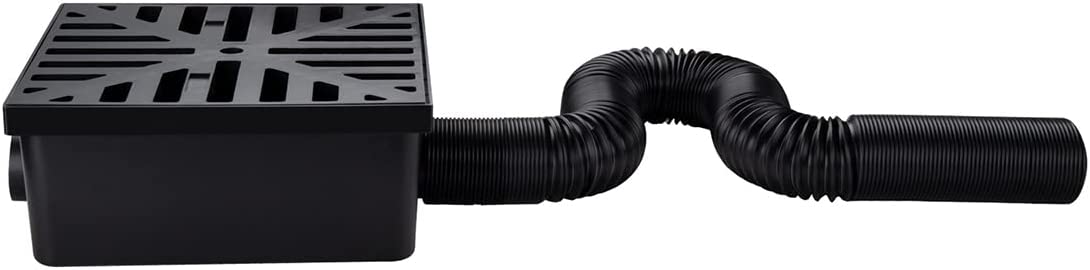
- There is no sump or catch basin at the low point. The outlet is the only place where debris can collect, and it is the worst place to service. A catch basin gives the silt a place to settle before the pipe.
- Maintenance stops at the surface. Clearing the grate is only the first step. The channel, the outlet screen and the catch basin all need to be checked after leaf fall.
What to fix, in order
Start at the outlet, not the grate. Remove the outlet screen and inspect the pipe mouth with a torch. If the channel is full, use a wet/dry vacuum or a soft scoop; do not push the mat into the pipe with a hose. A hose adds water and compacts the leaf mould, which makes the blockage harder to clear.
Outdoor channels are not display sanitary ware; access and fall matter more than a polished finish. Check the fall with a level. A practical target for a shallow garden channel is 1:100 (1%), with a smooth invert and no counter-slope. Confirm the design with the project engineer; the number is a target, not a substitute for setting out. If water stands in a section after cleaning, the fall or the bedding is wrong, and the silt will return.
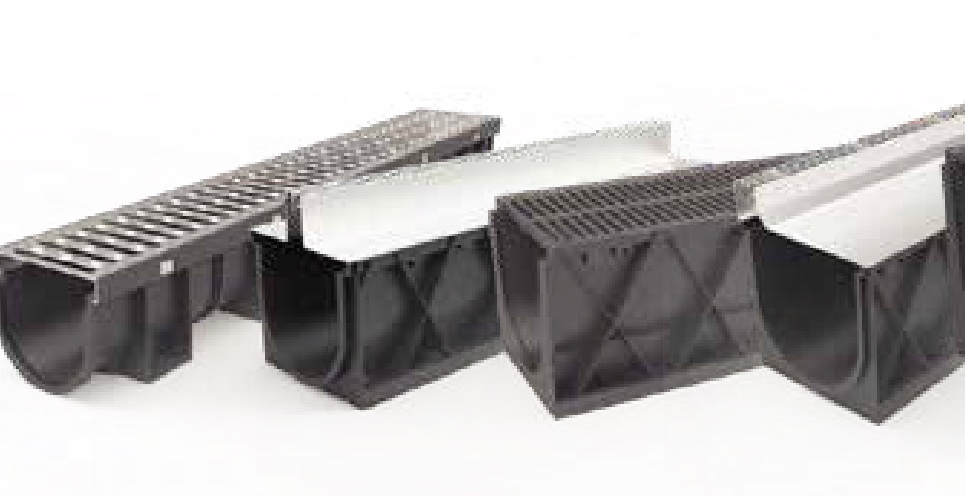
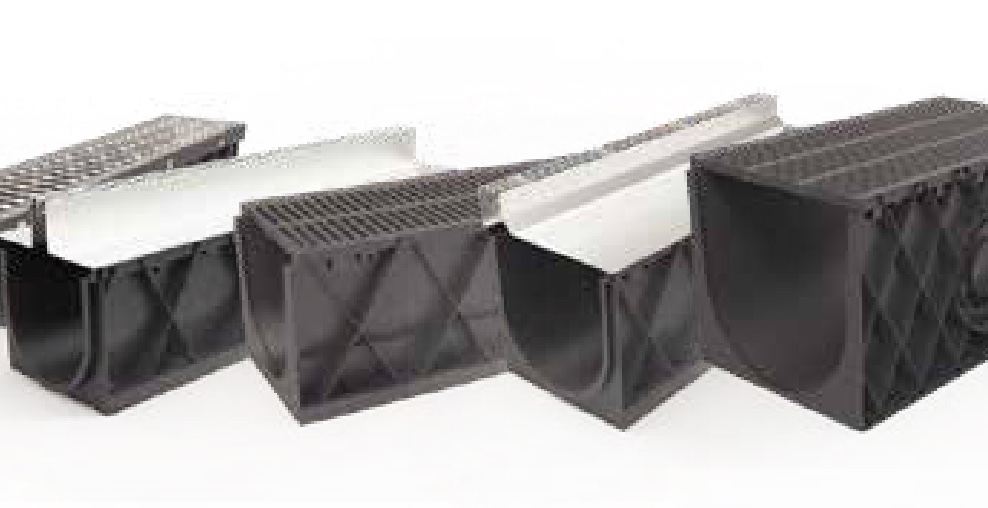
Add a catch basin at the low point. The HU250 plastic pit is a 250×250×108 mm catch basin that gives leaf mould and grit a place to settle before the outlet. The HU1000 HDPE drainage channel is a 100×45 / 100×100 / 100×150 mm modular channel in 1 m lengths with optional grates, rated A15 for pedestrian and light garden use. The HU3000 is a 300×300 mm HDPE channel for larger flows, also A15. These are not vehicle-rated products; a car or a loaded wheelbarrow can deform an A15 channel and crack its grate.
Choose the grate for the debris, not only for the flow. A grate with a large open area passes more water and more leaves. A finer grate keeps more debris on top, where it can be swept, but it needs more frequent cleaning. The right balance depends on the tree species, the rainfall and the maintenance interval. For custom widths, the HW05W wedge wire grate is made in 100/200/300 mm widths in SS304/316 with a 5×4 mm V-wire; it is a robust option where the project needs a bespoke opening, but it still needs a maintenance plan.
A maintenance calendar that works
Clear the grate before the first autumn storm, not after the first flood. Lift the grate and remove the surface layer. Check the channel invert for a continuous fall. Empty the catch basin when it is one-third full; waiting until it is full defeats the purpose. Clean the outlet screen last, and photograph the outlet before closing the grate so the next visit has a baseline.
During leaf fall, check after every heavy rain. After leaf fall, check monthly. The interval is not a standard; it is set by the trees around the drain. A property with fine-leaved species and prevailing wind will need more frequent checks than an open courtyard with large leaves.
Certification and the limit of the label
Specify CE EN 1433 for drainage channels where applicable and ISO 9001 manufacturing. A CE mark confirms that the product was tested to the declared class; it does not make an A15 channel suitable for a vehicle. The load class, the installation and the maintenance plan are separate decisions. A certified channel full of leaf mould still floods.
Where to start
If a garden channel ponds every autumn, clean the outlet and check the fall before buying a new grate. If the channel is shallow or the run is long, add a catch basin and set a maintenance interval that matches the trees. Browse our HDPE drainage channel ranges, plastic catch basins and stainless grates, or send the run length, outlet position and paving levels. We can help specify a trench drain and drainage system that gives leaves a place to settle before they reach the sewer connection.