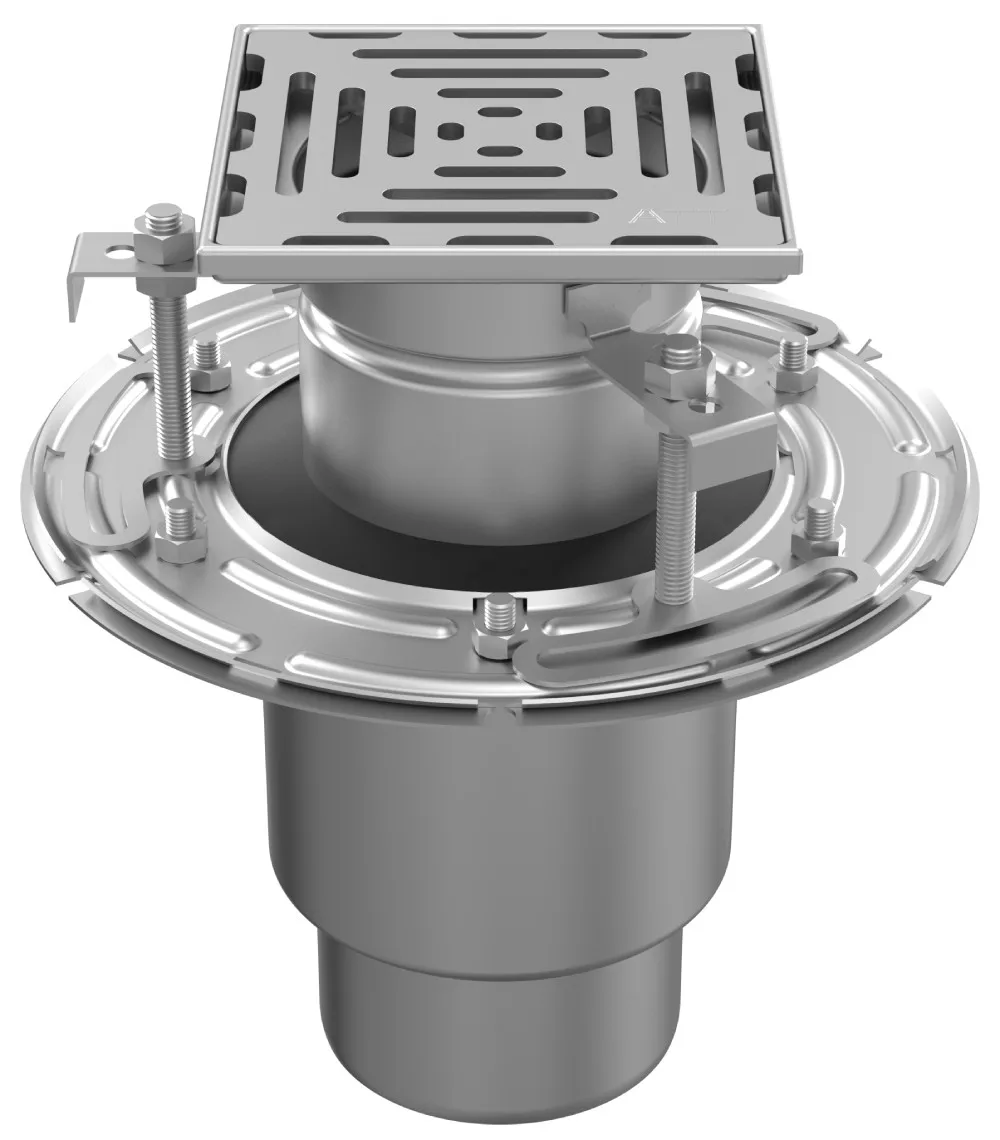

The complaint arrives from a site in a market where the pipework is BSP and the drains were ordered with NPT outlets. The contractor fits the first drain, turns it two or three times by hand, feels it tighten, and stops. Then the joint will not go further. He adds PTFE tape, then a wrench. The plastic female fitting cracks, or the joint passes the fill test and weeps at handover.
The drain is not defective. The thread is the wrong standard. NPT and BSP are both called “inch” threads, and at some sizes they even share the same thread count, but they are different geometries. They can engage far enough to feel right and still fail to seal. In a drainage system, that mistake usually appears as a leak behind a finished wall or under a slab.
The complaint: it fits for two turns, then stops
A 1½-inch or 2-inch drain outlet is one of the most common connections on a project. The buyer writes “1½ inch” or “2 inch” on the purchase order, assumes the supplier knows the market, and does not state the thread standard. The supplier ships the standard used in its own factory. The result is an NPT male outlet meeting a BSP female socket, or the reverse.
The first few turns can feel normal because the nominal diameter is close and the threads are both tapered. Then the flanks bind. A installer who forces the joint may damage both parts. A installer who stops and adds sealant may create a joint that holds air but weeps water. Neither outcome is acceptable on a drainage connection that will be buried or boxed in.
Why NPT and BSP are not interchangeable
- The thread angle is different. NPT uses a 60-degree thread form under ASME B1.20.1. BSP uses a 55-degree Whitworth form under ISO 228-1 for parallel threads or ISO 7-1 for tapered threads. The flanks do not mate across their full surface even when the diameters look close.
- The thread count is not a reliable guide. At 1/2 inch and 3/4 inch, NPT and BSP both use 14 threads per inch, which is why small fittings are so often mixed. At 1½ inch, NPT is 11.5 threads per inch and BSP is 11; at 2 inch, the difference is the same. A drain outlet in the larger sizes should fail visibly, but a tapered thread can still start.
- The taper and sealing method differ. NPT and BSPT are tapered and are intended to seal on the threads with a compatible sealant. BSPP is parallel and does not seal on the threads at all; it needs a bonded washer, O-ring or gasket on a sealing face. Screwing a parallel BSPP male into a tapered NPT female is not a seal, no matter how much tape is used.
- Nominal size describes the bore, not the connection. “2 inch” does not tell you the thread family, the pitch, the taper, the gender or the sealing face. A complete connection description needs all of those. A catalogue line that says only “2 inch outlet” is incomplete for an export order.
- Forcing damages both sides. A mismatched male thread deforms the female thread. Even after the correct adapter is found, the damaged female may no longer seal. On plastic drains, the female can split; on thin stainless, the thread can gall and seize.
Where the mistake hides in drainage
The outlet of a floor drain, the tailpiece of a trap, the inlet of a drainage channel and the connection to a waste pipe are all potential mismatch points. The error is easy to miss at receiving because the parts are wrapped or capped, and a tapered mismatched joint can hold low pressure while still leaking.
In a slab or wall, the leak does not always appear at the joint. Water travels along the pipe and emerges at the slab edge, at a penetration, or at the base of the drain. The installer then blames the waterproofing, and the waterproofing contractor blames the drain. The actual cause is a thread that was never compatible.
The four-point receiving check
- Identify the standard in writing. The purchase order and the packing list should state NPT, BSPT or BSPP, plus the nominal size and gender. “BSP” alone is not enough, because BSPP and BSPT are different connections.
- Measure the thread. Use a thread pitch gauge or a known matching fitting. Count the threads per inch and check the flank angle with a thread profile gauge where available. Do not rely on a caliper across the outside diameter alone.
- Check the sealing face. For BSPP, confirm the washer, O-ring or gasket is present and the face is machined. For NPT or BSPT, confirm the joint is intended to seal on the threads and that the sealant is compatible with the fluid and material.
- Try a dry fit on a known sample. A correct tapered joint should engage several turns by hand before it becomes stiff. If it stops after two turns, stop. Do not use a wrench to prove compatibility.
Specify the outlet, not just the size
Write the connection into the product description: “1½-inch NPT male outlet”, “DN40 BSPP female with gasket”, or “2-inch BSPT male”. Add the market and the applicable pipe standard. If the project uses a mix of standards, supply a labelled adapter with each drain rather than asking the site to improvise. Keep the adapters in the same box as the drain and mark the crate.
For the sanitary ware drain itself, confirm the outlet diameter against the fixture load and the pipe capacity. A 50 mm water seal is a useful baseline for odour control, and the trap must fit the available depth. The body should be 304 stainless for normal indoor use or 316 stainless where chlorides, coastal air or aggressive cleaning chemicals are present. The grate and frame should meet the required load class, A15 for pedestrian areas or B125 where carts and light vehicles cross. None of those details will save a joint with the wrong thread.
Certification and the handover file
Ask for CE EN1253 Certified drains where the standard applies, WaterMark Certified products for Australian projects, and ISO 9001 Certified manufacturing. Put the thread standard, outlet size, gasket type and adapter part number in the handover file. A certificate confirms the product; it does not confirm that the site pipe and the drain outlet are the same thread family.
The sanitary ware may be specified and the trench drain may be the right length, but a thread mismatch is a connection failure, not a product failure. Check it at the packing list, before the crate is opened.
Where to start
If a drain will not thread, stop turning it. Identify the existing pipe standard, measure the thread, and order a purpose-made adapter or correct outlet. Browse our stainless floor drains, industrial drains and linear trench drain and drainage channel systems, or send us a photograph of the pipe end, the drain outlet and the purchase order description. We can confirm the outlet thread before the next container is packed, so the drainage system connects first time.